
Leave Your Message
-
E-mail
-
Whatsapp
-
Message
High-performance PCB products engineered specifically for EV charging systems, power management, and automotive-grade electronic assemblies.
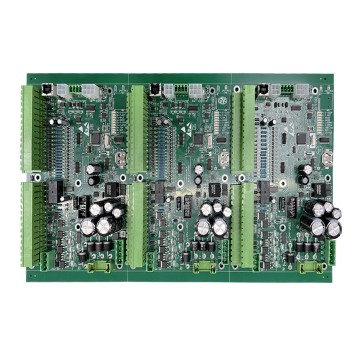
Advanced RF Wireless PCB Assembly for Automotive Charging Infrastructure: Powering Radar, ADAS & Connected Vehicles
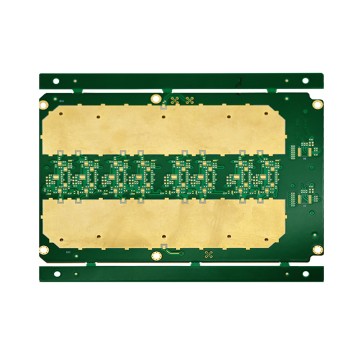
8-Layer High-Frequency Hybrid PCB | Rogers RO4350B + Shengyi S1000-2M | RF Circuit Board for Charging Infrastructure
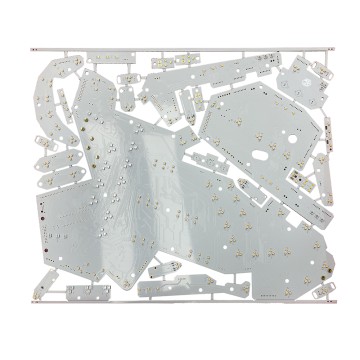
Automotive Charging Circuit Boards: Essential Design and Manufacturing Tips for Optimal Performance
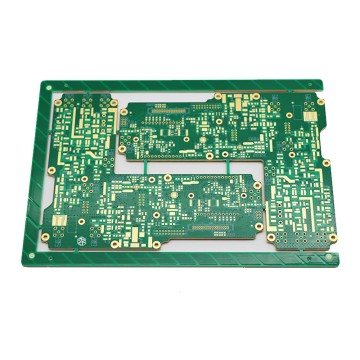
6-Layer High-Frequency Hybrid Pressing PCB | Rogers RO4350B | Precision-Engineered Circuit Board for Charging Systems
As the global electric vehicle (EV) market accelerates toward mass adoption, the underlying automotive circuit technology for charging infrastructure has become one of the most strategically important domains in advanced electronics manufacturing. From residential Level 2 chargers to ultra-fast DC fast-charging (DCFC) stations capable of delivering 350 kW or more, every node in the charging ecosystem depends on precision-engineered printed circuit boards (PCBs) to manage power conversion, communication, safety, and thermal regulation.
The convergence of high-voltage power electronics, real-time digital control, wireless connectivity, and stringent automotive-grade reliability standards has fundamentally transformed what is demanded of a charging infrastructure circuit board. Engineers must now design PCBs that simultaneously handle kilowatt-level power flows, sub-microsecond switching transients, and encrypted bidirectional data streams — all within a thermally hostile, vibration-prone environment.
Understanding where and how specialized PCBs are deployed across the EV charging value chain.
The heart of any charging station is its AC-to-DC power conversion stage. High-frequency switching topologies — including LLC resonant converters and Vienna rectifiers — demand PCBs with ultra-low parasitic inductance, controlled impedance traces, and copper weights up to 6 oz to manage thermal dissipation. Multi-layer boards using hybrid Rogers/FR4 stackups are increasingly standard for these demanding power stages.
Vehicle-to-Grid (V2G) technology requires automotive circuits that support bidirectional power flow alongside ISO 15118 Power Line Communication (PLC) protocols. These PCBs must integrate high-speed digital logic, analog front-ends for pilot signal monitoring, and robust EMI shielding — all on a single compact assembly that meets IATF 16949 automotive quality standards.
Modern charging stations integrate 4G/5G cellular modems, Wi-Fi, Bluetooth, and OCPP-compliant cloud communication. RF PCBs using Rogers RO4350B or similar low-loss high-frequency laminates ensure minimal signal degradation across the 600 MHz to 6 GHz spectrum. These boards also support over-the-air (OTA) firmware updates and real-time energy metering data transmission.
Ground Fault Circuit Interrupter (GFCI), arc fault detection, over-voltage/over-current protection, and insulation resistance monitoring circuits are mission-critical. These automotive-grade protection PCBs must operate reliably across -40°C to +125°C temperature ranges and withstand 1,000V+ isolation voltages, requiring specialized high-Tg FR4 or ceramic-filled laminates.
Battery Management System (BMS) interface boards within charging infrastructure handle cell voltage monitoring, temperature sensing via NTC arrays, and state-of-charge algorithms. These circuits require precision analog design with sub-millivolt accuracy, demanding careful PCB layout with isolated power domains and shielded signal layers to prevent switching noise interference.
Next-generation robotic charging systems and autonomous parking with automatic plug-in require ADAS-grade sensor fusion PCBs combining millimeter-wave radar, ultrasonic sensors, and computer vision processors. These multi-function boards leverage high-frequency hybrid PCB technology to process sensor data in real time with latencies under 10 milliseconds.
The adoption of Silicon Carbide (SiC) and Gallium Nitride (GaN) power devices is revolutionizing charger circuit design. Operating at switching frequencies above 1 MHz with junction temperatures exceeding 200°C, these devices demand PCBs with ultra-low-inductance power loops, thermally conductive dielectric layers, and via-in-pad technology. Rich Full Joy's high-Tg and hybrid laminate capabilities are perfectly aligned with this shift.
The integration of charging infrastructure into smart grid ecosystems requires PCBs that support edge computing, demand response algorithms, and real-time load balancing. Multi-core processor boards with integrated Ethernet, CAN bus, and OCPP 2.0 protocol stacks are becoming standard. RF PCBs enabling 5G NR connectivity are critical for sub-10ms grid response times.
As charging units shrink to support residential, commercial, and on-board vehicle charger (OBC) formats, HDI PCB technology with laser-drilled microvias, stacked vias, and fine-pitch BGA components enables power densities exceeding 5 kW/L. This miniaturization trend is driving demand for 8-layer and above multilayer boards with controlled impedance and embedded passives.
With charging stations becoming connected IoT nodes, hardware security modules (HSM) and secure element ICs are being integrated directly into charging circuit boards. These require PCBs with tamper-evident design features, isolated security domains, and EMI shielding to prevent side-channel attacks — a growing requirement in ISO 15118-20 and NIST cybersecurity frameworks for EV infrastructure.
RoHS, REACH, and emerging EU Battery Regulation requirements are driving the selection of halogen-free laminates, lead-free surface finishes (ENIG, ENEPIG), and recyclable PCB materials. Manufacturers like Rich Full Joy, holding ISO14001 environmental certification, are positioned to support OEMs in meeting lifecycle sustainability targets for charging infrastructure components.
Dynamic wireless power transfer (DWPT) systems for in-road charging and static wireless EV charging (WEVC) per SAE J2954 standards require resonant coil driver PCBs operating at 85–150 kHz with precise frequency control. These boards demand extremely tight impedance matching and low-ESR component placement, pushing the boundaries of high-frequency PCB manufacturing precision.
Global charging network operators including Tesla Supercharger, ChargePoint, ABB E-mobility, and BTC Power are deploying tens of thousands of charging units annually. Each unit contains multiple specialized PCB assemblies — power modules, human-machine interface (HMI) boards, communication controllers, and metering units. The commercial charging market demands PCBs that meet IEC 61851, UL 2202, and SAE J1772 standards, with MTBF (Mean Time Between Failures) requirements exceeding 100,000 hours.
Electric bus depots, logistics fleet charging facilities, and port electrification projects represent the industrial segment of charging infrastructure. Here, megawatt-scale charging systems (MCS) per CharIN standards require power electronics PCBs handling 1,000V DC bus voltages and 3,000A peak currents. Multi-layer copper-filled PCBs with embedded thermal management and conformal coating for harsh industrial environments are essential. Rich Full Joy's IATF 16949-certified manufacturing processes directly address these demanding industrial specifications.
The OBC is the automotive circuit that converts grid AC power to the high-voltage DC required by the vehicle's traction battery. Modern 11 kW to 22 kW OBCs use isolated bidirectional topologies on compact multi-layer PCBs. These boards must pass automotive EMC standards (CISPR 25, ISO 11452), survive 1,000-hour salt spray tests, and operate reliably through thermal cycling from -40°C to +125°C — requirements that align precisely with Rich Full Joy's automotive-grade PCB manufacturing capabilities.
150 kW to 350 kW DC fast chargers contain modular power conversion assemblies where each module is a sophisticated PCB-based power electronics system. The trend toward modular, hot-swappable power modules demands PCBs with high-reliability edge connectors, gold-plated contact surfaces, and controlled impedance power planes. Advanced thermal simulation and 3D PCB design tools are now standard in the development workflow for these high-stakes boards.

Based in China and looking at the global market, Shenzhen Rich Full Joy Electronics Co., Ltd. has been committed to industry development for 20 years. The company is a national high-tech innovative enterprise that combines focus and expertise. It's also an important enterprise incubation base in China. We specialize in providing customers with one-stop intelligent electronic manufacturing services, including scientific research, PCB design, PCB manufacturing, PCB assembly (including SMT, DIP, Programming and testing) and component selection.
Technological innovation is the core competitiveness of enterprises. We've obtained multiple invention and utility model patents, and has passed various international standard certifications. We've provided high-quality and reliable products to multiple research institutions, universities, and assisted customers in identifying design issues and providing reasonable suggestions and processing parameters. We not only publish technical papers, but also actively participate in domestic and overseas technology exchange conferences to spread academic value and cutting-edge technological innovation. We regularly communicate with customers and strive to provide them with the best solutions.






















Explore our full portfolio of precision PCB products engineered for automotive charging infrastructure and advanced electronic systems.
Advanced RF Wireless PCB Assembly for Automotive Electronics: Powering Radar, ADAS & Connected Vehicles
8-Layer High-Frequency Hybrid PCB | Rogers RO4350B + Shengyi S1000-2M | RF Circuit Board
Drone Circuit Boards Essential Design and Manufacturing Tips for Optimal Performance
6-Layer High-Frequency Hybrid Pressing PCB | Rogers RO4350B | Precision-Engineered Circuit Board
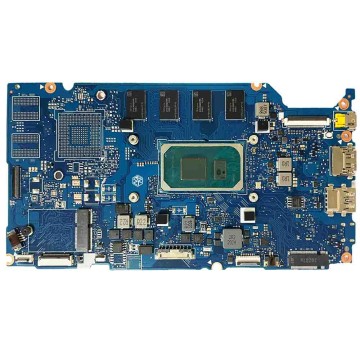
Consumer Electronic Circuit Board / Computer PCBA
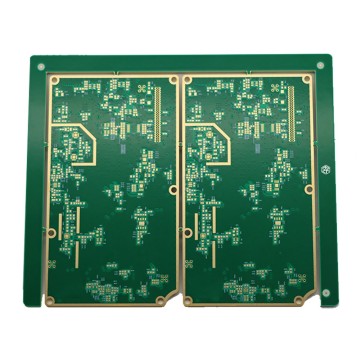
8-Layer High-Performance PCB with FR-4 and TG170 | Metal Edge & Solder Mask Plug Holes | Advanced Circuit Solution
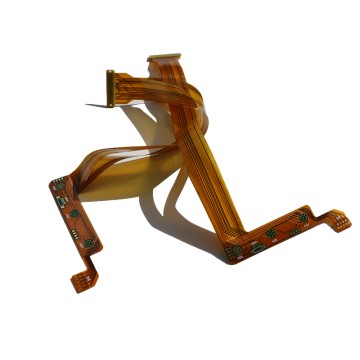
Flexible Printed Circuit Board, FPC Double-sided Board
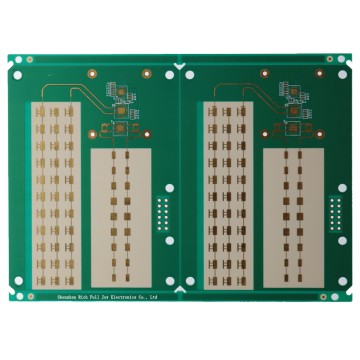
Rogers Microwave RF Automotive Radar PCB