Leave Your Message
-
E-mail
-
Whatsapp
-
Message
High-power, high-reliability circuit boards engineered for demanding automotive telematics environments
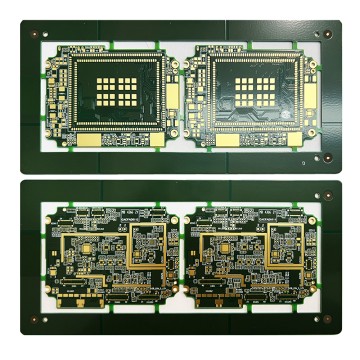
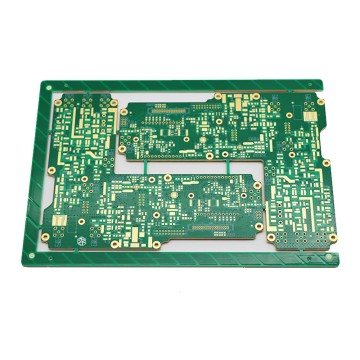
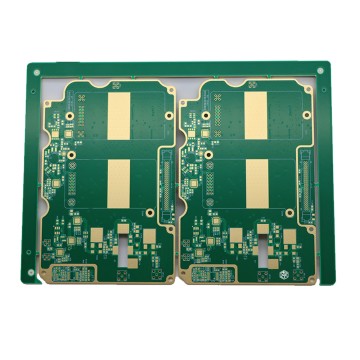
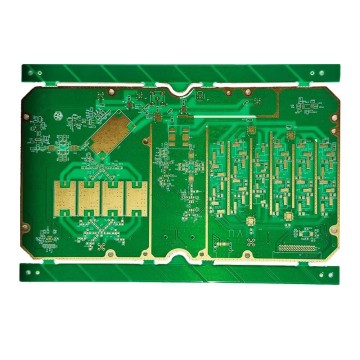
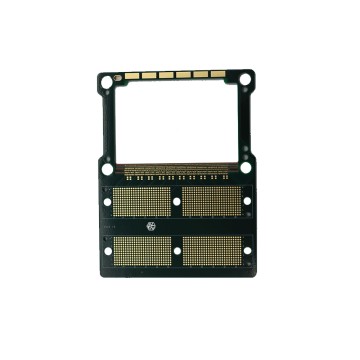
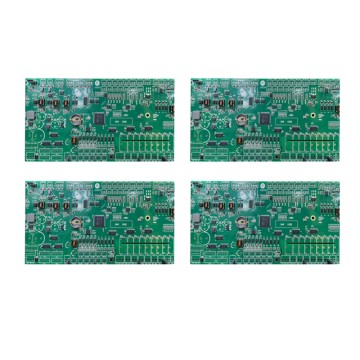
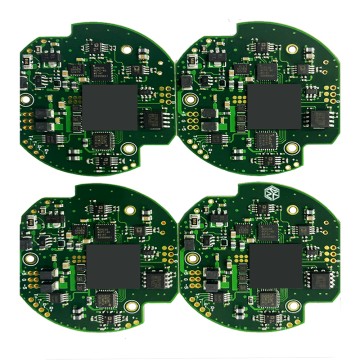
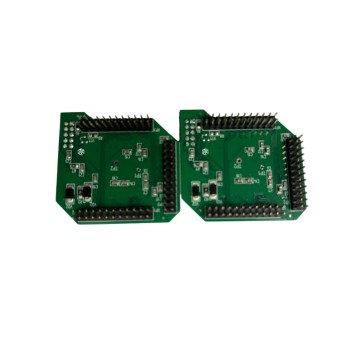
Automotive telematics PCBs (Printed Circuit Boards) are the electronic backbone of modern connected vehicles. They serve as the central hardware platform integrating GPS tracking, cellular communication (4G/5G), vehicle diagnostics (OBD-II), real-time data transmission, and advanced driver-assistance systems (ADAS) into a single, compact, and ruggedized circuit board assembly. In high-power automotive applications — including electric vehicles (EVs), hybrid electric vehicles (HEVs), commercial trucks, and industrial fleet systems — these PCBs must handle elevated current loads, wide thermal ranges, and persistent mechanical vibration while maintaining absolute signal integrity.
Unlike standard consumer electronics PCBs, automotive telematics boards are engineered to the stringent requirements of IATF 16949, AEC-Q100, and ISO 26262 functional safety standards. They operate reliably from -40°C to +125°C, withstand humidity, corrosive chemicals, and shock loads exceeding 50G — conditions that routinely destroy conventional circuit boards. As vehicles become smarter and more electrified, the role of the telematics PCB has expanded far beyond simple GPS tracking into a sophisticated, multi-domain electronic platform.
High-power automotive applications impose unique electrical and thermal challenges on telematics PCBs. Battery management systems (BMS) in EVs require PCBs that can monitor hundreds of individual cells while switching high-current circuits safely. Onboard charging units (OBCs) demand thick-copper PCB layers — often 3 oz to 6 oz copper — to carry currents exceeding 50A without excessive heat buildup. Inverter control boards must process PWM signals at switching frequencies above 20 kHz while isolating high-voltage (400V–800V) bus systems from low-voltage logic circuitry.
To meet these demands, leading manufacturers like Shenzhen Rich Full Joy Electronics deploy advanced PCB technologies including HDI (High Density Interconnect) stackups, embedded copper coin heat spreaders, Rogers high-frequency laminates, and hybrid pressing techniques that combine different dielectric materials in a single board. The result is a telematics PCB that delivers the signal performance of a telecommunications board with the thermal robustness of an industrial power electronics platform.
Why high-power automotive telematics PCBs demand specialized manufacturing expertise
Heavy copper layers (2–6 oz) and embedded bus bars enable telematics PCBs to safely carry high currents in EV battery management, inverter control, and DC-DC converter applications without thermal runaway.
Rogers RO4350B and hybrid laminate stackups maintain controlled impedance for 5G-V2X, GNSS, and DSRC antenna interfaces, eliminating signal loss in safety-critical telematics communication channels.
Thermal vias, copper coin inserts, and aluminum-backed substrates dissipate heat from power components, ensuring stable operation across automotive temperature grades from -40°C to +125°C.
Every telematics PCB is manufactured under automotive quality management systems, with full traceability, FMEA documentation, and functional safety analysis aligned to ASIL-B and ASIL-D requirements.
Any-layer HDI technology with laser microvias enables ultra-dense component placement for telematics SoCs, V2X modems, and ADAS processors in space-constrained automotive ECU packaging.
From PCB design review and material selection through SMT assembly, functional testing, and IATF-certified shipping — a complete supply chain under one roof reduces lead times and quality risk.
The automotive telematics PCB market is experiencing unprecedented growth driven by electrification, connectivity, and autonomy
The global automotive telematics market was valued at approximately USD 62 billion in 2023 and is projected to surpass USD 150 billion by 2030, growing at a CAGR exceeding 13%. This explosive growth is directly translating into surging demand for high-performance telematics PCBs capable of supporting the next generation of connected, electrified, and autonomous vehicles. Every new vehicle platform — from passenger EVs to autonomous delivery robots — requires multiple telematics ECUs, each containing one or more sophisticated printed circuit board assemblies.
In the high-power segment specifically, the EV revolution has been the single largest driver. Global EV sales exceeded 14 million units in 2023, and each EV contains significantly more PCB content than a conventional internal combustion engine vehicle. Battery management systems alone require high-power telematics PCBs with precision analog front-end circuits, isolated CAN/LIN communication interfaces, and high-current switching capabilities. As battery architectures shift from 400V to 800V platforms (as seen in Hyundai's E-GMP, Porsche Taycan, and Kia EV6), PCB voltage isolation requirements and dielectric material specifications become dramatically more demanding.
On the commercial vehicle side, fleet telematics mandates from regulatory bodies in the EU, USA, and China are compelling logistics companies to retrofit millions of trucks, buses, and construction vehicles with real-time tracking and diagnostics systems. This retrofit market alone represents a multi-billion-dollar annual opportunity for telematics PCB manufacturers who can deliver cost-effective, high-reliability assemblies at scale.
Vehicle-to-Everything (V2X) communication requires telematics PCBs to support mmWave 5G frequencies (24–40 GHz), demanding Rogers or PTFE-based high-frequency laminates, precision impedance control, and antenna-in-package (AiP) integration on the circuit board itself.
Silicon Carbide (SiC) MOSFETs are replacing silicon IGBTs in high-power inverter and OBC designs. Telematics PCBs must now accommodate SiC devices with specialized thermal interface materials, double-sided cooling structures, and ultra-low inductance power loop layouts.
Modern vehicles are moving from distributed ECU architectures to centralized zone controllers. This means fewer but far more complex telematics PCBs per vehicle — each integrating communication, power management, sensor fusion, and OTA update capabilities on a single high-layer-count board.
Radar, LiDAR, camera, and ultrasonic sensor data must be fused in real time on telematics PCBs supporting high-speed SerDes interfaces (MIPI CSI-2, LVDS, 100BASE-T1 Ethernet). HDI multilayer stackups with controlled-impedance differential pairs are essential for these designs.
Over-the-Air (OTA) software updates require telematics PCBs with dedicated secure element chips, hardware security modules (HSM), and isolated communication channels. PCB layout must minimize electromagnetic coupling between security-sensitive and high-power domains.
Tightening global environmental regulations (RoHS, REACH, EU ELV Directive) are pushing automotive telematics PCB manufacturers toward halogen-free laminates, lead-free ENIG/ENEPIG surface finishes, and recyclable substrate materials without compromising performance.
Where automotive telematics PCBs deliver critical value in high-power systems
The BMS telematics PCB is arguably the most safety-critical board in an electric vehicle. It continuously monitors cell voltage (with ±1mV accuracy), temperature, state-of-charge (SoC), and state-of-health (SoH) across hundreds of battery cells. High-power BMS PCBs must simultaneously manage active balancing circuits drawing several amps per cell, communicate over isolated CAN-FD or Ethernet interfaces, and trigger safety disconnects within microseconds. Rich Full Joy's HDI multilayer PCBs — with their precision analog routing, isolated power domains, and robust thermal management — are purpose-built for this demanding application.
Fleet management telematics units combine GPS/GNSS receivers, 4G/5G cellular modems, CAN bus interfaces, accelerometers, and power management ICs on a single compact PCB. In high-power commercial vehicle applications, these boards must survive the harsh electrical environment of a truck's 24V system — with load dump transients exceeding 60V, reverse polarity events, and conducted EMI from diesel injectors and alternators. Conformal coating, wide-temperature component selection, and robust PCB design are non-negotiable requirements.
OBC control boards manage the AC-to-DC power conversion process for EV charging, controlling PFC (Power Factor Correction) stages, LLC resonant converters, and isolated DC-DC stages. These PCBs handle switching node voltages up to 800V and gate drive currents for SiC MOSFETs. The telematics functions — communicating charging status to the vehicle's central gateway, supporting ISO 15118 Plug & Charge protocols, and logging energy data — are integrated directly onto the same board, requiring careful co-design of high-power and high-frequency signal domains.
V2X communication PCBs must operate reliably in outdoor infrastructure (RSUs) exposed to temperature extremes, UV radiation, and moisture ingress, as well as in vehicle-mounted OBUs subject to vibration and thermal cycling. The PCB must support DSRC (802.11p) or C-V2X (PC5) radio interfaces, process real-time safety messages with sub-10ms latency, and maintain GNSS timing synchronization — all while drawing minimal power from a vehicle's 12V or 48V supply.
Central ADAS domain controllers integrate telematics connectivity with sensor fusion processing, running automotive-grade SoCs (like NXP S32G, Renesas R-Car, or NVIDIA Orin) that demand PCBs with 16+ layers, DDR5 memory routing at 6400 Mbps, PCIe Gen 5 differential pairs, and power delivery networks capable of supplying 100W+ to the processor complex. These are among the most technically challenging automotive PCBs ever produced, requiring the full depth of HDI manufacturing expertise.
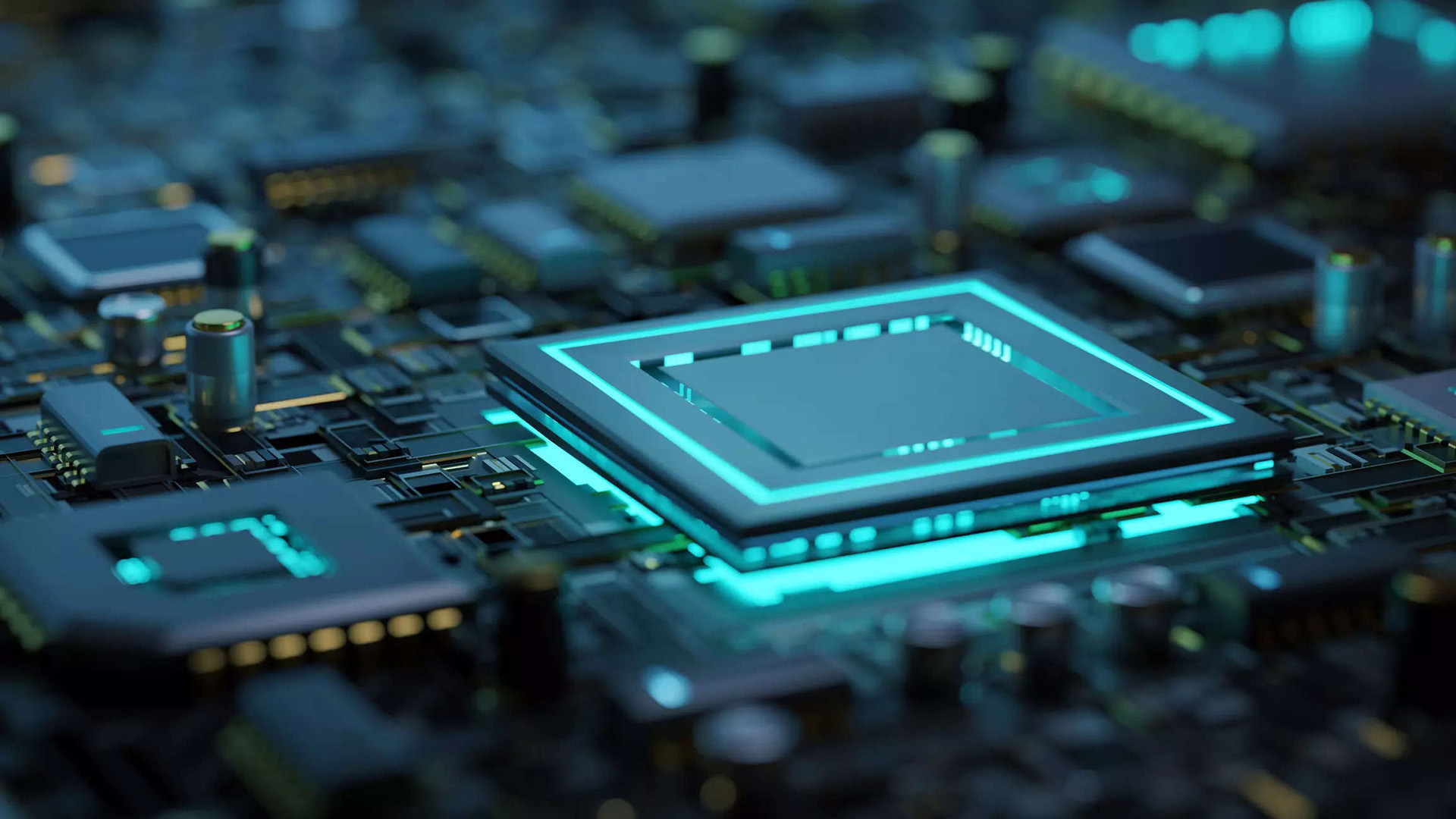
Based in China and looking at the global market, Shenzhen Rich Full Joy Electronics Co., Ltd. has been committed to industry development for 20 years. The company is a national high-tech innovative enterprise that combines focus and expertise. It's also an important enterprise incubation base in China. We specialize in providing customers with one-stop intelligent electronic manufacturing services, including scientific research, PCB design, PCB manufacturing, PCB assembly (including SMT, DIP, Programming and testing) and component selection.
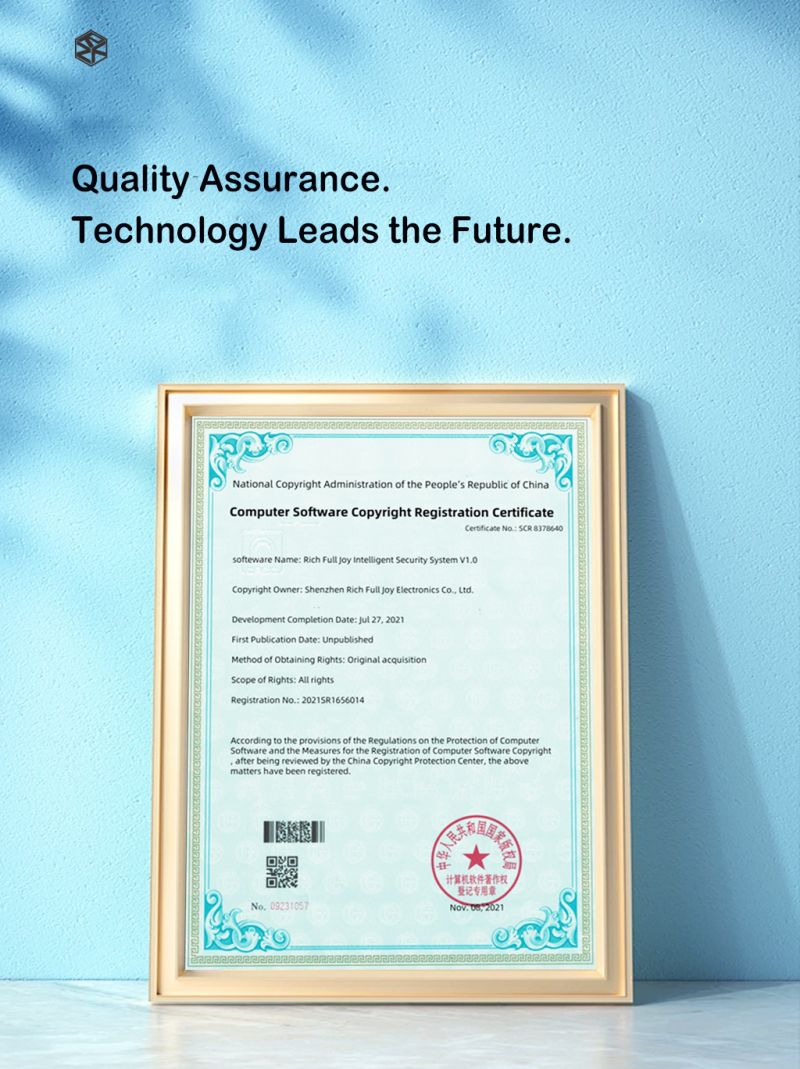
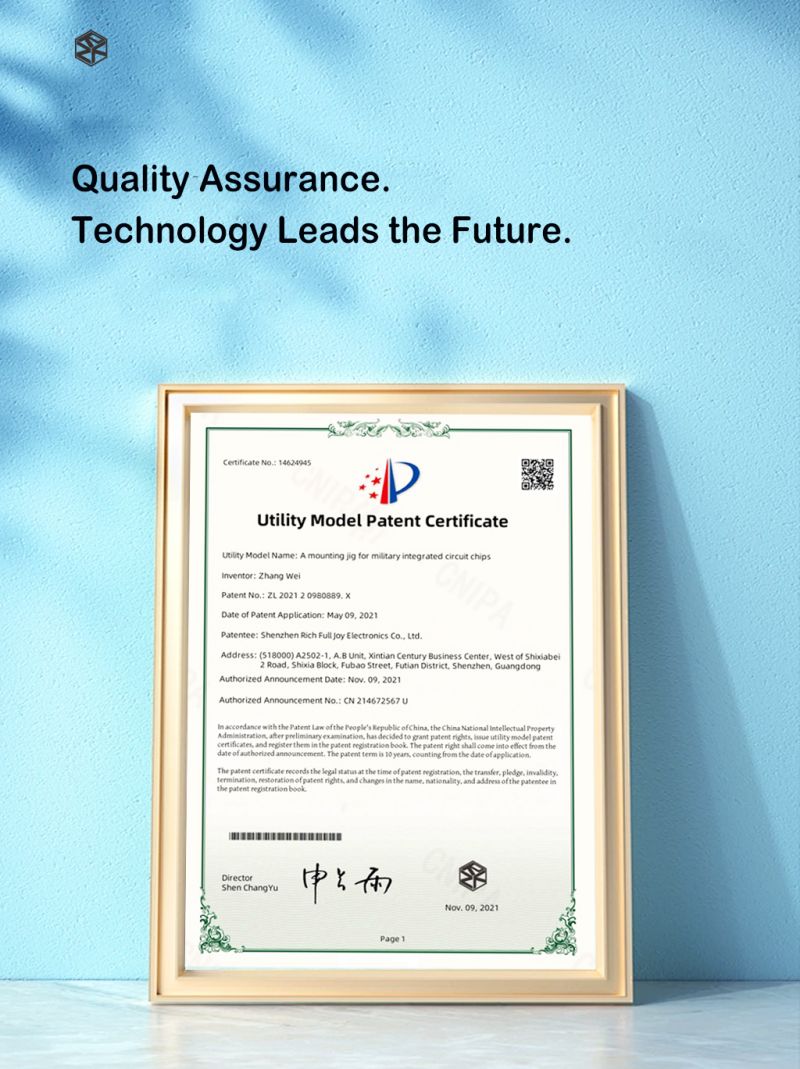
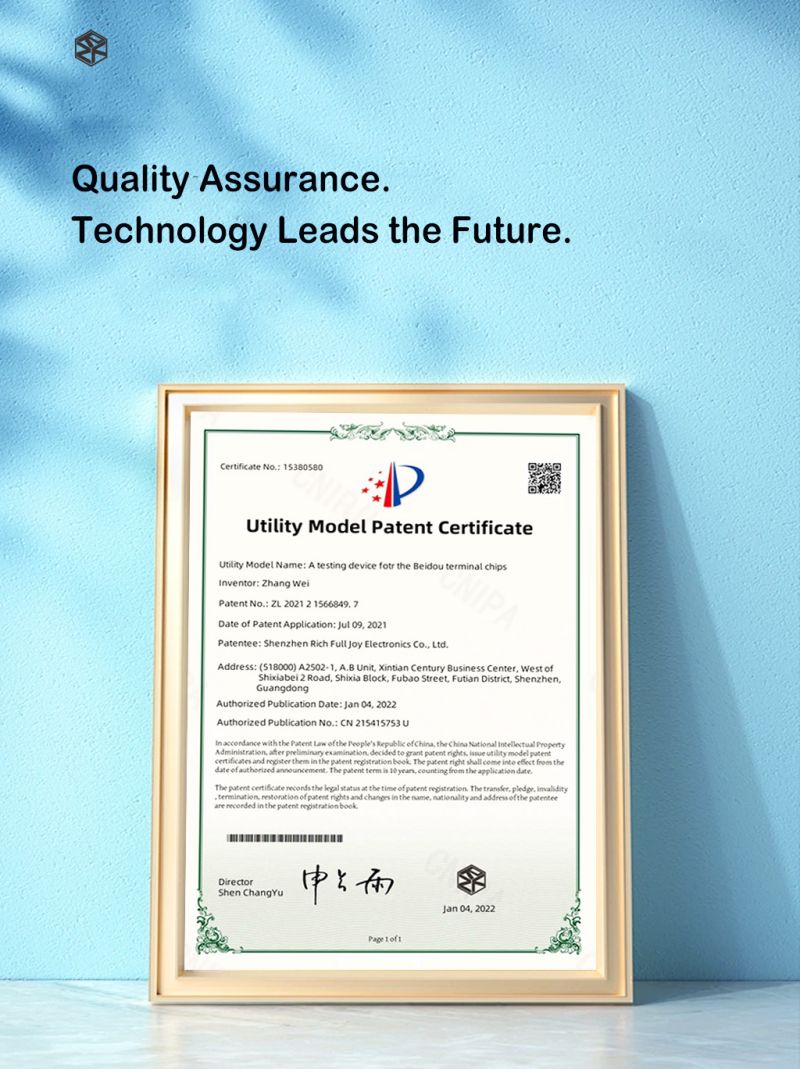
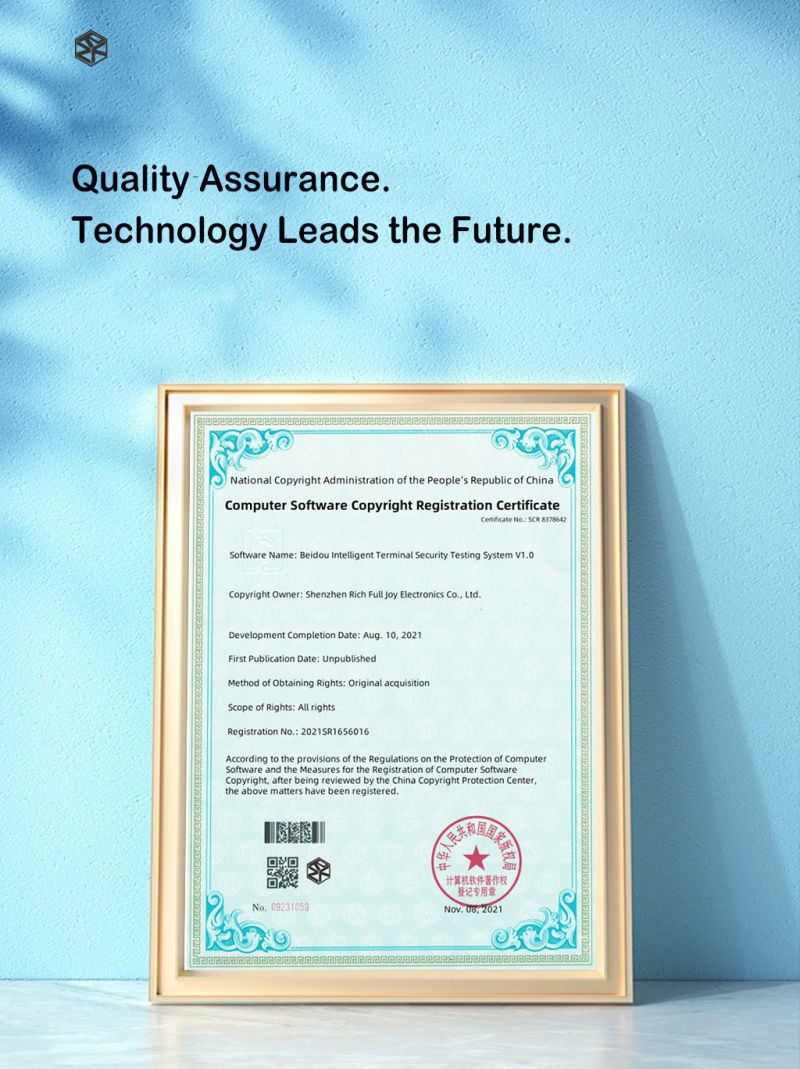
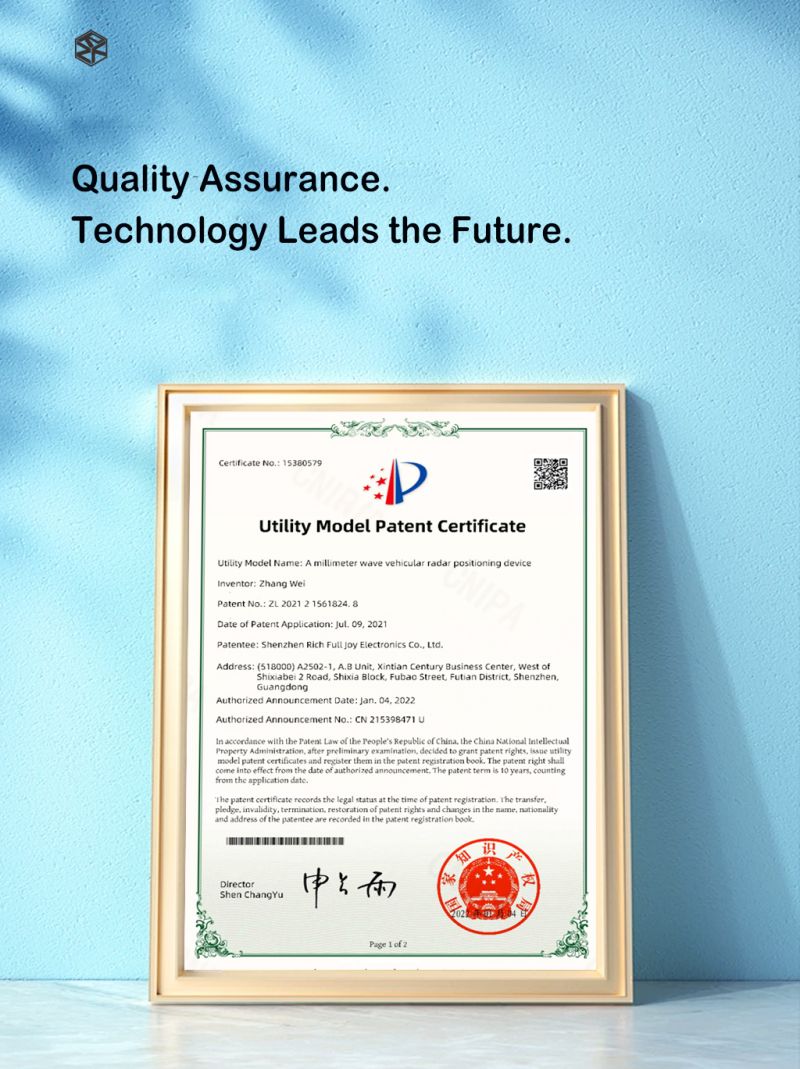
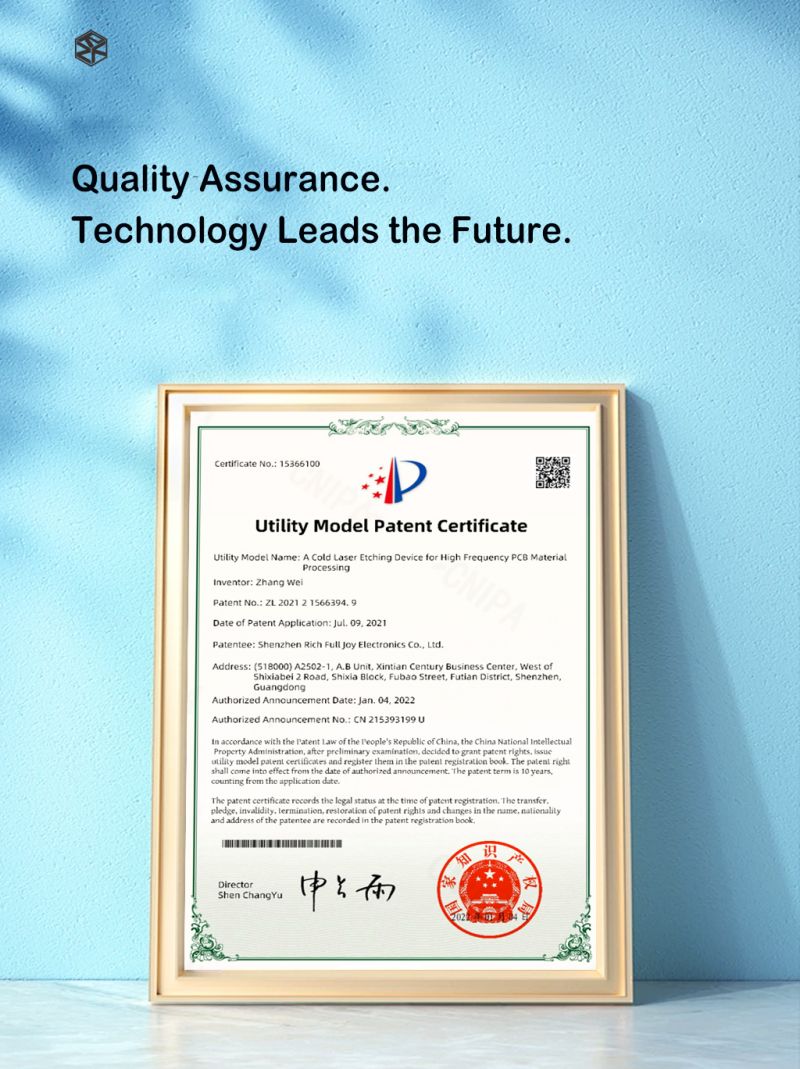
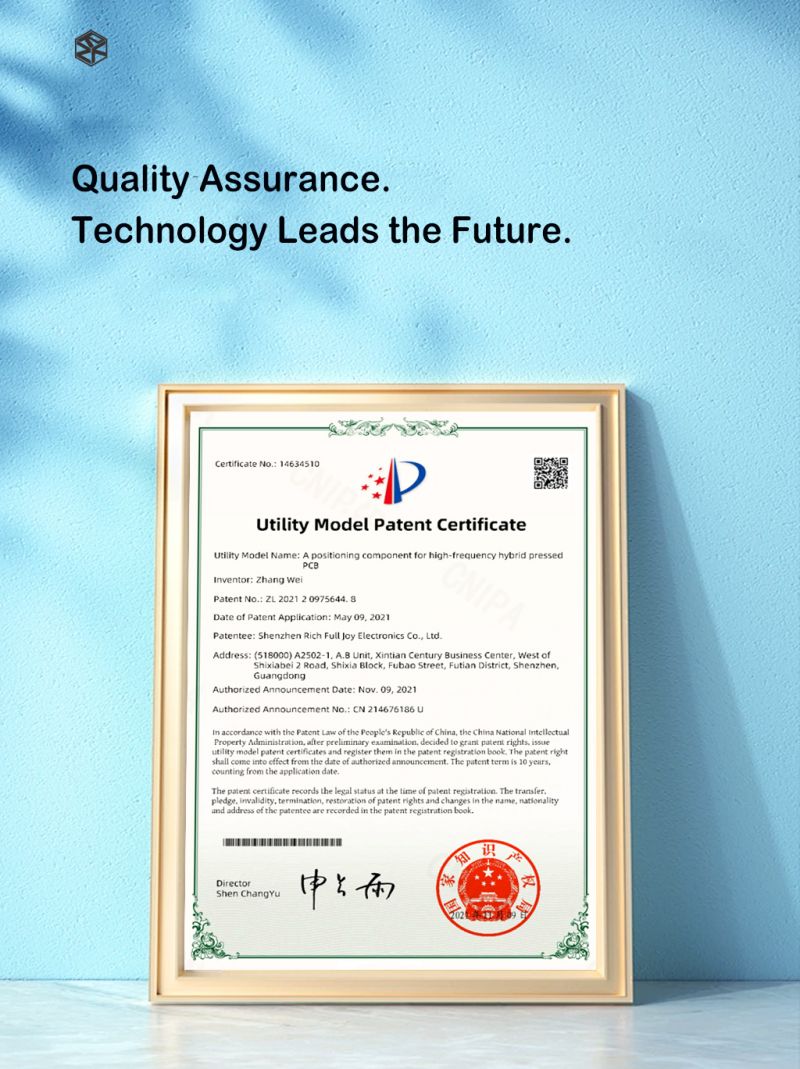
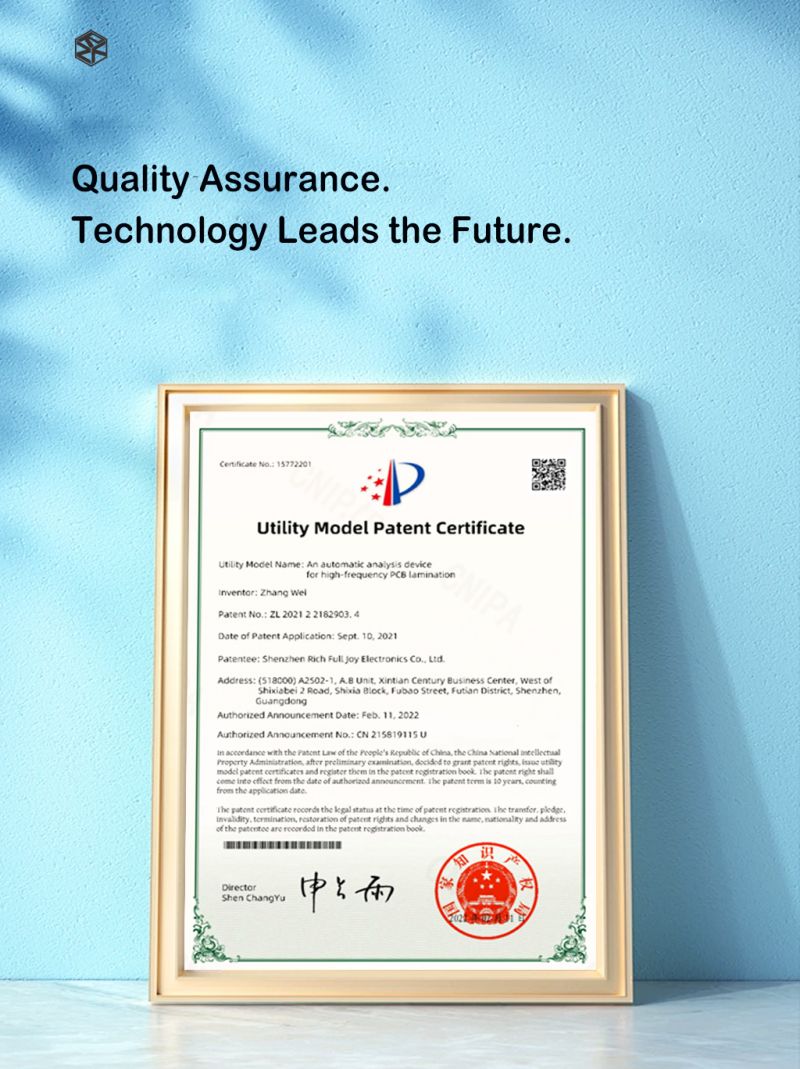
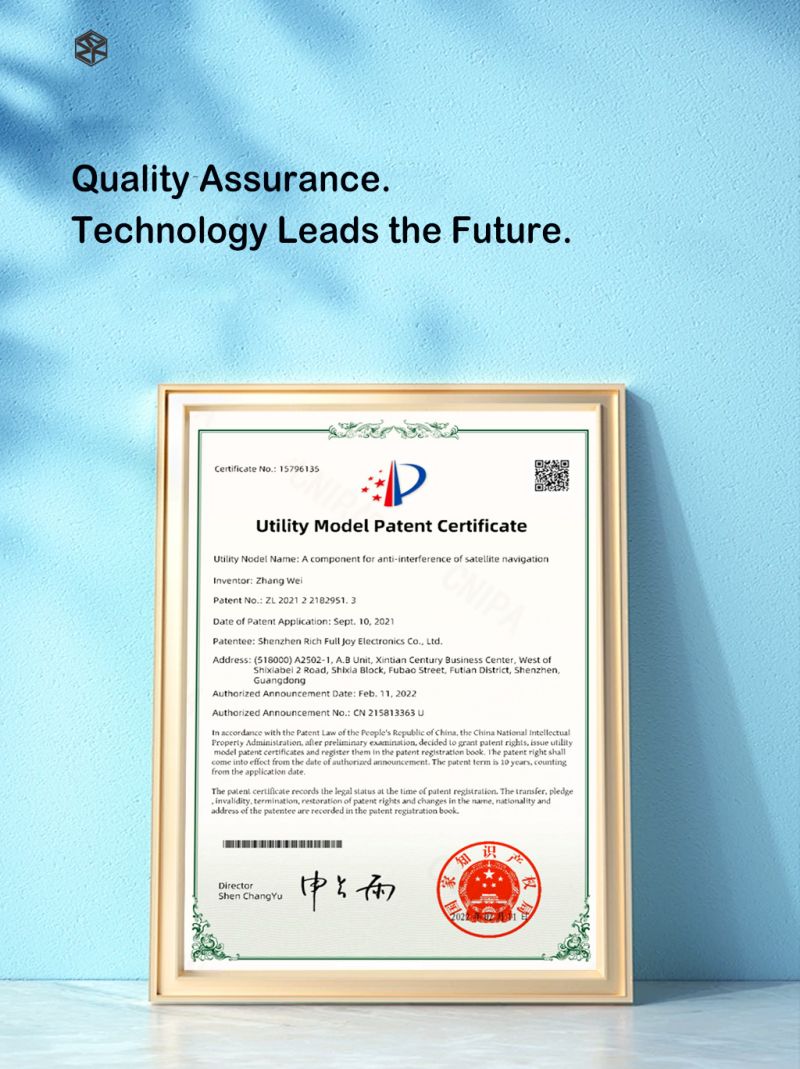
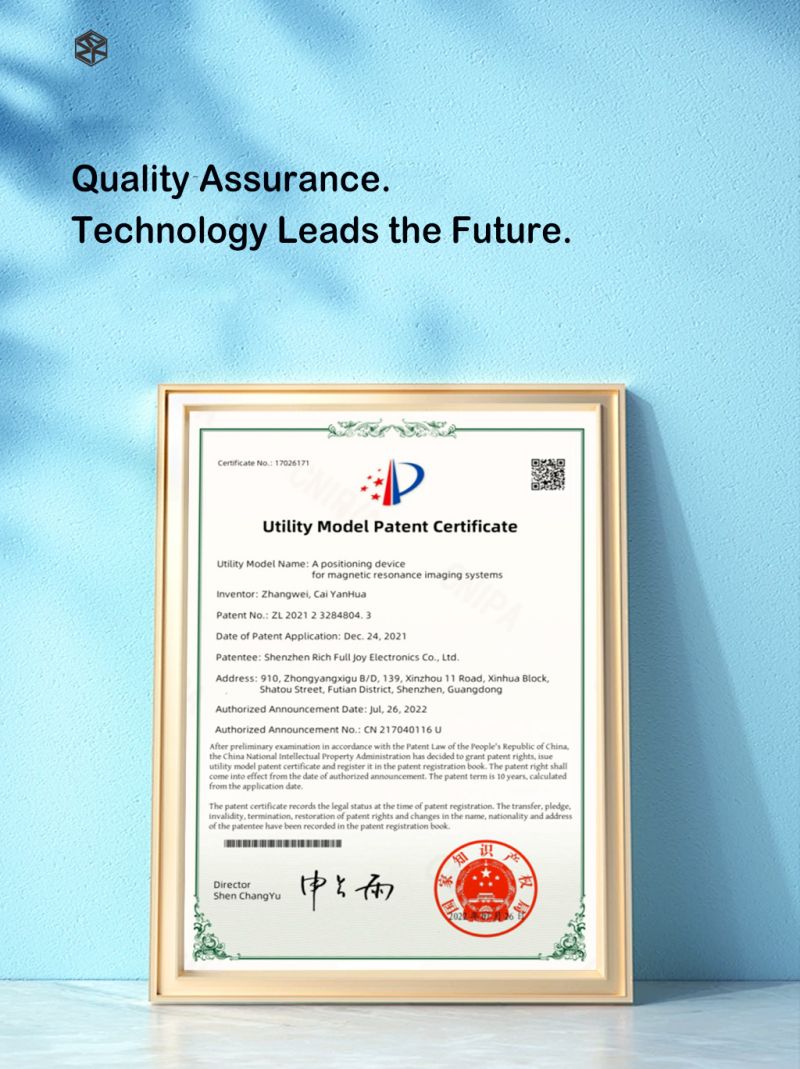
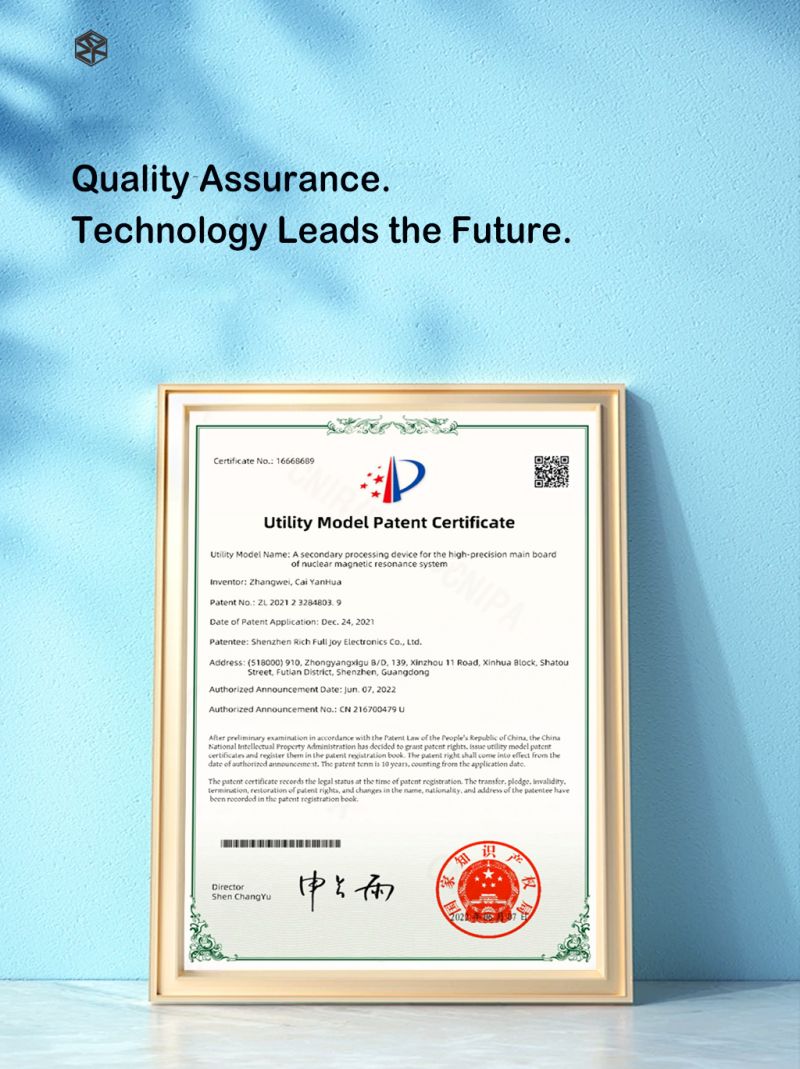
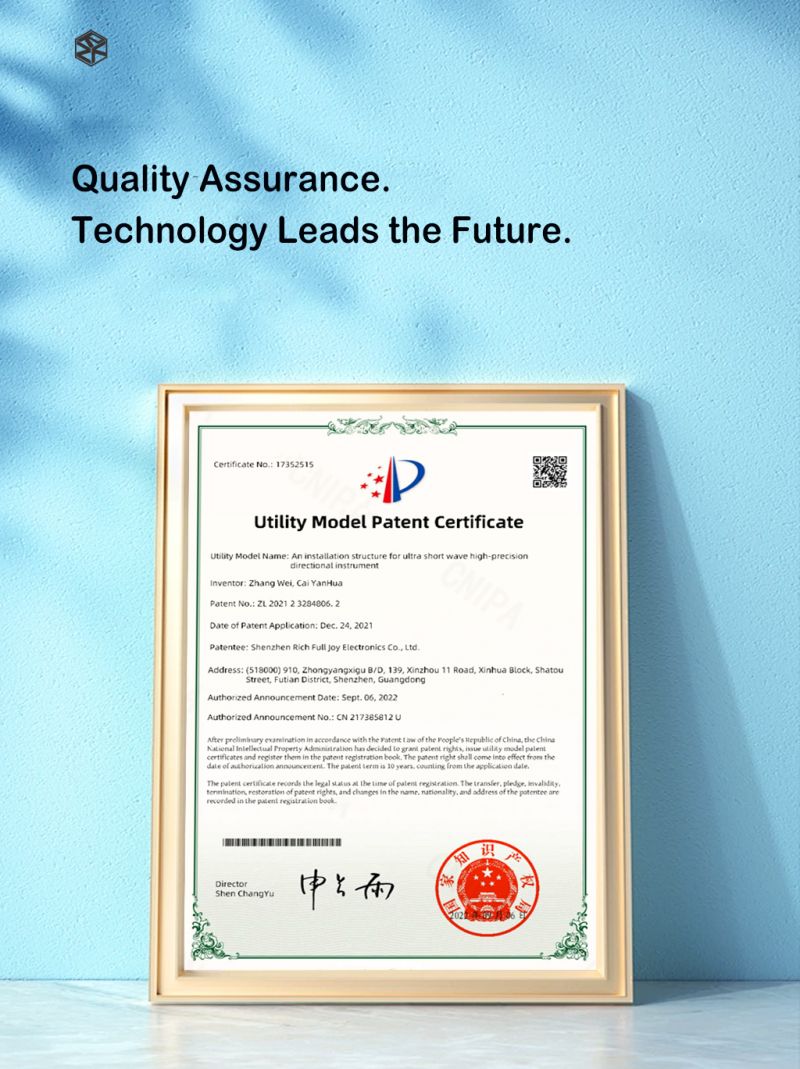
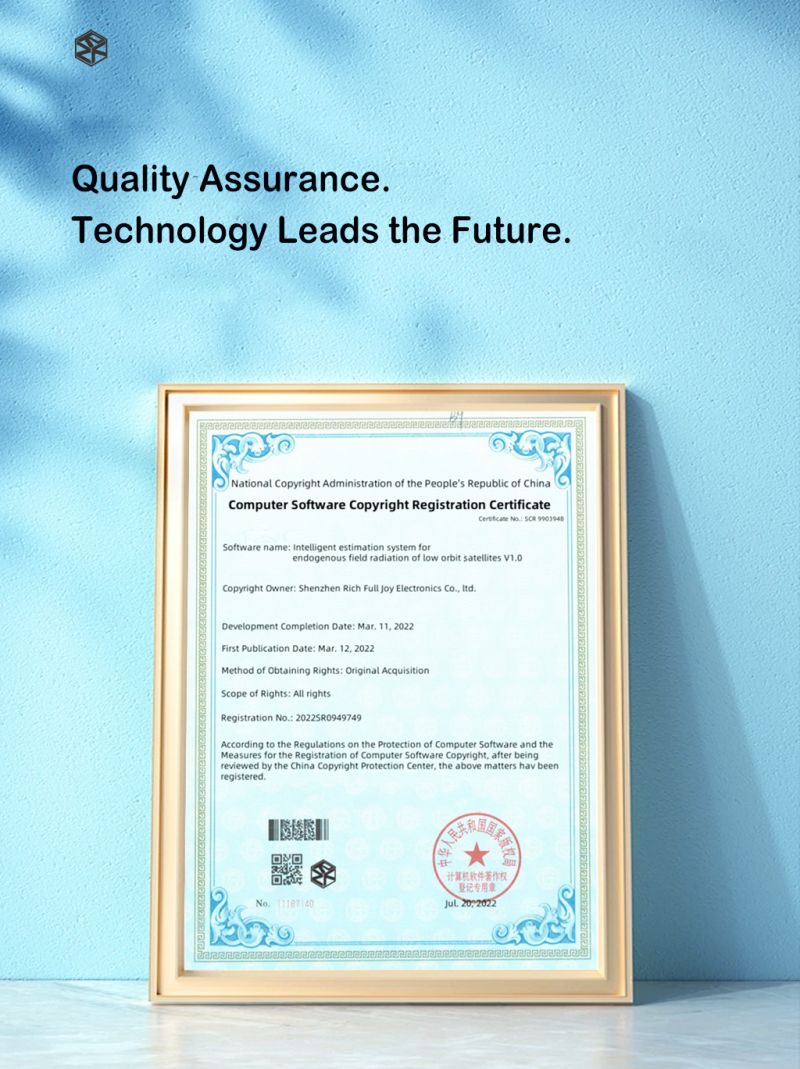
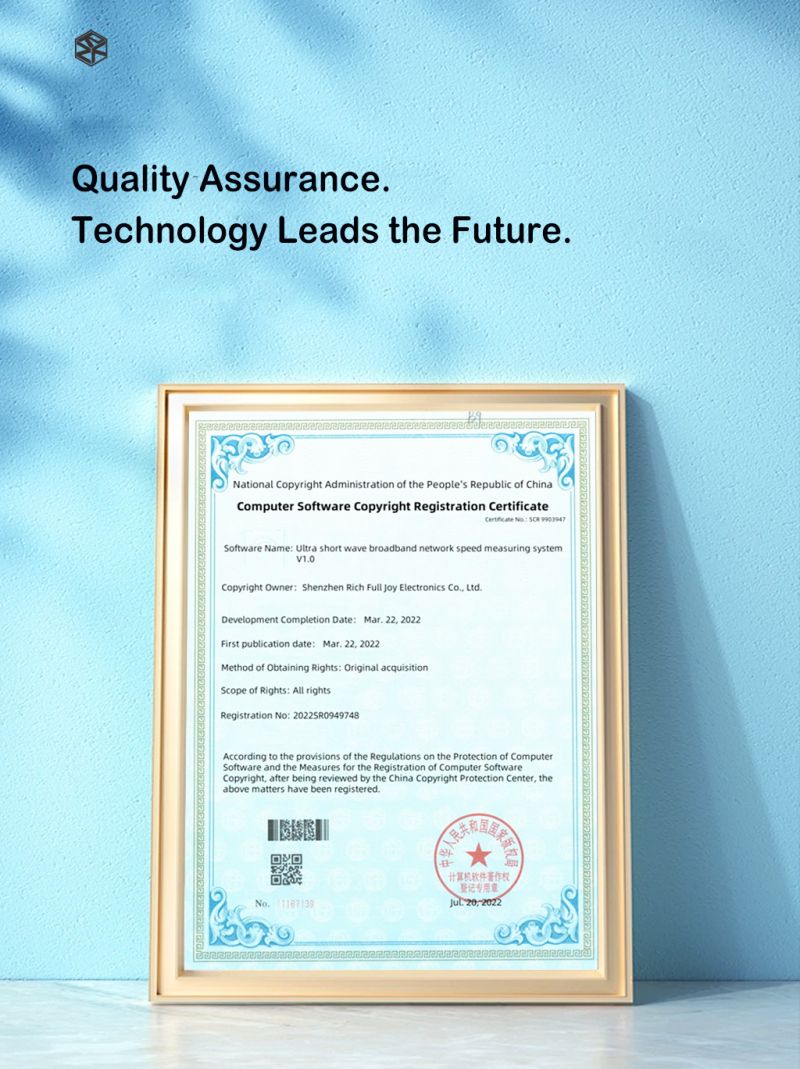
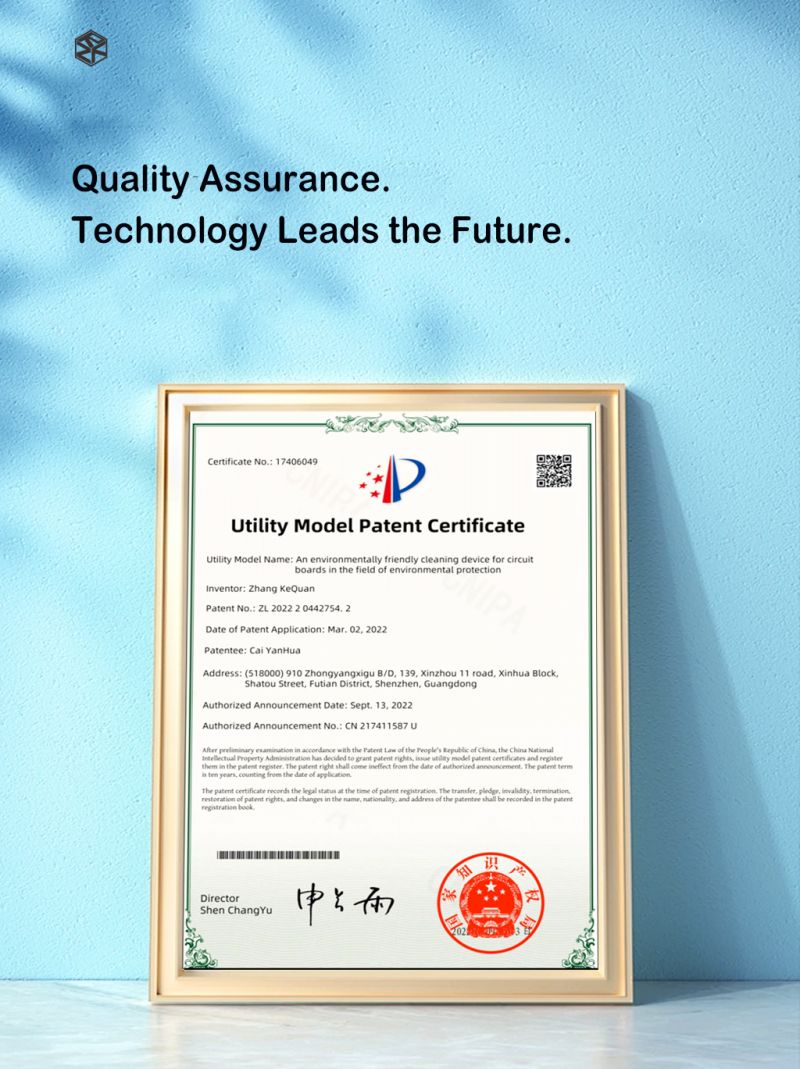
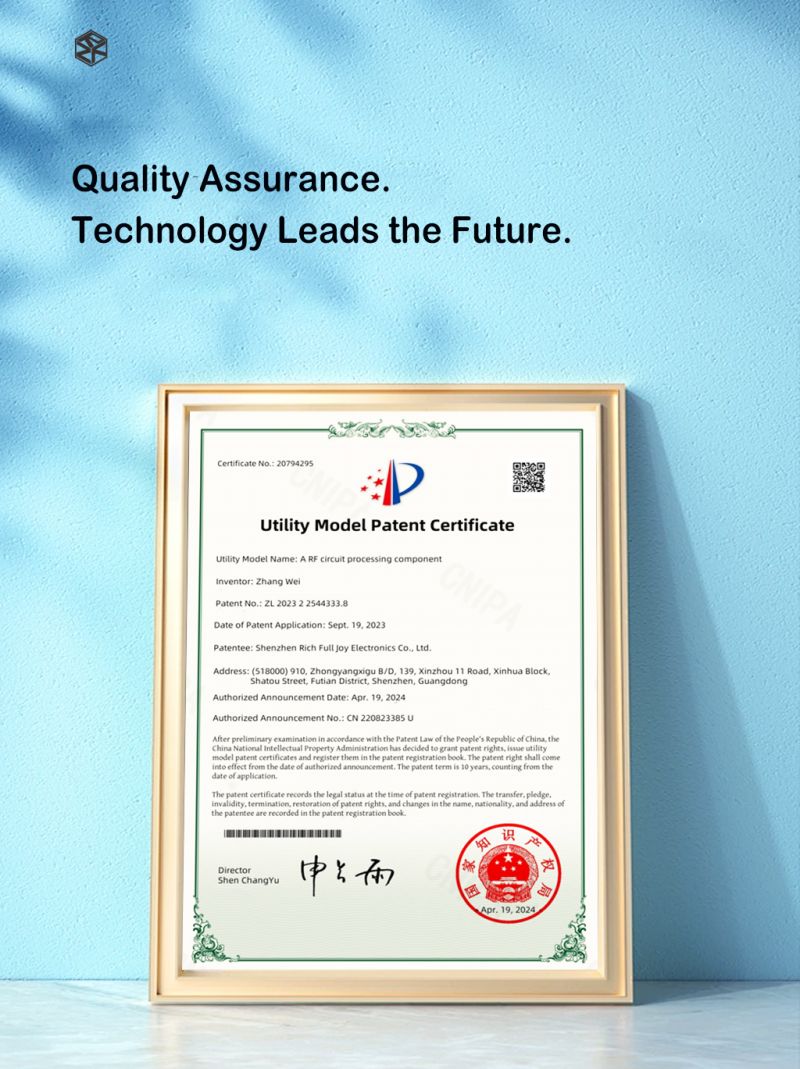
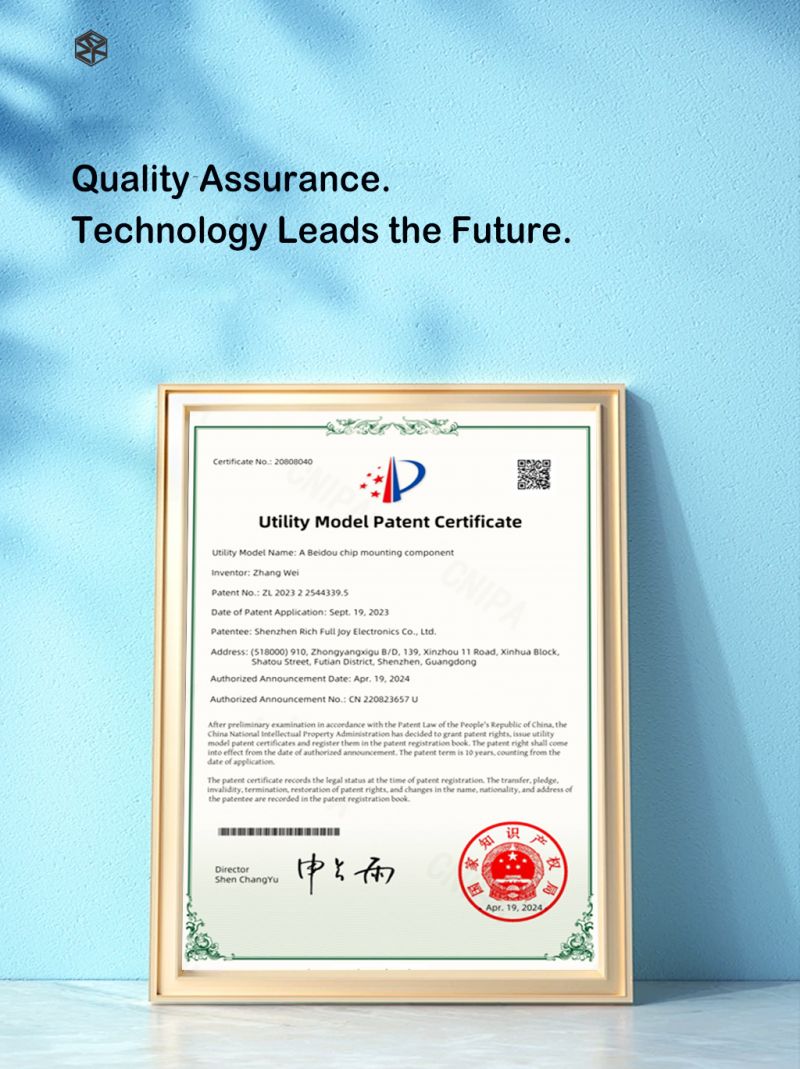
Technological innovation is the core competitiveness of our enterprise. We've obtained multiple invention and utility model patents, and have passed various international standard certifications. We've provided high-quality and reliable products to multiple research institutions, universities, and assisted customers in identifying design issues and providing reasonable suggestions and processing parameters. We not only publish technical papers, but also actively participate in domestic and overseas technology exchange conferences to spread academic value and cutting-edge technological innovation. We regularly communicate with customers and strive to provide them with the best solutions.
Our intellectual property portfolio demonstrates deep R&D capability in automotive telematics and high-power PCB technology





Explore our full range of high-power automotive PCB and PCBA solutions