Leave Your Message
-
E-mail
-
Whatsapp
-
Message
Explore our precision-engineered automotive PCB products designed for the most demanding ADAS applications — from radar signal processing to high-speed data transmission.
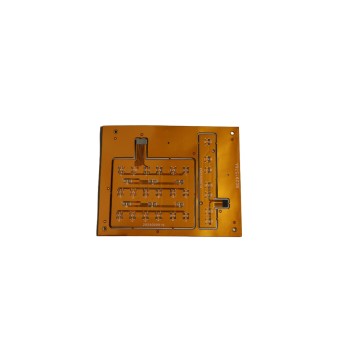
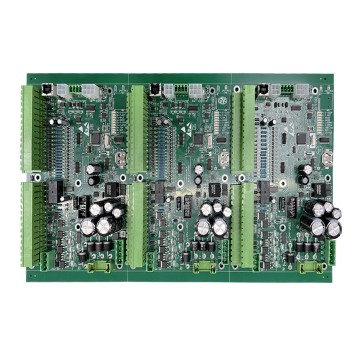
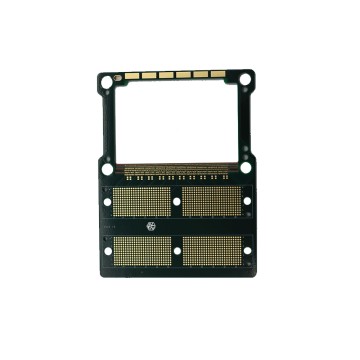
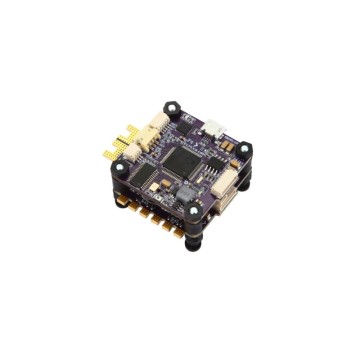
A comprehensive look at how advanced PCB technology is redefining the future of vehicle safety, autonomy, and intelligence.
Advanced Driver Assistance Systems (ADAS) represent one of the most transformative technological shifts in the automotive industry over the past decade. At the physical core of every ADAS module — whether it is a forward collision warning unit, a lane-keeping assist controller, or a full-scale autonomous driving compute platform — lies a highly specialized automotive circuit board. These printed circuit boards (PCBs) are not ordinary electronic substrates; they are precision-engineered, multi-layer assemblies that must simultaneously handle high-speed digital signals, high-frequency RF communications, thermal dissipation, and long-term mechanical reliability under extreme automotive environmental conditions.
Unlike consumer electronics PCBs, automotive circuit boards for ADAS systems must conform to AEC-Q100/Q200 component qualification standards, IATF 16949 manufacturing quality systems, and IPC Class 3 workmanship requirements. They must operate reliably across temperature ranges from −40 °C to +125 °C, withstand vibration profiles defined by ISO 16750, and maintain signal integrity at data rates that can exceed 25 Gbps in the latest domain controller architectures.
Every automotive circuit board deployed in an ADAS application is a safety-critical component. A single PCB failure in a radar ECU or camera processing unit can directly compromise collision avoidance, emergency braking, or lane-departure warning — making manufacturing precision and quality control non-negotiable.
The global ADAS market was valued at approximately USD 27 billion in 2023 and is projected to surpass USD 74 billion by 2030, growing at a compound annual growth rate (CAGR) of over 15%. This explosive growth is directly translating into surging demand for high-performance automotive PCBs. Major automotive OEMs — including Tesla, Toyota, BMW, Mercedes-Benz, and BYD — are rapidly increasing the electronic content per vehicle, with ADAS-related circuit boards now accounting for a significant share of the total automotive PCB bill of materials.
From an industrial supply-chain perspective, the automotive PCB sector is undergoing a structural transformation. Tier-1 suppliers such as Bosch, Continental, Aptiv, and Mobileye are demanding PCB partners capable of delivering:
China has emerged as one of the world's leading manufacturing hubs for automotive PCBs, with domestic producers investing heavily in automated optical inspection (AOI), X-ray inspection, and impedance-controlled production lines. This positions Chinese PCB manufacturers at the forefront of global ADAS supply chains.
Several major technological and commercial trends are converging to reshape how automotive circuit boards are designed and manufactured for next-generation ADAS platforms:
Next-generation radar systems are migrating from 24 GHz to 77/79 GHz millimeter-wave frequencies, requiring PCB laminates with ultra-low dielectric loss (Dk ≤ 3.5, Df ≤ 0.003). High-frequency hybrid stack-ups combining Rogers materials with standard FR-4 cores are becoming standard in radar front-end modules.
The shift from distributed ECUs to centralized domain controllers (e.g., NVIDIA DRIVE Orin, Qualcomm Snapdragon Ride) demands PCBs with 16–20+ layers, any-layer HDI via structures, and controlled impedance traces supporting PCIe Gen 5 and LPDDR5 interfaces at multi-gigabit speeds.
High-power compute SoCs in ADAS platforms dissipate 50–200W or more. PCB designers are integrating embedded copper coins, thermal via arrays, and metal-core substrates to manage junction temperatures and ensure long-term reliability in under-hood environments.
100BASE-T1, 1000BASE-T1, and emerging 10GBASE-T1 automotive Ethernet standards are replacing legacy CAN/LIN buses in ADAS backbones. PCBs must achieve tight differential pair impedance control (100Ω ±10%) and low-loss routing over distances exceeding 50 cm on multi-layer boards.
Tightening EU End-of-Life Vehicle (ELV) and RoHS directives are accelerating the adoption of halogen-free, lead-free PCB materials. Automotive OEMs are mandating full material declarations (IMDS) from PCB suppliers, pushing manufacturers to qualify new green laminate systems.
Artificial intelligence is being deployed in PCB layout tools to automate signal integrity analysis, EMC pre-compliance checking, and design-for-manufacturability (DFM) optimization. This is dramatically compressing design cycle times for complex ADAS circuit boards from weeks to days.
Understanding the specific PCB requirements across the full spectrum of ADAS subsystems reveals the extraordinary engineering challenges that automotive circuit board manufacturers must solve.
Forward-facing and surround-view camera ECUs process image sensor data at up to 4K resolution using ISPs and neural network accelerators. The associated PCBs require high-speed MIPI CSI-2 routing (up to 2.5 Gbps per lane), EMI shielding layers, and rigid-flex constructions to accommodate tight packaging in A-pillars and rear-view mirrors.
77 GHz radar transceiver modules demand PCBs with Rogers RO4350B or Taconic TLY laminates, precision-etched antenna patch arrays, and back-drill via processing to eliminate stub reflections. Impedance tolerances of ±2% are routinely required, pushing PCB fabrication to its technological limits.
Solid-state and mechanical LiDAR systems generate massive point-cloud data streams requiring real-time FPGA or ASIC processing. The PCBs hosting these devices feature 16–20 layer HDI constructions, embedded bypass capacitor arrays for power integrity, and controlled-impedance DDR5 memory interfaces operating at 4800+ MT/s.
The sensor fusion ECU integrates inputs from radar, camera, LiDAR, and ultrasonic sensors to build a unified environmental model. These boards are among the most complex in the vehicle, often featuring 20+ layers, any-layer blind/buried vias, high-speed SerDes traces, and power planes capable of delivering 50A+ to compute SoCs.
AEB system ECUs must respond to collision threats within milliseconds. Their circuit boards must meet ISO 26262 ASIL-D functional safety requirements, featuring redundant power supply circuits, watchdog timer hardware, and fault-tolerant CAN FD / FlexRay communication interfaces with strict EMC shielding.
Parking assistance systems use arrays of up to 12 ultrasonic sensors managed by a central PDC ECU. The PCBs for these systems prioritize low-cost multi-layer construction, automotive-grade connectors, and conformal coating for moisture resistance, while maintaining sub-millisecond sensor polling cycles.
Studies of ADAS field failures consistently identify PCB-level issues — including via fatigue, delamination, solder joint cracking, and signal integrity degradation — as primary root causes. Selecting a PCB manufacturer with deep automotive process expertise, full IPC Class 3 compliance, and robust PPAP documentation capability is therefore the single most critical supply-chain decision for ADAS system developers.
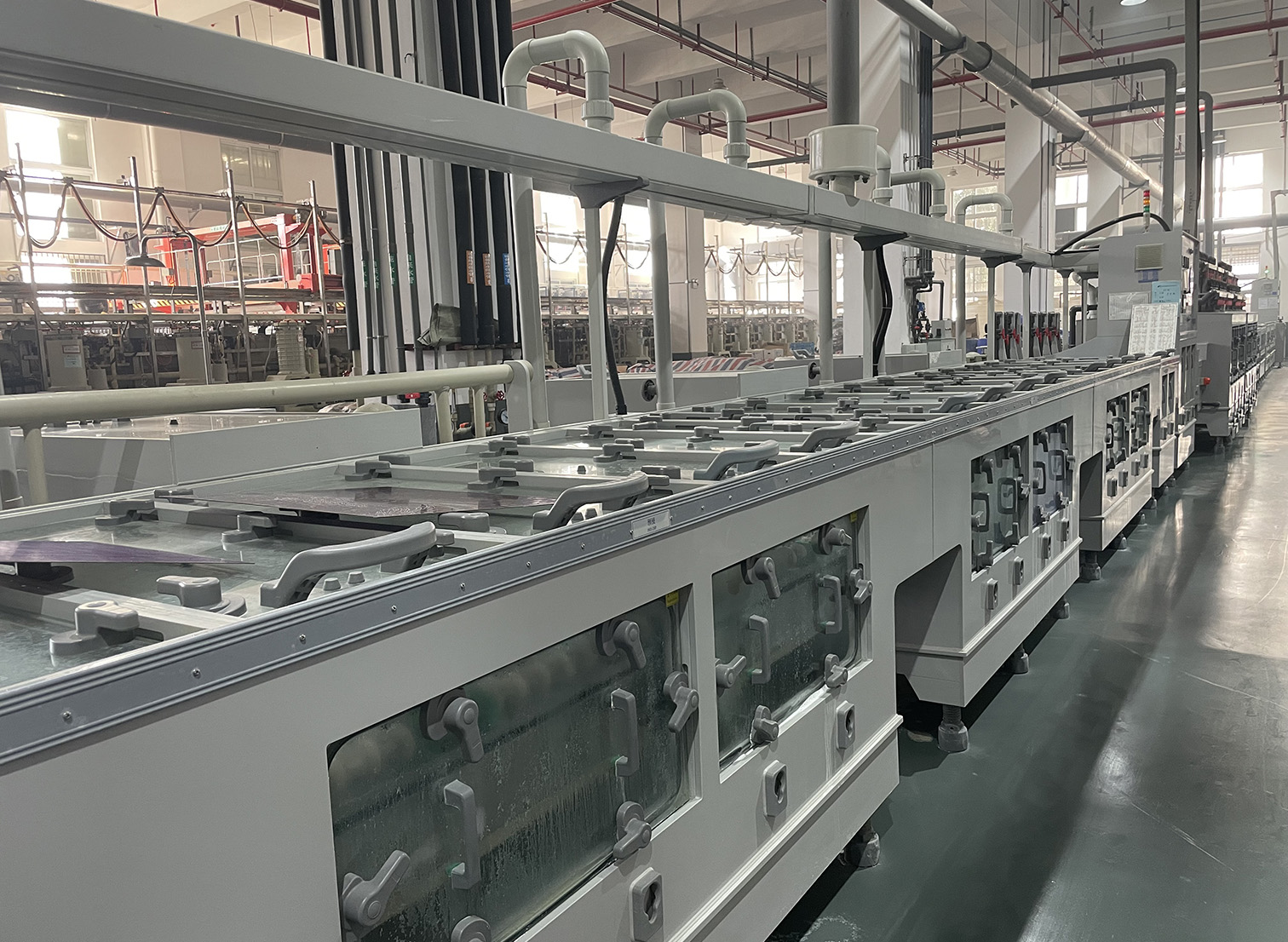
Over 20 years of PCB R&D, design and production. With a team of over 800 design engineers, striving for excellence, our service network has spread all over the world.
Our ADAS-focused engineering team brings together RF design specialists, high-speed signal integrity experts, and automotive-qualified DFM engineers to deliver circuit board solutions that meet the most demanding OEM specifications — on time and within budget.

As a company involved in the development and design of multiple scientific research products, our products are widely applied in various fields such as aviation, aerospace, automotive electronics, medical devices, industrial control, mobile terminal devices, servers, smart homes, AI applications, new energy, mini LED and testing instruments, etc.
We have a high-quality and highly capable technology R&D team, adhering to the development concept of high-end brands and products, and serving global customers. Our products are exported to various regions of the world.
We continue to lead in the production of small batches, multiple varieties, high difficulty and high-precision products in differentiated market competition. We have complete sets of advanced automatic production and testing equipment, strictly control every process, and are committed to the meticulous and perfect quality of products.
All products strictly adopt international IPC standards for production and inspection, with 24-hour high quality one-on-one service.
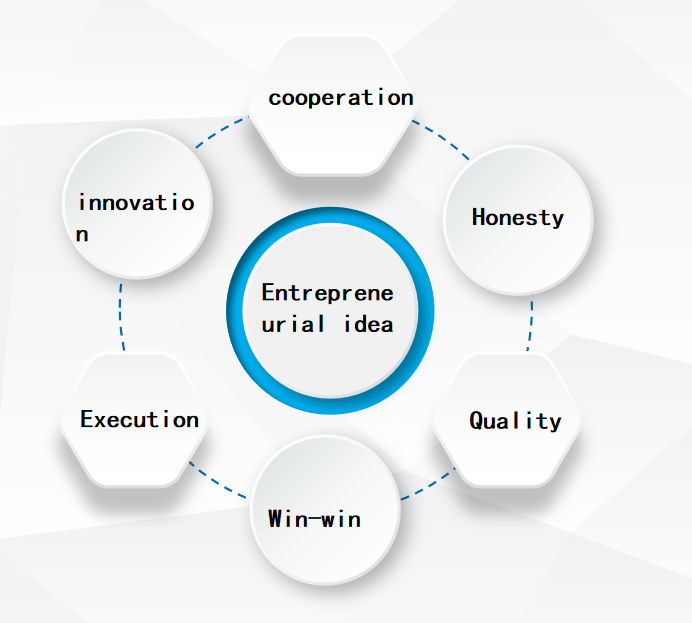
We uphold the spirit of craftsmanship to build intelligent manufacturing, leading the industry with technology and driven by technological innovation. We'll strive for excellence and become a leader in the industry, continuously strengthening our core competitiveness and establishing a leading position in various fields.
In the context of automotive circuit boards for ADAS systems, our value proposition extends beyond manufacturing: we serve as a technology partner, providing design consultation, material selection guidance, and lifecycle quality support to help our customers bring safer, smarter vehicles to market faster.
The values that drive our commitment to excellence in every automotive circuit board we produce.
Every automotive PCB we manufacture is built on a foundation of transparency, honest communication, and uncompromising adherence to quality standards — because in ADAS applications, integrity is not optional.
We continuously invest in R&D to develop next-generation PCB technologies — from embedded component boards to AI-assisted DFM — ensuring our ADAS circuit board solutions remain at the cutting edge of automotive electronics.
Superior quality and excellent service meet clients' needs and ideas, help them win the market to achieve success. Our 24/7 engineering support ensures that ADAS development programs stay on schedule.
Discover our full range of precision circuit board products engineered for automotive, aerospace, industrial, and intelligent system applications.