Leave Your Message
-
E-mail
-
Whatsapp
-
Message
High-performance PCB products engineered for demanding high-power automotive environments — from EV powertrains to RF radar systems.
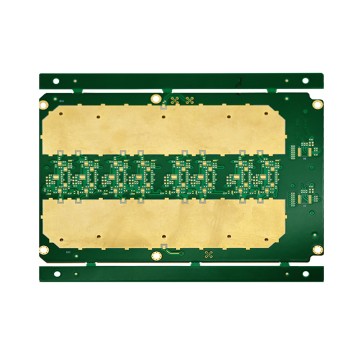
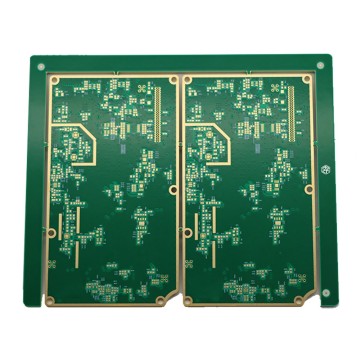
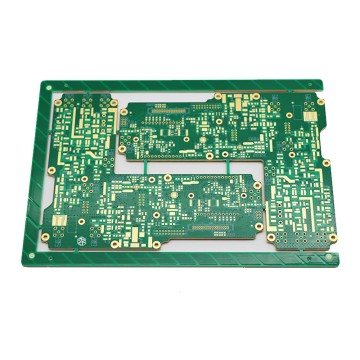
How advanced PCB engineering is reshaping the global automotive electronics industry
The global automotive electronics market is undergoing one of the most transformative shifts in its history. As the industry accelerates toward full electrification, autonomous driving, and connected mobility, the demand for robust, high-power automotive circuit solutions has never been greater. Automotive circuits — specifically those designed for high-power applications — now sit at the heart of every modern vehicle platform, from battery electric vehicles (BEVs) and plug-in hybrids (PHEVs) to advanced driver-assistance systems (ADAS) and intelligent cockpit architectures.
According to industry analysts, the global automotive PCB market is projected to surpass USD 12 billion by 2030, driven primarily by the explosive growth in EV adoption, the proliferation of onboard computing power, and increasingly stringent safety and emissions regulations. High-power automotive circuits — those managing voltages above 400V in EV battery management systems, inverters, and on-board chargers — represent the fastest-growing segment within this landscape.
Key Insight: Modern electric vehicles require PCBs capable of withstanding extreme thermal loads, high-frequency switching noise, and vibration — demanding materials and design expertise far beyond conventional consumer electronics standards.
From a commercial perspective, the automotive circuit supply chain has consolidated significantly over the past decade. Tier-1 automotive suppliers, EV startups, and traditional OEMs are all investing heavily in vertically integrated PCB manufacturing partnerships to ensure supply chain resilience and faster time-to-market. The COVID-19 semiconductor shortage exposed critical vulnerabilities in global automotive electronics supply chains, accelerating the push toward regionalized, high-quality PCB production capabilities.
Industrial applications of high-power automotive circuits extend well beyond passenger vehicles. Commercial EVs — including electric buses, heavy-duty trucks, and logistics vehicles — require even more demanding power electronics, with battery systems operating at 800V or higher. These applications demand multilayer PCBs with exceptional thermal management, high-current copper pours, and materials rated for continuous operation in harsh under-hood environments.
The charging infrastructure sector represents another booming commercial opportunity. DC fast chargers and ultra-fast charging stations (150kW–350kW) rely on sophisticated power conversion circuits built on high-frequency, high-reliability PCB platforms — often incorporating Rogers laminates, heavy copper designs, and advanced thermal interface materials.
Six forces reshaping the design, materials, and manufacturing of high-power automotive PCBs
Next-generation EVs are transitioning from 400V to 800V battery architectures, enabling ultra-fast charging and improved powertrain efficiency — demanding PCBs with superior high-voltage isolation and thermal performance.
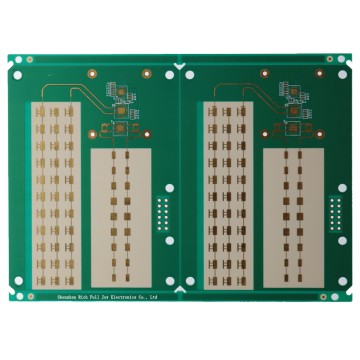
77GHz millimeter-wave radar, LiDAR signal processing, and camera fusion systems require ultra-low-loss RF substrates such as Rogers RO4350B, with tight impedance control and minimal signal degradation at high frequencies.
Power inverters, motor controllers, and onboard chargers generate intense heat. High-Tg FR-4, ceramic-filled laminates, and embedded copper coin technologies are increasingly critical for reliable thermal dissipation.
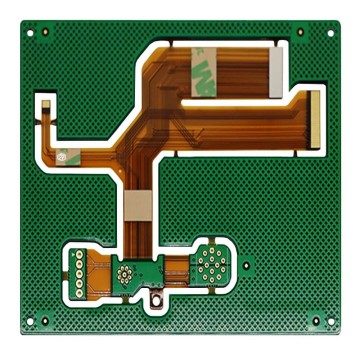
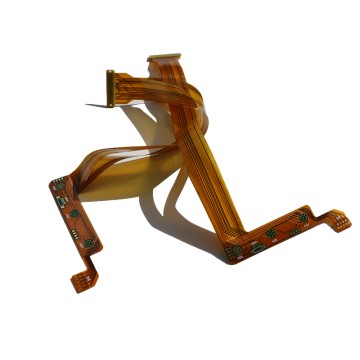
Space-constrained automotive platforms are driving adoption of rigid-flex PCBs that reduce connector counts, improve reliability in vibration-intensive environments, and enable compact 3D electronic packaging.
ASIL-B to ASIL-D safety requirements mandate redundant circuit architectures, rigorous design verification, and traceability across the entire PCB manufacturing process — from material selection to final inspection.
Machine learning algorithms are now being applied to PCB layout optimization, signal integrity simulation, and automated optical inspection — dramatically reducing design cycles and improving first-pass yields for complex automotive circuits.
Understanding where and how advanced automotive PCBs deliver critical performance advantages
The BMS is the electronic brain of every EV battery pack, continuously monitoring cell voltages, temperatures, and state-of-charge across hundreds of individual cells. BMS circuits must operate reliably in environments subject to thermal cycling, mechanical vibration, and exposure to battery electrolyte vapors. High-power BMS PCBs typically employ multilayer designs (8–16 layers) with heavy copper traces, high-Tg materials (TG170+), and conformal coating for environmental protection. Precision analog front-end circuits demand exceptional signal integrity, making controlled impedance and low-noise power distribution networks essential design requirements.
The traction inverter converts DC battery power to the three-phase AC current that drives the electric motor — and it operates at switching frequencies of 10–20kHz with bus voltages up to 800V. PCBs in this application must manage high-current gate drive circuits, isolated power supplies, and high-frequency switching transients simultaneously. Thermal management is paramount: direct bonded copper (DBC) substrates, aluminum-core PCBs, and embedded cooling channel designs are increasingly employed to keep junction temperatures within safe operating limits. The trend toward silicon carbide (SiC) MOSFETs further elevates switching speeds and thermal demands, requiring PCB materials with low dielectric loss at high frequencies.
Onboard chargers manage the AC-to-DC conversion for Level 1 and Level 2 charging, while bidirectional DC-DC converters interface between the high-voltage traction battery and the 12V/48V auxiliary systems. These power electronics circuits demand PCBs with high creepage and clearance distances, robust via structures capable of handling high thermal cycling, and materials compliant with UL 94 V-0 flammability standards. The shift toward 11kW and 22kW OBC designs is pushing PCB power densities higher, requiring innovative thermal management solutions integrated directly into the PCB stack-up.
ADAS platforms integrate radar, camera, LiDAR, and ultrasonic sensors with powerful computing SoCs to enable features from adaptive cruise control to full autonomous driving. The RF front-end circuits for 77GHz automotive radar require low-loss, thermally stable substrates — Rogers RO4350B and similar high-frequency laminates are the materials of choice. Hybrid PCB constructions combining RF laminates with standard FR-4 layers allow cost-effective integration of digital processing and RF sensing functions in a single board. Signal integrity at 25Gbps+ data rates between radar processors and central compute units demands meticulous differential pair routing, controlled impedance, and minimized via stubs.
The modern automotive cockpit has evolved into a sophisticated digital environment featuring large-format displays, multi-zone audio systems, 5G connectivity modules, and over-the-air update capabilities. High-density interconnect (HDI) PCBs with microvias, sequential lamination, and fine-pitch BGA component mounting are standard in this domain. Thermal management of high-performance application processors and GPU chips requires careful attention to copper pour design, thermal relief patterns, and heat spreader integration. Automotive-grade components and AEC-Q100 qualification ensure reliable operation across the full automotive temperature range (-40°C to +125°C).
As vehicles adopt zonal electrical architectures to reduce wiring harness complexity, central gateway modules and power distribution units (PDUs) become critical nodes managing high-current distribution across the vehicle. These modules require PCBs with heavy copper layers (3–10oz), robust connector interfaces, and integrated bus bar structures. The transition from traditional fuse boxes to solid-state power controllers (SSPCs) places additional demands on PCB thermal performance and switching transient management.
Over 20 years of PCB R&D, design and production excellence — serving global automotive and industrial clients
With a team of over 800 design engineers, striving for excellence, our service network has spread all over the world. We support mainstream design tools including Allegro, POWERPCB, Altium Designer, Mentor Expedition, and PROTEL99se.
High speed, Analog, Data mixing; High density, High voltage, High power, RF; Backboard, ATE; FPCB, R/F PCB; Al CCL, and more advanced design types.
Up to 68 layer design, supporting 25Gbps differential signal over 100cm. Full capability for the most demanding automotive and aerospace circuit designs.
Network communication, energy, healthcare, aerospace, automotive electronics, industrial control — comprehensive design support across all major technology sectors.
As a company involved in the development and design of multiple scientific research products, our products are widely applied in various fields such as aviation, aerospace, automotive electronics, medical devices, industrial control, mobile terminal devices, servers, smart homes, AI applications, new energy, mini LED and testing instruments, etc.
We have a high-quality and highly capable technology R&D team, adhering to the development concept of high-end brands and products, and serving global customers. Our products are exported to various regions of the world.
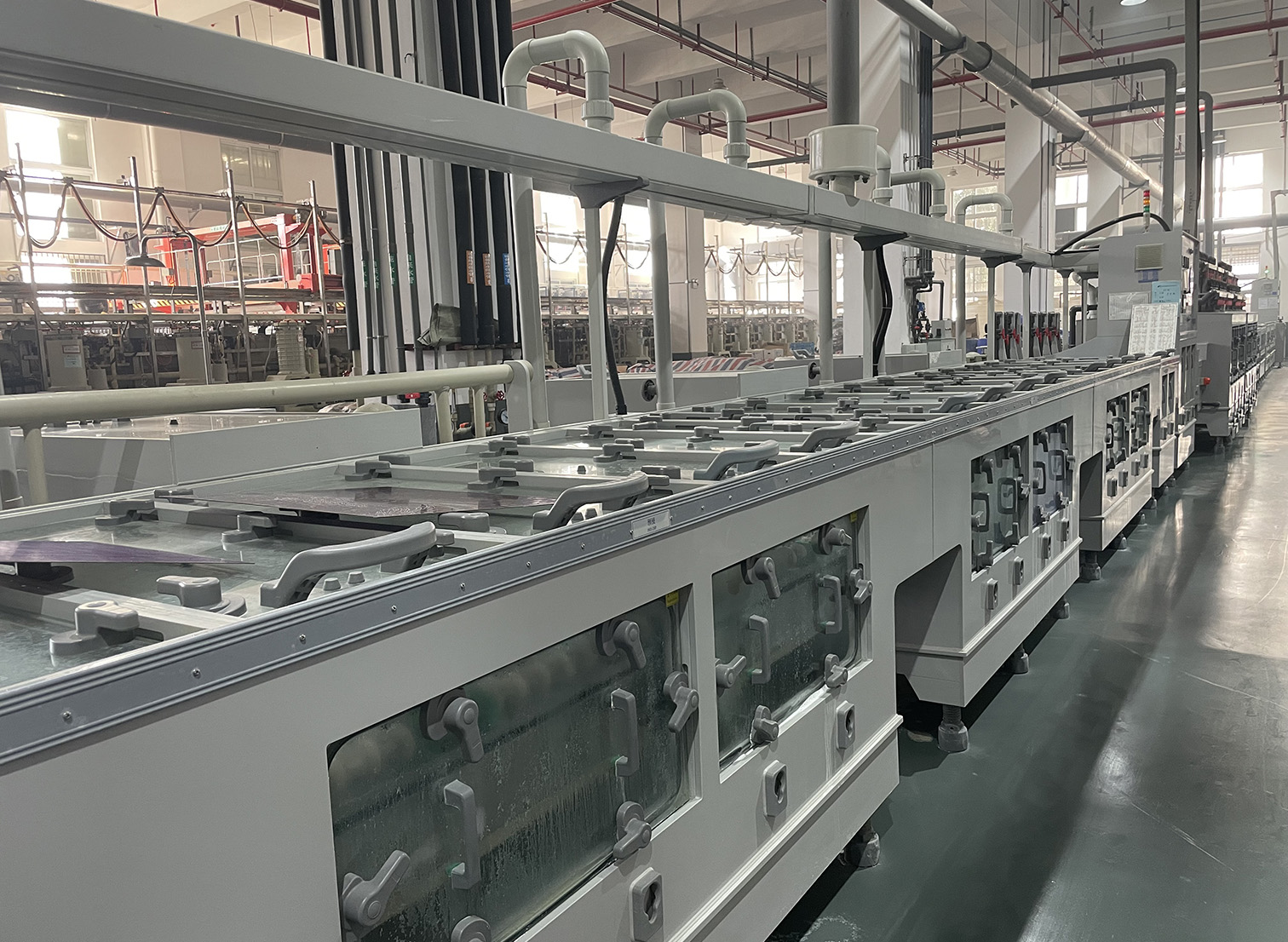
We continue to lead in the production of small batches, multiple varieties, high difficulty and high-precision products in differentiated market competition. We have complete sets of advanced automatic production and testing equipment, strictly control every process, and are committed to the meticulous and perfect quality of products.
All products strictly adopt international IPC standards for production and inspection, with 24-hour high quality one-on-one service.

We uphold the spirit of craftsmanship to build intelligent manufacturing, leading the industry with technology and driven by technological innovation. We'll strive for excellence and become a leader in the industry, continuously strengthening our core competitiveness and establishing a leading position in various fields.
In the context of high-power automotive circuit manufacturing, our value proposition is clear: delivering circuits that meet the most stringent automotive quality standards while enabling our customers to bring safer, smarter, and more efficient vehicles to market faster. Every PCB we produce reflects our commitment to precision engineering, material excellence, and unwavering quality assurance.
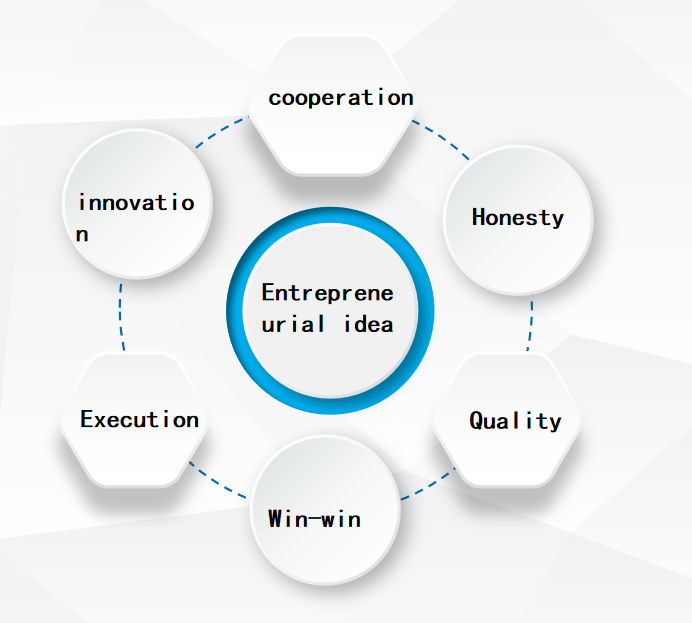
Every circuit board we manufacture is a testament to our unwavering commitment to honesty, precision, and craftsmanship excellence.
We continuously invest in R&D, advanced manufacturing technologies, and engineering talent to stay at the forefront of automotive circuit innovation.
Superior quality and excellent service meet clients' needs and ideas, help them win the market to achieve success in the competitive automotive industry.
With over 20 years of PCB engineering expertise, 800+ design engineers, and a global service network, we deliver automotive-grade circuit solutions that meet AEC-Q100, ISO 26262, IATF 16949, and IPC Class 3 standards. Whether you need a prototype for a new EV powertrain inverter, a high-frequency radar PCB for ADAS development, or mass production of safety-critical automotive control circuits, our team has the technology, capacity, and quality systems to deliver on time, every time.
Explore our full range of advanced PCB solutions for automotive, industrial, and high-reliability applications