The world of healthcare tech is changing super quickly, and one of the main drivers behind this shift is the growing use of Medical PCBA (that's Printed Circuit Board Assembly for medical devices). If you’ve heard about the latest reports, they say the global medical device market is expected to hit around $612 billion by 2025. A big reason for this growth? Advances in electronics and how tiny these devices are getting. These Medical PCBAs are actually a big deal—they make medical devices smarter and more reliable, whether we're talking about diagnostic tools or telehealth gadgets.
Looking ahead to 2025, exciting things like the Internet of Things (IoT), AI-powered diagnostics, and personalized medicine are really starting to shape how healthcare evolves. According to a detailed report from Grand View Research, innovations in electronic components are gonna be key in creating those advanced devices that not only improve patient care but also operate more efficiently. Plus, the surge in remote patient monitoring and ‘smart’ healthcare solutions shows just how much demand there is for creative Medical PCBA designs—making healthcare more accessible and easier to manage.
In this fast-moving scene, it’s crucial for everyone involved—whether you’re a manufacturer, developer, or investor—to stay on top of the latest trends in Medical PCBA. Think focus on new materials, smarter design styles, and sticking to strict regulations. These are the factors that will determine who’s successful and how well these devices will fit into our increasingly connected health world. As we explore these trends, one thing’s clear—these tech advancements won’t just improve how devices work, they’ll also help build a stronger, more resilient healthcare system for everyone.

Emerging PCB Technologies in Medical Devices for Enhanced Performance
The landscape of medical technology is rapidly evolving, with advanced Printed Circuit Board Assemblies (PCBA) playing a crucial role in enhancing the performance of medical devices. Emerging PCB technologies are at the forefront of this transformation, enabling the development of devices that are not only more compact but also offer greater functionality. Innovations such as flexible PCBs allow for intricate designs that can conform to unique device shapes, facilitating miniaturization while maintaining performance standards.
These advancements enable manufacturers to create devices that are lighter and more ergonomic, improving usability for both healthcare professionals and patients.
Another significant trend in medical PCB technology is the integration of smart sensors and IoT capabilities. By embedding miniature sensors directly into the PCBs, devices can achieve real-time monitoring and data collection, providing critical insights for patient care. This connectivity allows for remote patient monitoring, leading to timely interventions and improved health outcomes. Additionally, advancements in materials science, such as the development of biocompatible and antimicrobial coatings, ensure that medical devices function safely within the human body while minimizing the risk of infection. As these technologies continue to evolve, they promise to deliver unparalleled performance and reliability in medical devices, significantly enhancing healthcare solutions.
Impact of Miniaturization on Medical PCBAs and Patient Care Solutions
The impact of miniaturization on medical PCBs (Printed Circuit Boards) has transformed patient care solutions significantly. As technology progresses, the demand for smaller, more efficient medical devices has surged. Miniaturization allows healthcare providers to integrate advanced functionalities into compact designs, facilitating portability and ease of use. This development is particularly crucial in the age of telemedicine, where remote monitoring and diagnostics are becoming increasingly important.
Devices like portable ECG machines or miniature glucose monitors are just a few examples of how compact designs enhance patient engagement and management.
Moreover, the miniaturization trend in medical PCBs contributes to patient safety and comfort. Smaller devices can be less invasive, reducing patient discomfort during procedures. Additionally, lightweight and compact devices are easier for patients to wear or carry, leading to higher compliance rates for chronic condition management. This trend also promotes the integration of sophisticated sensors and connectivity features, allowing for real-time data collection and analysis. As a result, medical professionals can make more informed decisions, ultimately improving patient outcomes and experiences in various healthcare settings.
Trends in PCB Materials: Biocompatibility and Sustainability in Healthcare
The evolution of medical PCBA (Printed Circuit Board Assembly) technologies is increasingly influenced by the growing demand for biocompatible and sustainable materials in healthcare applications. As the medical industry pushes towards innovative solutions, manufacturers are exploring advanced PCB materials that not only meet stringent regulatory standards but also prioritize patient safety and environmental impact. Biocompatibility is essential for devices that interact with human tissues, as materials must minimize any adverse reactions while ensuring effective performance. This focus on safe materials ensures that technologies used in critical healthcare equipment, such as implants and diagnostic devices, contribute positively to patient outcomes.
In parallel, sustainability has become a pivotal trend in the development of medical PCBAs. The healthcare sector recognizes the importance of reducing its ecological footprint and is increasingly incorporating eco-friendly materials and processes in manufacturing. This shift not only addresses environmental concerns but also enhances the public perception of healthcare organizations as responsible and forward-thinking. The use of recyclable materials and eco-conscious manufacturing techniques in PCB production reflects a broader commitment to sustainability in healthcare, promising a more responsible utilization of resources while maintaining the efficacy and reliability required for medical devices.
2025 Top Medical PCBA Trends You Need to Know for Advanced Healthcare Solutions
| Trend |
Description |
Impact on Healthcare |
Biocompatible Materials |
Sustainability Practices |
| Integration of AI |
Use of artificial intelligence for diagnostics and patient monitoring. |
Enhances accuracy and efficiency in patient care. |
N/A |
AI systems power predictive analytics to optimize device life cycles. |
| Telehealth Expansion |
Increased adoption of telehealth technologies due to patient demand. |
Provides access to medical expertise remotely, improving patient outcomes. |
N/A |
Materials directives to minimize environmental impact in telehealth devices. |
| Wearable Medical Devices |
Growth in health monitoring wearables for real-time data tracking. |
Empowers patients with self-monitoring capabilities, leading to proactive health management. |
Silicone and TPU used for skin-contact components. |
Use of recycled materials in device casings and packaging. |
| Flexible PCB Technology |
Advancements in flexible PCB designs for compact medical applications. |
Increases versatility and integration in medical devices. |
Biodegradable polymers used in flexible designs. |
Promotes less waste and easier recycling methods. |
| IoT Connectivity |
Integration of Internet of Things to enhance device interconnectivity. |
Facilitates seamless data exchange for improved monitoring and treatment. |
Use of non-toxic metals in IoT devices. |
Focus on energy-efficient designs to extend battery life. |
Integration of IoT and Smart Technologies in Medical PCB Designs
The integration of IoT and smart technologies in medical PCB designs is revolutionizing the healthcare landscape, ushering in an era of more efficient and effective patient care. Smart medical devices are increasingly equipped with sensors that capture real-time data, allowing for continuous monitoring of vital signs and health parameters. This real-time data transmission is essential in facilitating immediate responses to patient needs, which can be crucial in critical healthcare scenarios. By embedding IoT capabilities in PCB designs, manufacturers are enabling devices to communicate seamlessly with centralized healthcare systems, enhancing the decision-making process for healthcare professionals.
Moreover, these advanced PCB designs are optimizing the functionality of medical devices while maintaining compactness and reliability. With smart technologies, the ability to manage energy consumption becomes vital, leading to the development of low-power, high-performance PCBs. These designs not only support advanced features like remote diagnostics and telemedicine but also ensure patient safety and device longevity. As the demand for connected health solutions grows, integrating IoT and smart technologies into medical PCBs will undoubtedly drive innovation, improving patient outcomes and paving the way for a more connected and health-conscious society.
Regulatory Compliance Challenges for Medical PCBA Manufacturing
The landscape of medical PCBA (Printed Circuit Board Assembly) manufacturing is increasingly influenced by the need for regulatory compliance, a significant challenge that industry players must navigate. According to a report from the Medical Electronics Association, around 70% of medical device manufacturers cite regulatory compliance as a top challenge that impacts their supply chain. This urgency is underscored by stringent standards set forth by organizations such as the International Organization for Standardization (ISO) and the Food and Drug Administration (FDA), which aim to ensure safety and efficacy in medical devices.
One critical aspect of regulatory compliance is the adherence to risk management standards outlined in ISO 14971, which require manufacturers to identify, evaluate, and mitigate risks associated with medical devices throughout their lifecycle. A recent survey from the Global Regulatory Affairs Council indicated that 60% of industry leaders believe the complexity of maintaining compliance across different regions can lead to costly delays and product recalls. This emphasizes the necessity for manufacturers to not only stay informed about evolving regulations but also to implement robust quality control processes and documentation practices that foster transparency and accountability in their operations. Staying compliant is not just about meeting regulatory demands; it is crucial for ensuring patient safety and fostering trust in advanced healthcare solutions.
2025 Top Medical PCBA Trends You Need to Know for Advanced Healthcare Solutions
This chart illustrates the key trends in medical PCBA manufacturing for 2025, focusing on areas such as Regulatory Compliance Challenges, Automation in PCB Assembly, IoT Integration, and Miniaturization of Devices.
Cost-Effectiveness in Medical PCBA Production: Trends and Innovations
Cost-effectiveness in medical PCBA production is increasingly becoming a focal point in the evolution of advanced healthcare solutions. As the demand for more sophisticated medical devices continues to rise, manufacturers are under pressure to deliver high-quality products at lower costs. Innovations in manufacturing techniques, such as automation and additive manufacturing, are revolutionizing the production landscape, enabling companies to streamline processes and reduce waste. By optimizing supply chain management and adopting lean manufacturing principles, firms are not only lowering expenses but also enhancing the speed to market for new medical devices.
In addition to improvements in production efficiency, the integration of advanced technologies such as artificial intelligence and machine learning in quality control processes has led to significant reductions in defects and operational costs. These innovations ensure that medical PCBAs meet stringent regulatory standards while maintaining cost-effectiveness. Furthermore, the advent of smart materials and miniaturization techniques enables the development of smaller, more efficient devices without compromising functionality. As these trends continue to evolve, the balance between cost and quality will be pivotal in shaping the future of medical PCBA production, ultimately leading to more accessible and affordable healthcare solutions.
Future of Telemedicine: The Role of Advanced PCBAs in Remote Healthcare
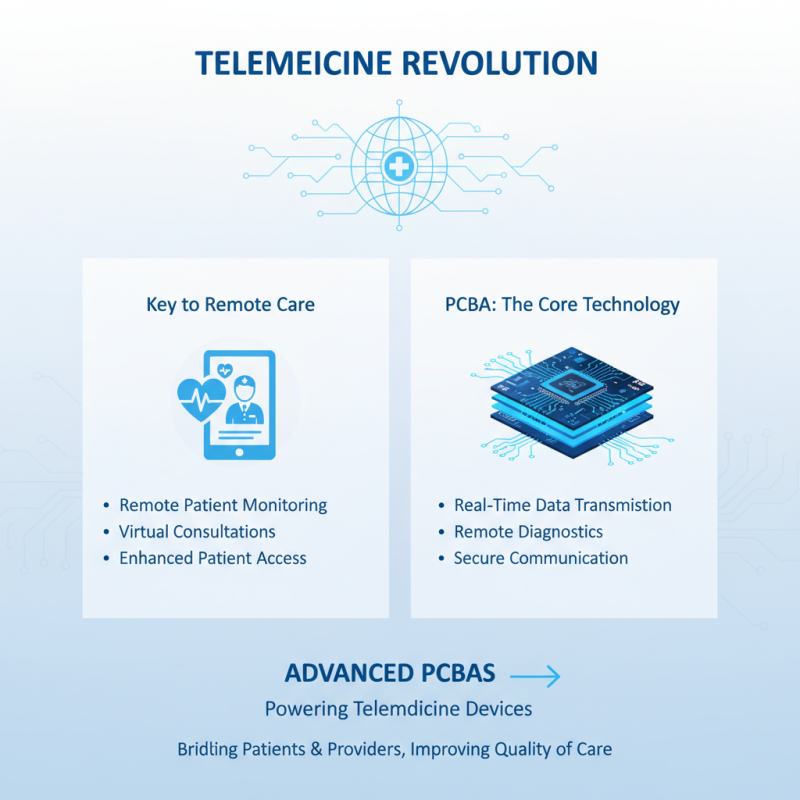
The emergence of telemedicine has revolutionized the healthcare landscape, enabling remote patient monitoring and consultation, which has become increasingly essential in today's fast-paced environment. Advanced Printed Circuit Board Assemblies (PCBAs) play a crucial role in this evolution, supporting the sophisticated technology behind various telemedical devices. By integrating cutting-edge components and technologies, these PCBAs facilitate real-time data transmission, remote diagnostics, and secure communication between patients and healthcare providers, thereby enhancing the quality of care and patient engagement.
As the demand for telehealth continues to rise, the need for reliable and efficient electronic solutions becomes paramount. Advanced PCBAs are being designed to meet specific healthcare requirements, such as miniaturization, low power consumption, and high reliability, allowing for the development of wearable devices and portable diagnostic tools. These innovations not only improve accessibility to healthcare services but also empower patients to take charge of their health through continuous monitoring and proactive management of chronic conditions. The role of advanced PCBAs in telemedicine is increasingly significant, paving the way for more personalized and responsive care delivery models in the future.
Conclusion
The article "2025 Top Medical PCBA Trends You Need to Know for Advanced Healthcare Solutions" explores the latest advancements and trends in medical PCBAs that enhance healthcare solutions. It highlights the emergence of innovative PCB technologies aimed at improving device performance and patient care. Notably, the impact of miniaturization is discussed, emphasizing its role in the development of compact, efficient medical devices. Additionally, the trend towards biocompatible and sustainable materials is underscored, reflecting the industry's commitment to safe and eco-friendly practices.
Furthermore, the integration of IoT and smart technologies into medical PCB designs is identified as a key trend, paving the way for more connected healthcare systems. The article also addresses the regulatory compliance challenges that manufacturers face in producing medical PCBAs and explores cost-effective production trends that promote innovation. Finally, the future of remote healthcare is linked to advanced PCBAs, showcasing their critical role in telemedicine and improving accessibility to medical services.