You know, in today’s crazy fast tech world, picking the right PCB assembly services for your project is super important if you want to make sure everything’s top-notch and runs smoothly. That’s where Shenzhen Rich Full Joy Electronics Co., Ltd. really shines—they're a key player in this space, bringing together deep know-how and a real dedication to doing things right. Whether you’re just getting started with a small prototype or diving into a big production run, it’s crucial to grasp the main things to think about when you’re choosing a PCB assembly partner. With the right info in your back pocket, you can make smart choices that fit your project goals while tapping into the expertise of reputable suppliers like Shenzhen Rich Full Joy Electronics. So, stick around! This blog will walk you through the key stuff you need to keep in mind to find the best PCB assembly service for your unique needs.
Understanding PCB Assembly Services: Key Factors to Consider
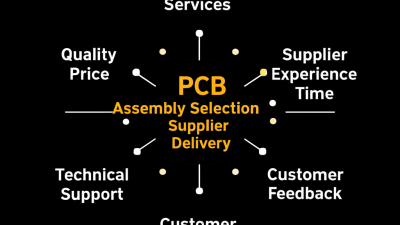
So, when you're on the hunt for the best PCB assembly services for your project, there are a few important things you really should think about. Seriously, these factors can make a big difference in how smooth and efficient your production goes. First up, check out the service provider’s background—like, how experienced are they with the specific PCB type you need? Different projects require different assembly techniques, whether it’s surface-mount technology (SMT) or good old thru-hole assembly. If a provider has a solid reputation in your industry, they can share valuable insights that might boost your product's reliability and performance.
Now, let's talk quality assurance—this is super important too. You’ll want to look for companies that really take quality control seriously throughout the entire assembly process. If they’ve got certifications like ISO 9001 or are IPC compliant, that usually means they’re committed to keeping their standards high. Plus, think about the variety of assembly services they offer. Are they just about assembling, or can they help with prototype development, testing, and even post-assembly support? A well-rounded provider can make your project flow smoothly from start to finish, which means less chance of delays and a quicker jump from prototype to mass production.
PCB Assembly Services Comparison
This bar chart visualizes a comparison between three hypothetical PCB assembly services based on key factors such as Cost, Lead Time, Quality Rating, Customer Support, and Technology Expertise, each rated on a scale of 1 to 10.
Evaluating the Capabilities of PCB Assembly Providers
So, when you're looking at PCB assembly providers, there are a few key things you really gotta think about if you want your project to succeed. First off, the location of the assembler is super important. With so many companies now leaning towards bringing production closer to home, it’s not just about saving time anymore; it also helps make the supply chain tougher and more reliable, you know? I came across a report by the Manufacturing Institute that talks about how sourcing locally boosts flexibility and responsiveness. That’s definitely a big win, especially with all the hiccups happening in global logistics these days.
Now, let’s not forget the tech skills of these PCB assembly providers. With gadgets getting more complex and safety standards tightening up, you really want to partner with someone who’s in tune with the latest international regulations and tech trends. Take the EU’s AI Act as an example; it’s shaking things up for product safety. This really highlights how essential it is for assemblies to keep pace with changing requirements. There’s also some talk in the industry that providers who have a solid game plan for tech advancements are better equipped to meet the demands of today’s tech scene. So, as you're checking out potential PCB assembly partners, make sure to favor those with a solid history of adapting to these fast changes, all while keeping their quality and compliance in check.
The Importance of Industry Certifications in PCB Assembly
You know, in the world of PCB assembly services, industry certifications are super important. They really help to build trust and make sure everything’s up to par. When you see certifications like ISO 9001 or IPC-A-610, it’s not just fancy letters; they show that a company follows some pretty strict manufacturing standards. Plus, it gives customers peace of mind. In fact, some recent reports say that businesses with recognized certifications are 50% more likely to win contracts. That’s a big deal! These certifications really do reflect a company’s dedication to quality and safety, which is crucial in electronics since mistakes can lead to serious financial losses or even safety issues.
Plus, certain certifications target specific fields, like AS9100 for aerospace or IATF 16949 for automotive, ensuring that PCB manufacturers meet the tough standards needed for these complex sectors. A study from IPC even found that 70% of manufacturers saw notable boosts in their operational efficiency after earning these industry certifications. So, when you’re picking a PCB assembly partner, it’s essential to choose one that not only has the right certifications but also shows a real commitment to quality management. In this ever-changing industry, partnering with a certified manufacturer can seriously cut down on the risks tied to production errors and make your projects way more reliable.
How to Choose the Best PCB Assembly Services for Your Project - The Importance of Industry Certifications in PCB Assembly
| Criteria |
Description |
Importance |
Certification Examples |
| Quality Control |
Processes to ensure the PCB meets specifications and is defect-free. |
High |
ISO 9001, IPC-A-610 |
| Manufacturing Capability |
Ability to handle different PCB technologies and complexities. |
Medium |
IPC-6012, IPC-2221 |
| Turnaround Time |
The time required to complete the assembly process. |
High |
None specifically |
| Customer Support |
Availability of assistance during the design and assembly process. |
Medium |
None specifically |
| Cost |
Total expense associated with PCB assembly services. |
High |
None specifically |
Cost Analysis: Balancing Quality and Affordability in PCB Assembly
So, when you're diving into a PCB assembly project, you've really got to pay attention to cost analysis—it's a key player in how successful your project will be.
It’s all about striking that delicate balance between quality and affordability, especially since the competition is getting pretty fierce out there.
You'll need to think carefully about the materials and technologies you want to use versus what your budget can handle. The last thing you want is to skimp on quality just to save a few bucks.
This is where you have to dig into potential service providers and look at what they bring to the table, not just their prices.
Lately, I’ve noticed a growing trend in the manufacturing world—everyone’s leaning towards smarter production choices that prioritize efficiency and cost-effectiveness.
This is super relevant in the fast-paced worlds of electronics and fashion. Finding the right PCB assembly partner who offers a sweet spot of high-quality components and trustworthy workmanship can really help you keep costs down while still delivering a great product.
So, doing a solid market analysis to find those service providers who not only meet your quality expectations but are also reasonably priced is crucial if you want to turn your innovative ideas into reality.
Lead Time and Production Efficiency: What to Expect
So, when you’re picking PCB assembly services, two biggies to keep in mind are lead time and how efficient they are. These factors can seriously affect your project’s timeline and budget, you know? There’s this study floating around on key performance indicators (KPIs) in production, and it really emphasizes how crucial it is to take a big-picture approach to measuring efficiency. If companies can nail down their KPIs, they can really fine-tune their production workflows and, as a result, speed up those lead times. It’s super important to keep an eye on things like cycle time, defect rates, and on-time delivery – those metrics tell you a lot about how efficient an assembly service is.
Also, with the demand for electronics skyrocketing—especially with the whole energy transition and push for sustainable practices—having a flexible supply chain is more important than ever. Manufacturers that focus on building a strong, resilient supply chain aren’t just keeping up with today’s demands; they’re also gearing up for whatever comes next. The hiccups we’ve seen in global manufacturing lately really show us just how necessary it is to be agile in production. PCB assembly services that can consistently deliver on lead times and show solid efficiency are definitely going to stand out in a crowded market by keeping projects on track and within budget.
Emerging Trends in PCB Technology and Their Impact on Assembly Choices
You know, as technology keeps advancing, the trends in PCB (Printed Circuit Board) manufacturing and assembly are shifting too. One game-changer has been the growing popularity of surface-mount technology (SMT). This lets components be mounted right on the surface of the PCB, which is pretty cool because it not only shrinks devices but also boosts their efficiency and performance. So, when you're on the hunt for PCB assembly services, it’s super important to find folks who really know their stuff with SMT, especially since today’s electronics are getting smaller and way more complex.
But that's not all! Another trend that's popping up is the use of automation and AI in the assembly process. It’s amazing how automated assembly lines can ramp up precision and speed, cutting down lead times and costs. Plus, more and more companies are adopting AI-driven quality control systems. This means every board that rolls out is held to high standards, with way less chance of human error slipping in. For anyone looking into PCB assembly services, picking partners who are using these cutting-edge technologies is crucial. It can really up the quality and reliability of what you get in the end, not to mention help speed up the design process too!
Enhancing Performance with Four-Layer Gold-Plated PCBs: A Dive into High-Frequency Materials and Impedance Control
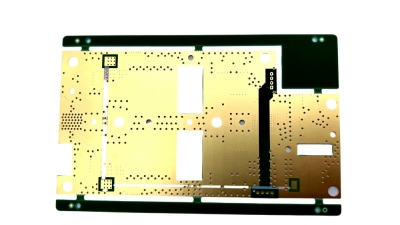
When it comes to high-frequency applications, the choice of printed circuit boards (PCBs) can significantly influence overall performance. Our Four-Layer Gold-Plated Multifunction Board stands out with specialized features designed to enhance impedance control and accommodate various high-frequency materials. Crafted with a focus on advanced manufacturing techniques, this board employs through-hole technology and high-frequency mixed-pressure designs that are integral for optimizing signal integrity and minimizing interference.
Constructed with a combination of premium materials such as FR-4 TG170, RO4350B, and IT180A, the board measures a precise thickness of 1.20±0.12mm. Each layer is expertly laminated and drilled, featuring a 0.2mm drilling diameter that caters to intricate circuit requirements. The use of gold-plating not only provides a robust surface finish but also enhances conductivity, ensuring that performance is kept at peak levels even under demanding conditions. With a sleek green soldermask and white silk-screening, the board doesn’t just perform well; it looks good too, making it ideal for a range of applications in the high-frequency domain.
Integrating four different designs into a single board, this multifunction PCB represents a leap forward in versatility and performance. Whether you're developing advanced telecommunications equipment or aerospace technology, our board's impedance control and high-frequency capabilities deliver unmatched reliability and efficiency in any project.
FAQS
: Industry certifications such as ISO 9001 and IPC-A-610 establish credibility and ensure quality by signifying adherence to strict manufacturing standards, which enhances customer trust and competitive advantage.
Companies that hold recognized certifications are 50% more likely to secure contracts, highlighting the competitive edge that these certifications provide.
Certifications like AS9100 for aerospace and IATF 16949 for automotive ensure that PCB assembly manufacturers meet stringent requirements necessary for complex applications.
A study has found that 70% of manufacturers experience marked improvements in operational efficiency after obtaining relevant industry certifications.
Lead time and production efficiency are crucial factors that can significantly influence a project's timeline and budget, making it essential to choose PCB assembly services that focus on these aspects.
Key performance indicators (KPIs) such as cycle time, defect rate, and on-time delivery should be tracked to effectively measure assembly service efficiency.
A resilient supply chain is vital as it helps manufacturers meet current demands and prepare for future challenges, especially important in a market experiencing rising electronics demand.
Significant trends include the increased use of surface-mount technology (SMT) and the integration of automation and AI, which enhance efficiency and reduce manufacturing costs.
Automated assembly lines improve precision and speed, while AI-driven quality control systems ensure high standards are consistently met, reducing the risk of human error.
Businesses should choose partners proficient in advanced technologies like SMT and automation, as these can significantly enhance the quality, reliability, and turnaround times of their products.