Picking the right EV PCB manufacturing process is pretty crucial when you're developing electric vehicles. Honestly, this choice can make a huge difference in both how well the vehicle performs and how long it lasts. As more folks jump into the electric car scene, the demand for solid PCB solutions has just exploded—no kidding.
Manufacturers really need to weigh a bunch of factors. For starters, material choice is a big deal—things like conductivity and durability hinge on it. Production methods? They've got tons of options, each with its own pros and cons. Some might save you a buck but kinda lack in precision, while others deliver high quality but come with a steeper price tag.
Now, let's be real—no process is perfect. Companies like Advanced Circuits and PCBWay often run into their fair share of hurdles during manufacturing. Quality control? It’s definitely important, but in the rush to meet deadlines, it sometimes gets overlooked. The key is to really think about your specific needs and long-term plans. That way, you can make smarter choices that help your EV project grow sustainably and stay reliable over time.
The significance of PCBs in electric vehicles (EVs) cannot be overstated. These vital components manage power, signals, and communication systems. A well-designed PCB ensures that energy flows efficiently throughout the vehicle. It enhances performance and reliability. An inadequate design may lead to overheating or malfunctions. These scenarios can have serious implications for safety.
In the world of EVs, the manufacturing process of PCBs greatly influences their functionality. Choosing the right materials is crucial. For instance, high thermal conductivity materials can prevent overheating. Yet, not all manufacturing processes provide this. Some may seem cheaper but compromise quality. This reflects a common oversight. Prioritizing short-term gains can result in long-term issues.
The intricacies of PCB design require attention to detail. Each section of the PCB must align with the EV’s requirements. Overlooking small details can lead to inefficiencies. For example, if component placement is not optimal, signal integrity may be affected. This may not be immediately evident, but the impact can grow over time. Engineers must reflect on potential weaknesses in the design process to create a more robust solution.
This chart illustrates the various factors influencing the selection of PCB manufacturing processes for electric vehicles (EVs). The data represents the percentage of importance assigned to each factor by industry professionals.
When choosing a PCB manufacturing process for electric vehicles (EV), several factors come into play. Material selection is critical. Different substrates can affect performance. For instance, materials like FR-4 are common but may not handle high temperatures well. Consider also the specific requirements of the EV application. High-frequency applications might need materials that can withstand higher electrical stresses.
Production methods matter too. Techniques such as through-hole versus surface mount have pros and cons. Surface mount offers space-saving advantages but can complicate repairs. It's essential to weigh the benefits against potential maintenance issues. Additionally, the lead time and costs of various manufacturing processes can significantly impact project timelines. While some methods are faster, they might sacrifice quality, leading to possible failures down the line.
It's important not to overlook the complexity of designs. More intricate designs often require advanced manufacturing techniques. However, complexity can lead to higher chances of defects. Balancing the design goals with manufacturing capabilities is key. What works well in theory may not always be practical in production. Choosing the right process means reflecting on these trade-offs.
The electric vehicle (EV) industry relies heavily on advanced printed circuit board (PCB) manufacturing techniques. As EV technology evolves, selecting the right PCB process becomes crucial. Different techniques offer various benefits and drawbacks, requiring careful consideration.
One common method is surface mount technology (SMT). This technique has become popular due to its efficiency in space utilization. Moreover, the PCB assembly industry is projected to grow by 10% annually. However, SMT can pose challenges in heat management. With high-density assemblies, thermal issues can lead to performance drops. Finding the right balance between compact design and heat dissipation is vital.
Another notable technique is through-hole technology. While it provides robust mechanical connections, it often demands more board space and time. Some reports indicate this method is slowing down in favor of newer technologies. Still, it remains relevant for high-reliability applications. Engineers must evaluate the strengths and weaknesses of both methods to meet specific project requirements effectively. Always reflect on how each approach impacts overall design and functionality.
When selecting materials for electric vehicle (EV) printed circuit boards (PCBs), understanding their properties is crucial. The thermal conductivity, for instance, significantly affects the overall performance. High heat dissipation can directly enhance efficiency. According to a recent industry report from IPC, PCBs in EVs must handle temperatures ranging from -40°C to 125°C. This range demands robust materials that maintain integrity under stress.
Consider the dielectric properties as well. These properties influence insulation and signal integrity. Inadequate knowledge of these can lead to failures. A study from TechInsights indicates that materials with a low dielectric constant enhance efficiency. Yet, they often compromise mechanical strength. This trade-off requires careful consideration.
Tips: Always test materials before large production runs. Small tests can reveal unseen issues. Collaborate with suppliers for updated material data. Continuous dialogue fosters improvement and innovation. It’s essential to remain adaptable. Experimentation can lead to better solutions, even among conventional materials. Reflecting on past choices often uncovers paths to better performance.
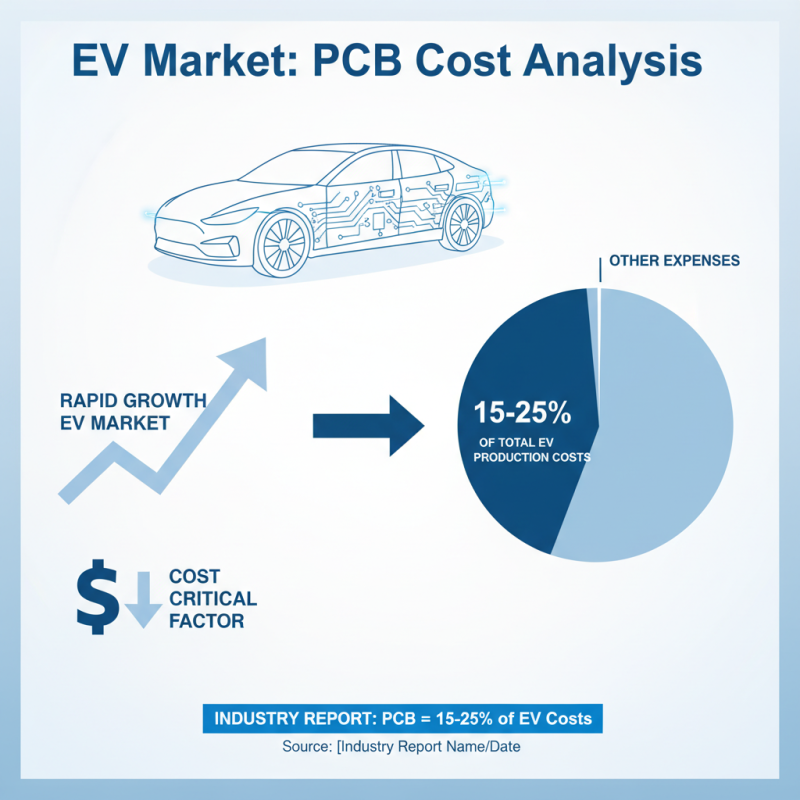
The electric vehicle (EV) market is rapidly growing. Yet, cost remains a critical factor in the PCB manufacturing process. A recent industry report indicates that PCB costs can account for 15-25% of the total production expenses in EVs. This insight emphasizes the need for careful cost analysis.
Quality often correlates with higher prices. High-quality materials and advanced manufacturing processes are costly but essential for performance. A study has shown that PCBs with better thermal management can reduce failures by up to 30%. However, this comes at a price. Many manufacturers struggle to balance these competing priorities.
Choosing the right process can be tricky. Some options may cut costs upfront but lead to long-term issues. Investing in quality may seem daunting. Yet, over 70% of industry leaders agree that high standards ultimately save money. The intricate relationship between quality and cost is more apparent now. It's crucial to reflect on priorities when selecting an EV PCB manufacturing approach.
Choosing the right supplier for EV PCB production is crucial. Start by assessing their capabilities. Look into their manufacturing technology. Advanced techniques ensure better performance and reliability. Check if they have experience with electric vehicles. This experience can make a significant difference.
Evaluate their production processes. Do they use automated systems? Automation often leads to higher precision. This is vital for PCBs used in EVs. It’s also essential to review their testing methods. Reliable testing ensures quality and performance standards.
You might find gaps in their offerings. Some suppliers may lack experience with specific materials. This could hinder production efficiency. Don’t overlook their customer service approach. Poor communication can lead to misunderstandings. Ensure they are responsive and open to collaboration. This can prevent issues down the line. Consider prioritizing suppliers with a proven track record in EV PCB technology.
| Criteria | Importance (1-5) | Performance Level (1-5) | Comments |
|---|---|---|---|
| Technology Capability | 5 | 4 | Advanced technologies for manufacturing are critical. |
| Quality Assurance | 5 | 4 | Ensure high standards to prevent failures. |
| Production Capacity | 4 | 3 | Ability to meet demand is essential for scaling. |
| Cost Efficiency | 3 | 4 | Pricing must balance quality with budget constraints. |
| Lead Time | 4 | 3 | Timely delivery impacts project deadlines. |
The world of electric vehicle (EV) innovations is rapidly advancing. The manufacturing processes for their printed circuit boards (PCBs) are adapting to these changes. Future trends highlight a shift towards automation and sustainability. Manufacturers are increasingly using advanced materials that not only improve performance but also reduce environmental impact. This transition is essential in meeting the growing demands of the EV market.
Tips: Explore new materials. They could offer significant advantages. Flexible PCBs are gaining traction. They can fit into tight spaces with ease. However, they might be more challenging to design and produce. It's crucial to weigh the benefits against the complexities.
Sustainability is becoming more prominent in PCB manufacturing. Recyclable materials and eco-friendly processes are on the rise. However, integrating these solutions can be difficult. Companies need to reassess their supply chains. Streamlining operations may lead to better efficiency, but it requires careful planning. Innovations like 3D printing are emerging, yet they often raise questions about scalability and cost-effectiveness.
: The product enhances productivity. It also improves focus and creativity. Users may experience better time management.
Yes, the product is designed for daily use. However, some may find it overwhelming. Moderation is key.
Some users report mild headaches. Others may experience anxiety or jitters. It's important to monitor your response.
Results can vary. Some notice improvements within a week. Others may need several weeks for significant changes.
Yes, follow the guidelines provided. Adjust according to personal tolerance. Users should always listen to their bodies.
Generally, most adults can use it. However, those with health issues should consult a professional.
Keep it in a cool, dry place. Avoid direct sunlight. Improper storage may affect effectiveness.
Some users might not feel immediate changes. Reflect on your habits and try adjusting the usage.
The product's sustainability varies. Check packaging and sourcing for eco-friendliness. Consider your personal values on this.
The article "How to Choose the Best EV PCB Manufacturing Process?" delves into the critical role that printed circuit boards (PCBs) play in the functioning of electric vehicles (EVs). It emphasizes the need to understand various PCB manufacturing processes while considering key factors such as material properties, cost constraints, and supplier capabilities. Manufacturers must assess how different techniques can affect performance and durability, ensuring that the chosen method aligns with the specific requirements of EV applications.
Additionally, the article highlights the importance of evaluating future trends in EV PCB manufacturing, which can influence strategic decisions in design and production. By balancing quality and budget, stakeholders can make informed choices that support the overall efficiency and sustainability of electric vehicles. Ultimately, understanding these elements is essential for advancing the technology and reliability of EVs through effective EV PCB manufacturing.