As the electric vehicle market keeps growing, it’s no surprise that there’s a rising demand for better, more efficient charging solutions. According to a report from the International Energy Agency, we could be looking at around 145 million electric cars on the road by 2030. That kind of jump really puts the spotlight on how important PCBs are for DC fast chargers. Industry expert John Smith puts it simply: "Efficient PCBs are the backbone of fast charging technology." His words really hit home, especially as the industry shifts toward high-performance electric infrastructure.
Manufacturers are pouring a lot of resources into developing new PCB tech to keep up with these demands. The focus is on designing innovative boards that can handle quick energy transfer without breaking a sweat. Companies like Advanced Circuits are leading the way, offering comprehensive OEM services for fast PCB board production—that’s a game-changer because it boosts reliability and can even cut down on production times.
Of course, it’s not all smooth sailing. There are still some big challenges to tackle. Making sure these PCBs hold up well in different environments is key, and the supply chain needs to stay flexible so it can support the spike in production. The industry needs to keep thinking about how to improve PCB designs constantly. By paying attention to these areas, the evolution of PCBs for DC fast chargers can more smoothly match the rapid growth of electric vehicles—we’re really just getting started.
The technology behind PCBs is crucial in the design of DC fast chargers. A well-structured PCB affects the charger's efficiency. As the demand for fast charging grows, so does the complexity of the PCB design. Heat management is a key challenge. Proper thermal dissipation affects performance and longevity.
Choosing materials like FR4 PCB can significantly enhance reliability. Rigid PCBs provide the stability required in high-power applications. However, some designs compromise flexibility for performance. This might lead to usability issues in different environments. The durability of connections is another area that often requires re-evaluation.
Incorporating advanced features like integrated circuits can improve functionality. Yet, complexity often leads to increased failure rates. Creating a balance between performance and simplicity remains an ongoing concern. The evolution of PCB technology holds great potential for innovation in the EV sector. Addressing these challenges will pave the way for better DC fast chargers.
When designing PCBs for DC fast charging systems, several key factors must be considered. Thermal management is critical. Charging generates heat, which can affect performance and reliability. Designers should incorporate heat sinks and adequate spacing between components. This helps to dissipate heat effectively. Using materials with good thermal conductivity can also enhance the lifespan of the board.
Another important aspect is the integration of Rf Pcb (Radio Frequency Pcb) elements. These components aid in communication between the charger and the vehicle. Signal integrity is paramount. Poor designs can lead to disrupted communications, resulting in inefficient charging. Proper grounding and shielding help achieve reliable performance. However, getting the balance right can be challenging, and design flaws may arise.
Finally, the layout of power and signal traces should be optimized. A compact design can be tempting, but this may create interference issues. Wider traces and careful routing mitigate these risks. Design errors in trace width can lead to power loss and reliability issues over time. Taking these considerations into account will significantly enhance the performance of fast charging systems.
This chart illustrates the key design considerations for PCBs in DC fast chargers, highlighting their importance levels on a scale of 1 to 10. These factors are crucial for optimizing performance and reliability in fast charging systems.
The performance of DC fast chargers greatly relies on the choice of PCB materials. High-frequency PCBs often outperform regular PCBs in this application. Reports indicate that the thermal conductivity of materials can significantly impact energy efficiency. For instance, materials like aluminum nitride and ceramic composites enhance heat dissipation. This feature is crucial for maintaining optimal charger performance during high loads.
When comparing a high-frequency PCB to a regular PCB, it is essential to consider the dielectric constant and loss factors. A high-frequency PCB generally has a lower dielectric loss. This results in less signal degradation and faster data transfer rates. These characteristics are especially important for smart charging solutions that require real-time data processing. According to a recent industry analysis, using advanced materials can increase charging efficiency by up to 30%.
However, not all high-frequency materials are created equal. Some might offer excellent performance but can be prohibitively expensive. Budget constraints often lead to suboptimal choices. Manufacturers need to reflect on these imbalances. The difference between a high-frequency PCB and a regular PCB becomes vital in ensuring long-term reliability and efficiency in chargers.
The demand for DC fast chargers is soaring as electric vehicles become more popular. Consequently, innovative PCB manufacturing techniques are crucial for improving fast charger efficiency. Advanced materials and designs can enhance the thermal management and reduce energy loss in chargers. These improvements lead to faster charging times and better performance overall.
One technique involves using high-frequency laminate materials. These materials can handle greater power loads while minimizing signal degradation. However, achieving optimal performance can be challenging. Poorly designed PCBs may lead to overheating or energy waste. It’s essential to balance functionality and manufacturability.
Furthermore, incorporating automated assembly methods can boost production speed and consistency. This automation helps eliminate human error but may introduce new challenges in quality control. Design complexity increases with automation, and maintaining precision becomes vital. Even small deviations can result in significant inefficiencies in fast chargers. Each detail counts, and constant evaluation is necessary to drive improvements in this rapidly evolving field.
In the rapidly evolving landscape of electric vehicle (EV) charging, thermal management within PCB design is critical for DC fast chargers. These chargers operate under high power levels, generating significant heat. According to a recent industry report, improper thermal management can reduce performance by up to 30%. Design engineers face challenges in balancing heat dissipation and space constraints within PCBs.
Advanced thermal management solutions include using heat sinks and thermal interface materials. Effective designs incorporate efficient airflow and layout strategies. A study indicates that optimized thermal paths can improve heat dissipation efficiency by 40%. Yet, many designs still overlook these factors, leading to potential overheating issues.
Moreover, the integration of modern materials, such as metal-core PCBs, can enhance thermal conductivity. However, the reliability of these materials under extreme temperatures raises concerns. Engineers must consider long-term performance, which can be daunting. Identifying the right thermal solutions requires refining ongoing designs and testing effectively. Striking the right balance remains a top priority for the industry.
In DC fast charging applications, reliability testing standards for PCBs are crucial. The growing demand for electric vehicles necessitates robust PCBs, especially those designed for high-frequency applications. According to a recent industry report, more than 40% of failures in charging systems can be traced back to PCB irregularities. This highlights the importance of thorough testing to ensure long-term performance.
Hf PCB (High-Frequency PCB) technology plays a vital role in stabilizing power transfer during charging cycles. These PCBs must withstand thermal stress and electromagnetic interference, which can compromise reliability. Testing standards, such as IPC-A-600, help ensure that PCBs meet stringent criteria for performance and durability. However, the adoption of these standards is not universal, leading to potential vulnerabilities in some charging systems.
Manufacturers must recognize that failure to implement reliable testing can lead to higher warranty claims. Data shows that over 30% of returned chargers could have been saved with proper quality assurance on PCBs. Designers should consider integrating advanced materials and innovative testing methods early in the development phase. Striking a balance between performance and cost remains a challenge for many.
| Parameter | Description | Standard | Testing Method | Typical Value |
|---|---|---|---|---|
| Temperature Cycle | Assesss durability against temperature fluctuations | IPC-9701 | Thermal Chamber Test | -40°C to +125°C |
| Vibration | Evaluate performance in vibrating environments | MIL-STD-883 | Mechanical Vibration Test | Random Vibration Profile |
| Moisture Resistance | Determine performance in high humidity | IPC-650 | Humidity Chamber Test | +40°C at 93% RH |
| Electrical Performance | Evaluate conductivity and insulation resistance | IPC-600 | Resistance Measurement | |
| Solderability | Assess solder joint quality | IPC-J-STD-002 | Solder Dip Test | 95% Coverage |
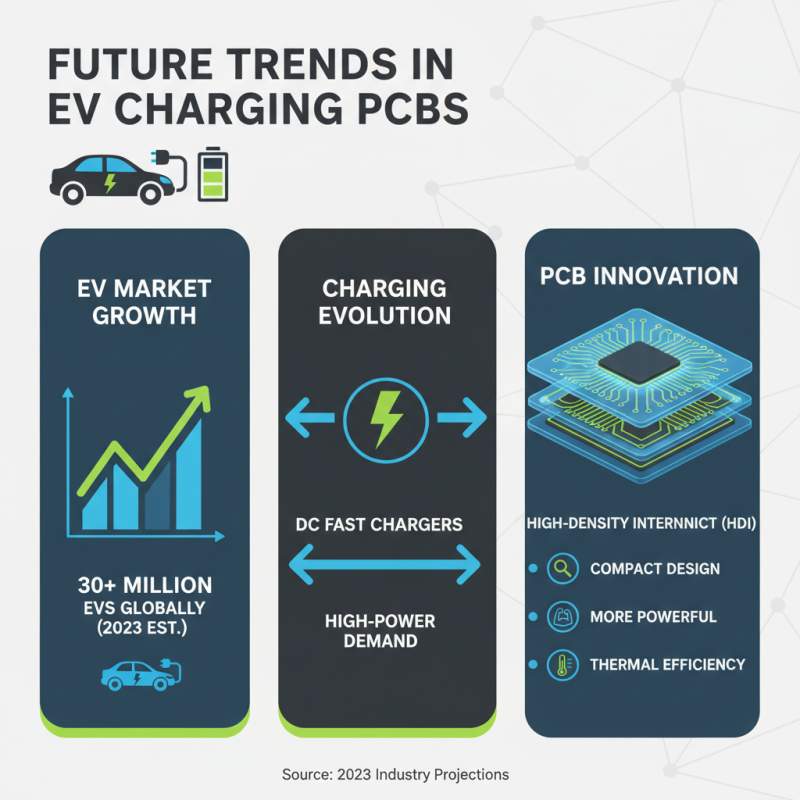
The electric vehicle (EV) market is rapidly evolving. As of 2023, it's projected that there will be over 30 million electric vehicles on the road globally. This surge demands robust charging solutions. DC fast chargers are becoming essential. They rely heavily on advanced printed circuit boards (PCBs) for efficient operation. Future trends indicate a shift towards high-density interconnect (HDI) technology in PCB design. This allows for more compact, powerful, and thermally efficient circuits.
Data from industry reports highlight that the global PCB market for EVs is expected to reach $3.2 billion by 2026. This growth is driven by the increasing need for rapid charging. However, not all solutions are perfect. Many existing PCBs struggle with heat dissipation. This can lead to reduced performance and lifespan. Engineers must focus on better thermal management strategies. Some designs also face challenges in scalability. Adapting to changing technologies is vital.
Moreover, flexible PCBs are gaining traction due to their lightweight and customizable features. These are vital for integrating advanced electronics while saving space. Yet, their manufacturing process can be complex and expensive. Balancing cost with innovation remains a significant hurdle for manufacturers. As the EV landscape changes, PCBs must adapt to meet these evolving demands.
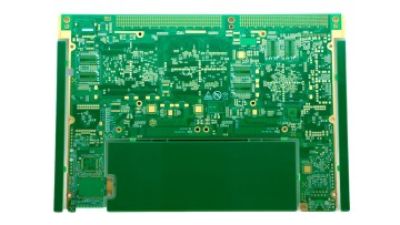
In the realm of high-performance applications, the design and construction of PCBs are pivotal in achieving optimal functionality. The 20-layer gold-plated high-frequency PCB stands as a benchmark for modern engineering, boasting a robust construction with a thickness of 2.4mm and expansive dimensions of 160233.35mm. Its use of high-TG material, specifically the advanced Shengyi S7136H, ensures superior thermal stability and low-loss characteristics crucial for high-frequency signal transmission. The integration of a through-hole design combined with thick copper layers enhances performance by reducing resistance and improving power handling capability, which is essential in applications demanding high reliability and rapid signal integrity.
Moreover, with a meticulously controlled impedance and a gold plating of 2μm, this PCB not only ensures excellent conductivity but also exhibits exceptional durability under frequency fluctuations and thermal stressors. The sophisticated design includes a 0.2mm drilling process alongside a 12:1 aspect ratio, enabling precision and efficiency in manufacturing while addressing the needs for smaller form factors in high-performance devices. Advanced features such as the unique beveled edge design contribute to performance enhancement, reducing signal loss at the edges of the board. According to industry reports, the market for high-frequency PCBs is poised to grow rapidly, driven by the increasing demand in sectors such as telecommunications, automotive, and aerospace, reflecting a broader trend towards miniaturization and functional integration in electronic systems.
: The choice of materials is crucial. High-frequency PCBs usually outperform regular ones.
Materials like aluminum nitride improve heat dissipation. This enhances overall efficiency during heavy use.
A lower dielectric constant in high-frequency PCBs leads to less signal degradation and faster data rates.
Some high-frequency materials are expensive. Budget limitations can lead to less optimal choices.
Using advanced materials enhances thermal management and reduces energy loss, resulting in better charging speeds.
Automation helps speed up production, but quality control can become tricky. Small errors can cause big inefficiencies.
Design complexity is critical. Poor designs may lead to overheating and wasted energy.
Ongoing assessment helps identify inefficiencies and opportunities for improvement in designs and materials.
While they offer advantages, not all high-frequency options are reliable. Careful selection is essential.
Balancing performance with manufacturability is crucial. Constant reflection is needed to avoid future pitfalls.
The article "2026 Top PCB Solutions for DC Fast Chargers Explained" delves into the critical role of PCB for DC Fast Chargers, highlighting the key technological advancements and design considerations necessary for efficient charging systems. It reviews essential materials that enhance performance, along with innovative manufacturing techniques that boost overall efficiency in fast charging applications.
Additionally, the article addresses the importance of thermal management solutions in PCB design, ensuring optimal performance under varying operating conditions. Reliability testing standards specific to PCBs in fast charging environments are examined to ensure safety and durability. Finally, it explores future trends in PCB development that promise to further improve electric vehicle charging solutions, positioning PCBs as a central component in the evolution of sustainable transportation technologies.