Leave Your Message
-
E-mail
-
Whatsapp
-
Message
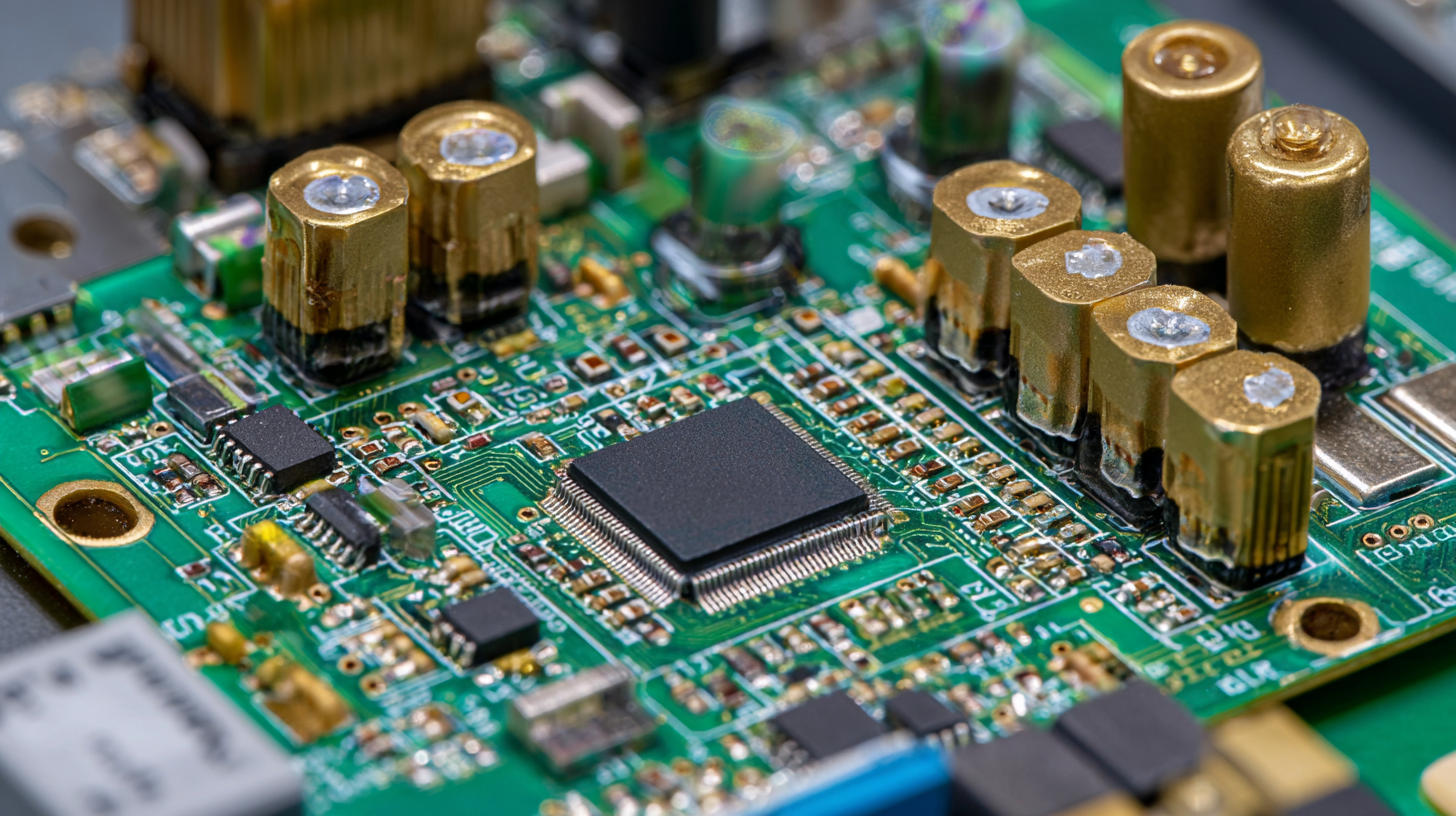 As we get closer to the 138th Canton Fair in 2025, you can really feel the buzz around innovations in the On-Board Charger PCB (OBC PCB) industry. The global electric vehicle scene is heating up, with forecasts suggesting we’ll see around 23 million units by 2030. Naturally, that’s causing a big surge in demand for more advanced OBC PCBs, especially in tech hubs like Shenzhen. Companies like Shenzhen Rich Full Joy Electronics Co., Ltd.—a nationally recognized high-tech enterprise—are leading the charge and playing a crucial role in this industry shift. Recent market insights show that the OBC PCB market is growing at an impressive CAGR of over 15%, as manufacturers are battling to improve efficiency and reliability in charging systems. All in all, this fair is a fantastic chance for folks in the industry to check out the latest trends and tech breakthroughs — it’s all about staying ahead in such a fast-moving market, you know?
Hey, have you heard about the upcoming Canton Fair 2025? It’s gonna be pretty exciting because everyone’s buzzing about the latest and greatest in on-board charger PCBs. As the industry gets more into cutting-edge tech, new trends are popping up—especially around using artificial intelligence to design PCBs. It’s like having a smart assistant that can turn complex circuit layouts into working code, which really speeds things up and makes the whole process a lot simpler. This isn’t just about saving time—it also helps manufacturers craft smaller, more efficient chargers that fit better into today’s gadgets.
And if you’re into innovation and sustainability, you’ll want to keep an eye on how the industry is shifting towards eco-friendly materials and greener manufacturing methods. Companies are teaming up to improve how they optimize designs and prepare data, which opens up loads of new possibilities for better, more innovative products.
Oh, and don’t forget – with cool applications like custom drones becoming more popular, on-board charger PCBs are proving just how versatile they can be across different sectors, even agriculture. By customizing designs to suit specific needs, manufacturers can make farming gear more energy-efficient and eco-friendly, which is pretty awesome. As all these exciting developments unfold, the Canton Fair is definitely set to show off some game-changing designs that could shape the future of on-board charger tech. It’s definitely something to look out for!
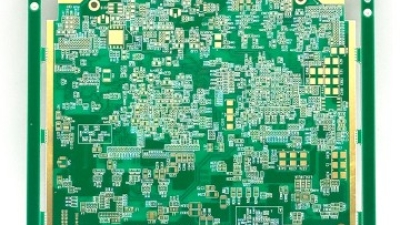
In modern electronic applications, the demand for high-frequency hybrid pressing PCBs has surged, particularly due to their profound impact on impedance performance. A recent industry report highlights that integrating advanced materials, such as Rogers RO4350B and standard substrates like S1000-2M, FR-4, and TG170, enhances signal integrity and thermal management, crucial for 14-layer (14L) designs. These materials not only minimize dielectric losses but also support tighter impedance control, addressing the challenges posed by increasingly complex electronic systems.
The specifications of high-frequency hybrid pressing PCBs play a pivotal role in their performance. For instance, a typical board thickness of 2.0mm, combined with an outer copper thickness of 35um and inner copper thickness of 18um, demonstrates robustness while ensuring effective thermal dissipation. The use of resin plug holes in the via treatment process significantly contributes to the reliability of the connections, while the precise mechanical drilling density of 35W/㎡ and minimum via size of 0.2mm underscores the growing need for miniaturization in PCB design without compromising functionality.
Finally, the choice of surface finish, such as ENIG, along with a green solder mask and white silkscreen color, not only adds to the aesthetic appeal but also ensures compatibility with modern assembly processes. Industry analysis indicates that high-frequency hybrid PCBs are vital for achieving high signal quality in today’s applications, underlining their importance in continued innovations within electronic technology.
: The Canton Fair 2025 will spotlight innovative designs in on-board charger PCBs, particularly those integrating advanced technologies such as artificial intelligence to enhance efficiency and precision.
Companies are using AI to convert complex circuit board layouts into executable code, simplifying development processes and reducing time to market.
There is a growing focus on sustainability, with a shift towards eco-friendly materials and processes in PCB design, along with collaborations that boost manufacturing capabilities.
On-board charger PCBs are demonstrating versatility in fields like agriculture, particularly in custom-built drones that enhance energy efficiency and sustainability.
The global on-board charger market is projected to reach $9.32 billion by 2026, growing at a compound annual growth rate (CAGR) of 28% from 2021.
The adoption of silicon carbide (SiC) and gallium nitride (GaN) semiconductors is driving advancements, enabling faster charging times and improved thermal management.
Shenzhen Rich Full Joy Electronics Co., Ltd. aims to lead innovation in the on-board charger sector by integrating advanced PCB technologies into their products to meet industry demands for efficiency and sustainability.
The rising demand for electric vehicles (EVs) is driving the need for high-performance on-board charger solutions that enhance battery charging speeds while maintaining safety standards.
The new designs promise to be more efficient and compact, which is essential for addressing the growing market needs and enhancing overall product performance.
The industry is expected to continuously innovate with advancements in technology and materials, aiming for lightweight and highly integrated designs that cater to changing market demands.
So, the 138th Canton Fair in 2025 was pretty exciting, especially because it showcased some seriously cutting-edge stuff in On-Board Charger PCB (or OBC PCB) tech. There were lots of new designs on display that could totally shake up how we see electric vehicle charging. People were talking a lot about making these boards more efficient and smaller — you know, squeezing more size out of less space — and a big focus was also on smart tech integration. This means better user experience and improved performance, which is pretty cool. Sustainability was also a huge topic — everyone’s really thinking about the environmental impact, pushing for eco-friendly materials and greener manufacturing processes.
Beyond that, the fair was a goldmine for networking. It’s where folks from the industry got together, shared ideas, and even formed partnerships that could lead to even more innovation down the line. Experts were sharing insights and teasing out what future developments might look like—pretty inspiring stuff. And all of this really cements Shenzhen Rich Full Joy Electronics Co., Ltd. as a major player in this high-tech world — a real incubator for pioneering tech in China, no doubt.






 So, at the 138th Canton Fair in 2025, folks are really starting to focus on