You know how quickly the electric vehicle market is changing? Well, there's been a huge jump in the demand for DC fast chargers recently. Because of that, choosing the right PCBs for these chargers is more important than ever. I came across a report from MarketsandMarkets that said the global EV charging infrastructure market is expected to jump from about $8.5 billion in 2020 all the way up to nearly $30.7 billion by 2025. Crazy, right? It just goes to show how vital reliable and efficient charging solutions are becoming.
At Shenzhen Rich Full Joy Electronics Co., Ltd., we're right there on the cutting edge of PCB design and manufacturing, playing a big role in supporting this fast-growing sector. Thanks to our expertise, we can meet all the technical needs and safety standards that DC fast chargers require — so they perform well and last a long time. Picking the right PCB isn't just a technical detail; it’s actually crucial for manufacturers because it helps improve charging speeds, user satisfaction, and keeps everything industry-compliant. It’s an exciting time for sure!
Key Considerations for Selecting PCB Materials in DC Fast Chargers
When you're picking out PCB materials for DC fast chargers, there are a few main things you definitely want to keep in mind to make sure everything works smoothly and lasts a while. First off, managing heat is super important because these chargers get pretty hot when they're running. Using materials with good thermal conductivity—like copper—can really help spread out that heat and keep temperatures stable. That way, you're less likely to run into damage or shorten the life of the PCB and the whole charging setup.
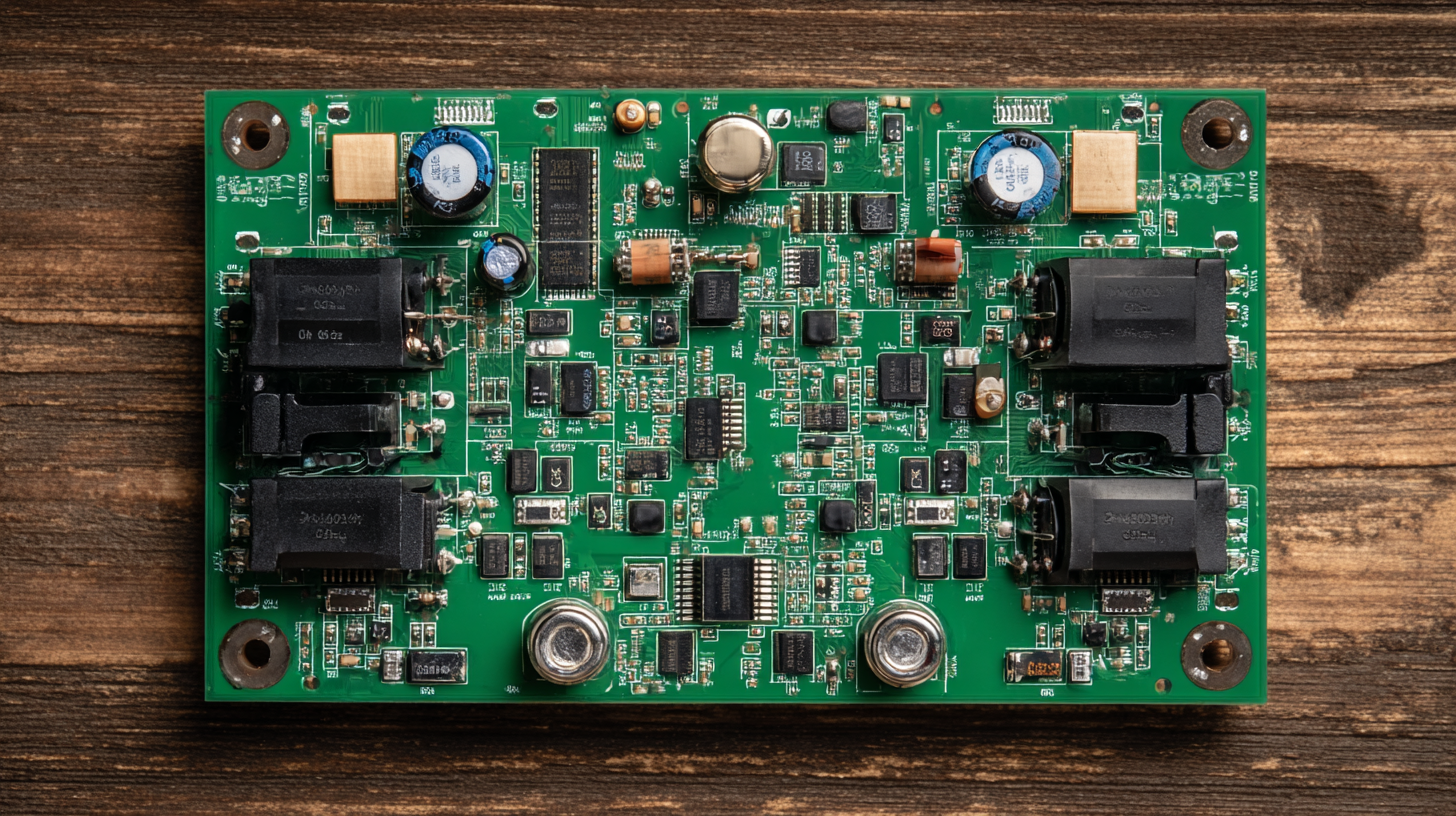
On the other hand, electrical performance matters just as much. The type of substrate you choose can affect how signals behave and how power flows through the system. For fast-charging stuff, you need materials that can handle quick switching speeds without causing unwanted electromagnetic interference. Plus, it’s worth thinking about how resistant the material is to moisture and chemicals, especially if the charger will be outside or in different environments. Basically, focusing on both heat management and electrical qualities can really help you design a PCB that’s tough and reliable—perfect for the demanding world of DC fast charging.
Understanding Electrical Requirements for Efficient Charger Performance
When you're picking out the right PCB for a DC fast charger, understanding what the electrical specs are really matters—it's key to making sure everything runs smoothly. At Shenzhen Rich Full Joy Electronics Co., Ltd., we always stress how important a good, well-designed PCB is. It’s not just about looks; it actually impacts how reliable and efficient your charger is. Things like voltage, current capacity, and thermal management need to match your specific charging needs—no shortcuts there.
A few tips? First off, look at how much power the PCB can handle—this has to line up with your fast charger’s specs. Also, go for materials that have good thermal conductivity because heat dissipation during operation is super critical. And don’t forget about the layout—ideally, it should minimize interference and be able to support high-frequency signals without headaches.
Oh, and safety features are a must—things like overcurrent protection and short circuit prevention. Working with a knowledgeable manufacturer like Shenzhen Rich Full Joy Electronics can really make a difference, helping you navigate all these details and end up with a high-performance charger that’s just right for your needs.
Evaluating Thermal Management Features in PCB Design
When you're picking out a printed circuit board (PCB) for a DC fast charger, paying close attention to its thermal management features is a must. With electric vehicle tech moving so fast lately, the power loads in on-board chargers (OBCs) are skyrocketing, which makes designing for heat management quite the challenge. It’s super important because almost 80% of the electrical energy used by these electronic parts turns into waste heat. That’s why integrating advanced cooling solutions right into your PCB design is key — to keep things running smoothly and reliably.
Now, when you're working with high power density OBCs, it’s a balancing act. You want materials and structures that help dissipate heat effectively without adding too much weight or ballooning costs. Innovations like 3D-integrated circuits (3D-ICs) are opening up new possibilities—they allow for smarter use of space and better thermal management by stacking components and combining different tech within a compact layout. As a leading high-tech company based in Shenzhen, Rich Full Joy Electronics is all about pushing the envelope with innovative PCB designs that focus on thermal efficiency — making sure they can keep up with the ever-changing demands of the EV market.
All in all, selecting the right PCB isn’t just about the basics anymore — it’s about smart design choices that keep your system cool and reliable under pressure.
Thermal Management Features in PCB Design for DC Fast Chargers
Analyzing Connector and Interface Options for Optimal Compatibility
When you're choosing a PCB for your DC fast charger projects, it's really important to get a good grasp of the different connector and interface options out there. I mean, did you know that, according to MarketsandMarkets, the global market for these charging stations is projected to jump from about $5.5 billion in 2021 all the way up to $30.7 billion by 2026? That’s a huge spike, and it just shows how much demand there is for fast, efficient charging solutions right now. With that in mind, it’s smart to pick PCBs that come with connectors capable of handling higher power levels—think CCS and CHAdeMO—so you can charge those EVs quickly without sacrificing safety or performance.
And it’s not just about the connectors. The communication protocols—things like ISO 15118 and OCPP—are just as important because they help different chargers and EVs work seamlessly together. A study from Electric Vehicle Infrastructure points out that supporting these standards can really improve interoperability, making things smoother for users. Plus, supporting these protocols now means your setup will be more future-proof as the industry keeps evolving. Bottom line: taking the time to choose the right combination of connectors and interfaces on your PCB will make a big difference in keeping up with new tech and market needs down the road.
Assessing Manufacturing Processes for High-Volume PCB Production
When you're picking out a PCB for a DC fast charger, it's super important to look into the manufacturing process, especially if you're planning to produce them in large quantities. Fast chargers pack a lot of complex components, so you need a sturdy PCB that can handle high temperatures and big currents without breaking a sweat. Getting a good grip on the manufacturing methods—things like automated assembly, surface mount tech (SMT), and cutting-edge techniques—is key to making sure your design is both reliable and cost-effective.
Going with manufacturers that use the latest tech really pays off in terms of durability and scalability. Techniques like laser drilling, high-density interconnect (HDI), and special insulation materials help with heat management and signal clarity—crucial for fast charging speeds. Plus, being able to produce PCBs with tiny traces and microvias means you can make your charger smaller and more compact, which is often a big deal when space is tight. At the end of the day, focusing on what the manufacturing process can do helps you pick a PCB that meets your performance goals and fits your production plan without a hitch.
Ensuring Compliance with Industry Standards for Safety and Reliability
When you're choosing a printed circuit board (PCB) for DC fast chargers, sticking to industry standards is a big deal — it’s all about making sure everything runs safely and reliably. You don’t want to cut corners here, especially with high-voltage stuff, right? Getting familiar with certification requirements like IEC 61851 and UL 2202 can really help guide engineers in picking the right PCBs that can handle the tough demands of EV charging. Things like heat management and preventing electromagnetic interference are super important to keep in mind.
On top of that, choosing the right PCB material really matters if you want your setup to last. Ideal materials should handle high frequencies, stay cool under pressure, and be mechanically sturdy. For example, materials such as FR-4 or high-speed laminates tend to offer better heat dissipation and dielectric properties — which is pretty crucial when dealing with fast charge scenarios. Oh, and working with manufacturers who are experienced in EV tech can make a huge difference. They’ll not only help ensure your PCB design meets all the safety standards but also boost the overall reliability of your charging system.
How to Choose the Right PCB for Your DC Fast Charger Applications
| Criteria |
Description |
Compliance Standards |
| Thermal Management |
Ensure the PCB design can dissipate heat effectively to prevent overheating. |
IPC-2221, IEC 61000-4-2 |
| Material Selection |
Choose materials that support high voltage and high current applications. |
UL 796, IPC-4101 |
| Layer Count |
Determine the number of layers needed for signal integrity and power distribution. |
IPC-2221, ISO 9001 |
| Circuit Density |
Evaluate the density of components and traces on the PCB for reliability. |
IPC-2221, IPC-A-600 |
| Connector Types |
Select connectors that can handle higher voltages and currents. |
IEC 60950-1, UL 62368 |
High-Frequency PCB Manufacturing in China: The Advantage of Choosing Rogers RO4350B for Superior Performance
High-Frequency PCB Manufacturing in China has seen significant advancements, particularly with the use of Rogers RO4350B materials. This high-performance substrate is recognized for its excellent electrical properties, making it an optimal choice for high-frequency applications. According to recent industry reports, Rogers RO4350B offers a low dielectric loss tangent and stable dielectric constant, essential for maintaining signal integrity in demanding environments. These attributes not only enhance performance but also expand the potential applications of high-frequency PCBs, especially in telecommunications, aerospace, and medical devices.
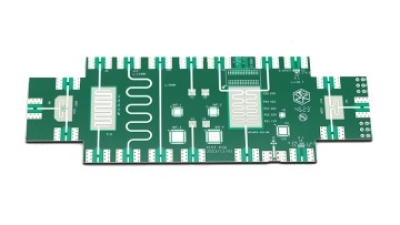
Incorporating Rogers RO4350B in a hybrid PCB configuration with FR-4 results in a robust eight-layer design that emphasizes impedance control and efficiency. A leading PCB manufacturer in China utilizes resin plug hole technology to further enhance reliability and performance. This meticulous layering provides superior thermal management and reduces electromagnetic interference, thus ensuring optimal signal transmission quality. Industry analyses suggest that PCBs made with Rogers materials can significantly lower loss in high-frequency applications, with reports indicating reductions of up to 30% in insertion loss compared to standard FR-4 materials.
Overall, the combination of Rogers RO4350B with advanced fabrication techniques not only meets the growing demands for high-frequency PCB solutions but also sets a benchmark for performance and reliability in the manufacturing sector. With China's booming electronics industry, the adoption of such high-quality materials is paving the way for innovative designs and applications that push the limits of technology.
FAQS
: Thermal management is the most critical factor, as DC fast chargers generate significant heat during operation. Choosing materials with high thermal conductivity, like copper, helps dissipate heat effectively.
Electrical performance is vital because the choice of substrate material influences dielectric constant and loss tangent, which impact signal integrity and power distribution in high-frequency applications typical of DC fast charging.
Materials that generate excessive electromagnetic interference should be avoided, as they can hinder performance in high-frequency applications, which are common in DC fast charging systems.
Resistance to moisture and chemicals is essential for reliability, particularly in environments where the PCB may be exposed to varying conditions, ensuring long-term durability and performance.
Effective thermal management features are crucial for maintaining optimal performance and reliability, as nearly 80% of electrical power consumed can dissipate as waste heat.
Advanced cooling solutions can enhance thermal management by optimizing heat dissipation while minimizing additional weight and cost, which is particularly important in high power density on-board charging systems.
Innovations such as 3D-integrated circuits (3D-ICs) can improve thermal management by optimizing spatial configurations and integrating various technologies within a compact footprint.
Shenzhen Rich Full Joy Electronics Co., Ltd. is mentioned as a national high-tech innovative enterprise capable of addressing these challenges through cutting-edge PCB designs focused on thermal efficiency.
A balance must be achieved between the need for efficient thermal conduction and other performance metrics while minimizing additional weight and cost in the design process.
Increasing power densities in on-board charging systems create challenges in thermal design, making effective thermal management essential for optimal performance.
Conclusion
Picking the right PCB for DC fast chargers isn’t just about ticking boxes—it actually involves juggling a few important factors. First off, the materials you choose matter a lot because they directly influence how well the charger performs and how efficient it is. It’s also super important to get a good handle on the electrical needs—making sure the PCB can handle those high power levels for rapid charging without breaking a sweat. And let’s not forget thermal management; designing with heat in mind is key to stopping overheating and keeping everything reliable over time.
Another thing to think about is the connectors and interfaces. You want to make sure they’re compatible with a wide range of EVs, after all. And if you’re planning to produce these chargers in large quantities, it’s smart to keep an eye on the manufacturing process—making sure it’s streamlined so you can meet market demand without a hitch. Oh, and of course, sticking to industry standards isn’t just a box-ticking exercise; it’s about ensuring safety and building trust with your users. Ultimately, choosing the right PCB isn’t just about performance—it’s about making something that’s dependable and ready for real-world use. At Shenzhen Rich Full Joy Electronics Co., Ltd., they’re all about delivering innovative PCB solutions that tick all these boxes for the EV charging world.