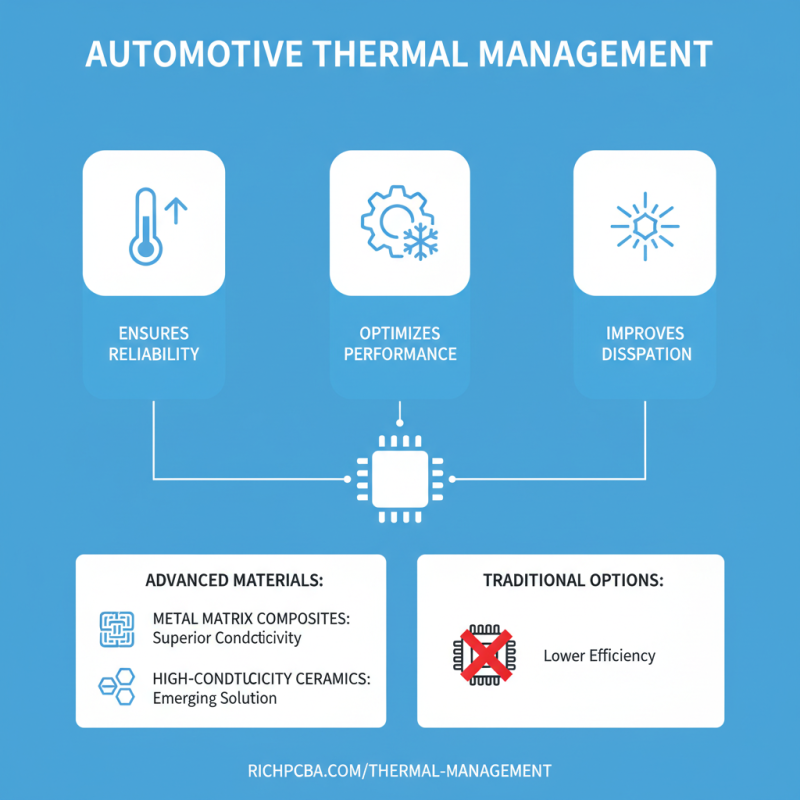
You know, with how quickly automotive electronics are evolving these days, managing heat effectively isn’t just a good idea – it’s absolutely essential. I recently came across a report from Automotive Thermal Management Solutions (ATMS), and get this – a huge 70% of car failures are linked to thermal problems. That really drives home just how critical well-designed Thermal Management PCBs are. Experts agree that making sure these systems perform well thermally is key to keeping electric vehicles reliable and efficient, especially with all the advanced driver-assistance tech out there.
Dr. Michael Johnson over at Thermal Dynamics Inc. once said something that stuck with me: "Without proper thermal management, you can’t really count on how long electronic parts will last." His words highlight why investing in good Thermal Management PCBs for automotive electronics is a smart move. As electronic systems pack more power into smaller spaces, engineers are really feeling the heat – literally – and need innovative solutions to keep everything cool.
Paying attention to the little things can make a big difference. For example, by using advanced materials, we can improve how quickly heat gets carried away. But, of course, it’s crucial to also watch out for flaws in the design and manufacturing process. Industry folks are constantly researching to stay ahead of the game and meet the ever-changing needs for effective thermal management. As we dive into the world of Thermal Management PCBs for automotive electronics, it’s worth reflecting not just on the wins but also recognizing where things can get better down the line.

Thermal management is critical in automotive electronics. As vehicles evolve, so do their electronic components. High-performance systems generate heat. This heat can damage PCBs if not properly managed. Therefore, understanding Thermal Management in PCBs is essential.
Efficient thermal dissipation relies on several factors. Heat sinks, thermal pads, and strategic layout choices can make a difference. For instance, using copper pours can improve heat distribution. However, many designs still overlook these details, which can lead to overheating.
Another aspect is material selection. Using materials with high thermal conductivity helps. Yet, manufacturers sometimes prioritize cost over performance. This often results in inferior thermal management in PCBs. Approaches like simulation tools can help identify problems early. However, not all designers utilize these tools effectively.
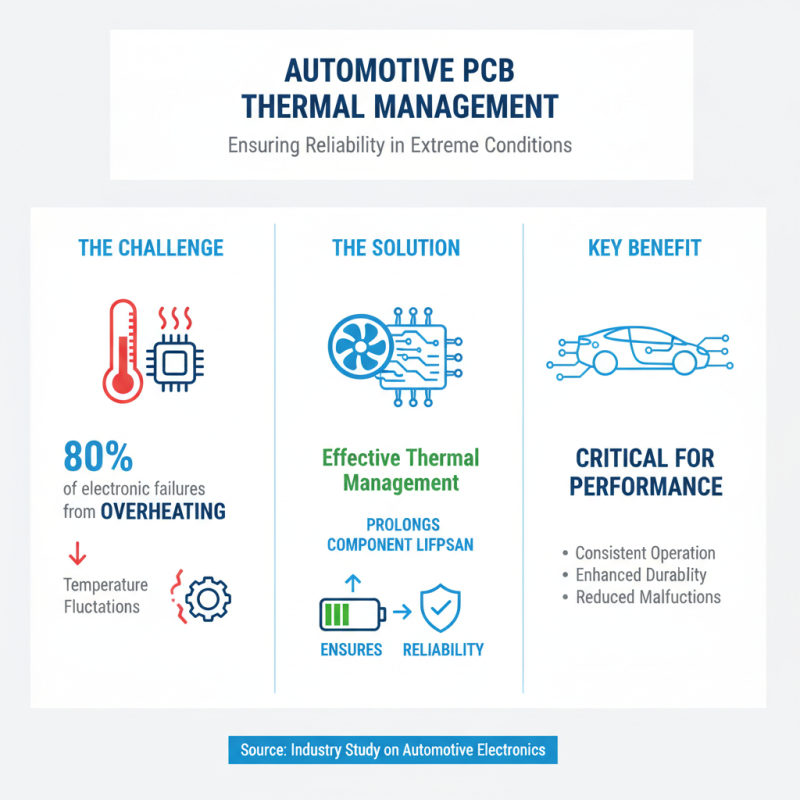
Thermal management is critical in PCB design for automotive electronics. Temperature fluctuations can significantly impact performance. A study shows that 80% of electronic failures result from overheating. Effective thermal management can prolong the lifespan of components, ensuring reliability under extreme conditions.
Heat dissipation is a major challenge. Good thermal design reduces hotspots on the PCB. Proper heat sinks and thermal vias are essential. According to industry reports, using dedicated thermal simulation tools at the design stage can improve thermal efficiency by 30%. However, many designers overlook this step, risking overheating and failure.
Thermal management also affects the overall system. Battery performance can decline due to heat. The efficiency of sensors might degrade. As vehicles become more electronic, managing heat efficiently becomes increasingly important. The need for reflection on design practices is clear. Balancing thermal management with performance and cost remains a complex issue.
In automotive electronics, heat sources vary widely. The primary culprits include processors, power converters, and sensors. Each component generates heat due to electrical resistance and energy conversion processes. For instance, microcontrollers can produce significant heat during peak operations. Without proper management, this heat can lead to malfunctions.
Additionally, power electronics play a crucial role in thermal management. They often operate under high currents, intensifying heat build-up. Improperly managed heat may cause components to degrade faster than expected. Also, battery systems can be substantial heat contributors, especially during charging and discharging cycles. Engineers should consider these factors in their thermal management strategies.
Effective cooling solutions are essential yet sometimes overlooked. Passive cooling is often chosen for simplicity, but it may not be sufficient. Integrating thermal management techniques from other industries, such as Thermal management in medical devices, could provide innovative advantages. The automotive industry must remain vigilant and adaptable to evolving heat management challenges in electronic systems.
Effective Thermal Management is crucial in automotive electronics. It ensures the reliable operation of components under varying temperature conditions. The choice of materials directly impacts thermal conductivity. Studies show that metal matrix composites can enhance heat dissipation. These materials often outperform traditional options. Additionally, ceramics with high thermal conductivity are also gaining traction in this field.
Aluminum and copper remain popular due to their excellent thermal properties. However, challenges exist. For instance, aluminum is lighter, but its thermal conductivity is lower than that of copper. This trade-off often forces engineers to make tough decisions based on weight or performance requirements. Recent reports highlight that nearly 30% of electronic failure in automotive applications can be attributed to inadequate thermal management.
The future looks promising. Advanced materials, such as graphene and carbon nanotubes, are being explored for better performance. These materials offer the potential for significantly improved thermal management. However, they also raise questions about scalability and cost. As the industry evolves, selecting the right materials for thermal management will continue to be a challenging yet necessary task. Each decision carries weight, influencing the overall reliability and efficiency of automotive electronics.
Effective thermal management in automotive electronics is crucial for performance and reliability. High temperatures can damage components. Inadequate thermal dissipation may lead to failures. A recent industry report indicated that thermal issues account for over 30% of electronic failures in vehicles. This emphasizes the need for effective design strategies in PCBs.
Using multiple thermal vias can enhance heat dissipation. These vias connect different layers and spread out heat effectively. Thermal pads can also be employed to manage heat transfer to the environment. The placement of components matters; clustering heat-generating components together can create hotspots. This could lead to thermal cycling issues. ODM PCBA Thermal Cycle Test helps identify weaknesses in these configurations.
Material selection is vital for thermal management. Copper layers in PCBs are effective for their high thermal conductivity. This should not be overlooked in design considerations. Yet, many designs still struggle with uneven thermal distribution. Continual testing and optimization can address these shortcomings. Engineers need to balance performance with thermal management, as costs can rise rapidly. This ongoing challenge requires innovative solutions and careful attention to detail.
In automotive electronics, managing temperature is crucial. Effective temperature monitoring can enhance performance and lifespan. For instance, using thermal sensors can provide real-time data on PCB temperatures. These sensors should be placed strategically for maximum accuracy.
One common technique involves thermal imaging. It allows engineers to visualize hot spots on a PCB. This can help pinpoint problem areas. However, it can be expensive. Engineers must weigh the benefits against the costs.
Regular maintenance is key. Components can degrade over time due to heat. Checking connections and insulation can prevent failures. Make it a habit to review thermal performance regularly. This not only helps in identifying potential issues but also fosters a culture of continuous improvement. Effective thermal management is an ongoing journey, not a one-time effort.
| Technique | Description | Benefits | Considerations |
|---|---|---|---|
| Active Cooling | Utilizing fans or pumps to dissipate heat. | Effective in high power applications. | Requires additional power and space. |
| Passive Cooling | Using heat sinks and thermal pads for heat dissipation. | Cost-effective and low maintenance. | May be less effective in extreme conditions. |
| Thermal Interface Materials (TIMs) | Materials used to enhance heat transfer between components. | Improves thermal conductivity. | Selection is critical for performance. |
| Temperature Monitoring | Using sensors to measure temperatures of critical components. | Allows for real-time thermal management. | Requires calibration and integration with systems. |
| Thermal Simulation | Using software to predict thermal performance under various conditions. | Helps in optimizing design before manufacturing. | Accuracy depends on model complexity. |
The future of thermal management in automotive electronics is evolving rapidly. Trends show a shift towards advanced materials, like graphene and phase change materials. These materials are highly efficient. According to a recent report, the thermal management materials market is expected to reach $10.3 billion by 2025, growing at a compound annual growth rate of 7.5%. This indicates strong demand and innovation in the sector.
As electric vehicles become mainstream, managing heat is crucial. Components like batteries and power electronics generate significant heat. Poor thermal management can lead to reduced efficiency and safety concerns. Inadequate heat dissipation can cause failures or decreased lifespan of electronic components. Continuous research is essential to overcome these challenges.
Simulation tools are also improving. They help design more effective cooling systems. Virtual prototypes allow companies to test thermals before production. Yet, these simulation methods can sometimes overlook real-world variables. Industry leaders must remain vigilant about these gaps. More investment in R&D is needed to address future challenges effectively.
: It aims to meet specific needs for users in everyday situations.
Follow the provided instructions; ensure you understand each step before starting.
Yes, always use as directed. Pay attention to warnings on the packaging.
Check the guidelines. If problems persist, consult a professional for advice.
It may not be for everyone. Assess your individual needs before using.
Keep it in a cool, dry place. Avoid direct sunlight and moisture exposure.
Misuse can lead to ineffective results or potential hazards. Reflect on your approach.
Consult a knowledgeable source before mixing products. Safety is key.
Some users may experience minor issues. Pay attention to your body’s responses.
Results vary by individual. Be patient and evaluate over time.
Effective thermal management is crucial for the reliability and performance of automotive electronics, particularly in the design of Thermal Management PCB for Automotive Electronics. Understanding how heat generation from various sources can affect the performance of electronic systems leads to better design strategies and materials selection.
Key design considerations include optimizing thermal conductivity through material choices, implementing design strategies that enhance thermal dissipation, and integrating temperature monitoring and control techniques. As automotive technology continues to evolve, staying updated on future trends in thermal management practices will be essential for ensuring the longevity and efficiency of electronic systems in vehicles. Emphasizing these aspects allows engineers to address the thermal challenges posed by modern automotive electronics effectively.