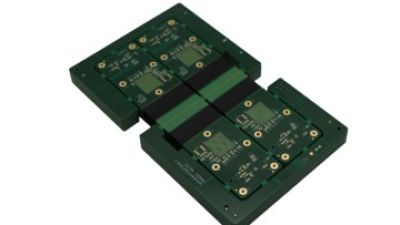
You know, the whole electric vehicle (EV) scene has really shaken up the auto industry, hasn't it? At the heart of this shift is how efficient these EVs are, and a big part of that is thanks to the high-current PCB used in their powertrains. These circuit boards are pretty impressive—they can handle lots of power without overheating, which is super key for keeping things safe and performance top-notch.
Now, here’s the thing—lots of manufacturers struggle with fine-tuning their designs. The cool part is, high-current PCB tech can actually help make vehicles more compact without sacrificing performance. Sadly, not everyone really gets this. Some companies still overlook how important it is to invest in better PCB materials, and that can cause problems like overheating, which obviously affects reliability and how long the components last.
Honestly, upgrading to high-current PCBs in EV powertrains can totally boost energy management and overall vehicle performance. As the market keeps changing, businesses need to keep up with these new demands. Ignoring or delaying investment in these advanced PCB techs? That’s a big mistake if you wanna stay competitive. Looking ahead, it’s pretty clear that reviewing current practices and putting more into better PCB solutions isn’t just smart—it’s essential for driving future innovations.
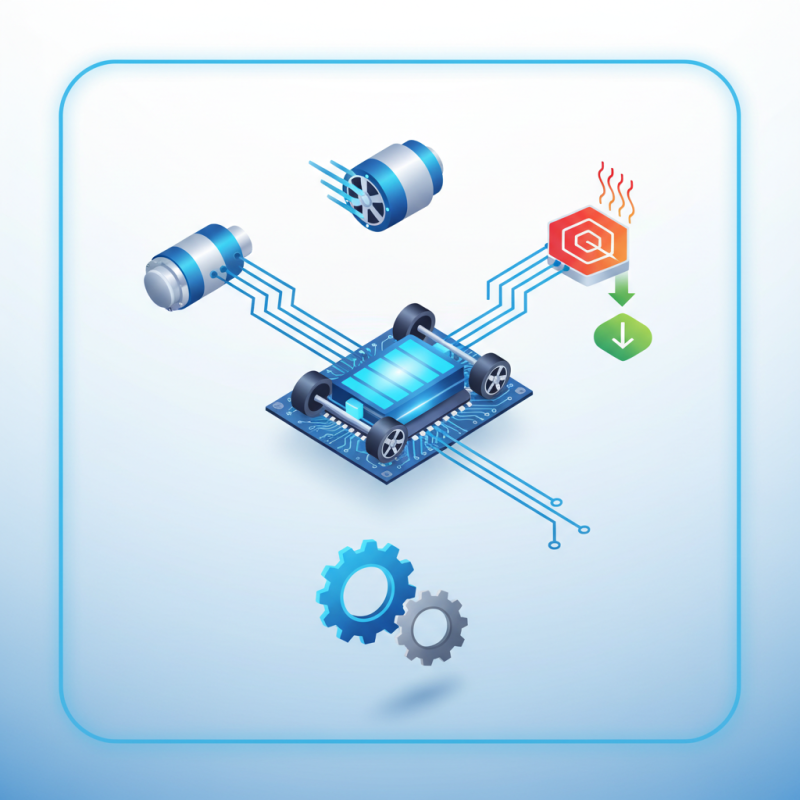
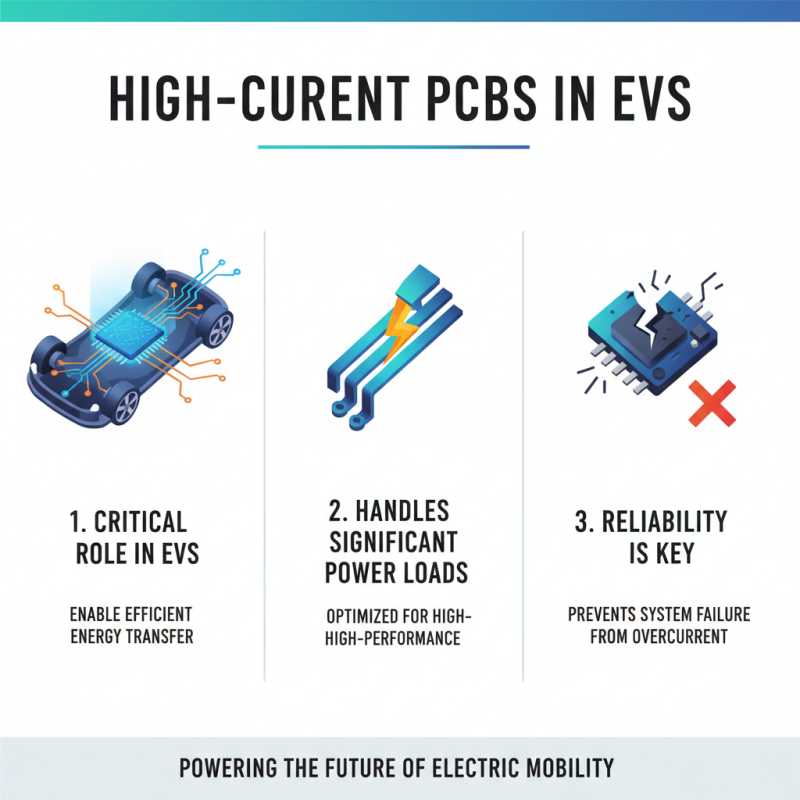
High current printed circuit boards (PCBs) play a critical role in electric vehicles (EVs). Their design must handle significant power loads, enabling efficient energy transfer within the powertrain. Current-carrying capabilities are vital, especially in high-performance applications. When components fail due to excessive current, the entire system suffers.
Proper materials are essential for these PCBs. Copper traces are often employed for their conductivity. However, the thickness of these traces must be carefully calculated to minimize resistance and heat generation. Complications can arise if the design does not account for temperature changes or mechanical stress. Continuous monitoring is essential, as even small discrepancies can lead to failures.
In EV powertrains, high current PCBs must maintain reliability under demanding conditions. They must endure vibrations and temperature fluctuations throughout the vehicle's lifespan. Issues like oxidation and thermal fatigue remain critical challenges. Engineers often need to innovate and rethink existing designs to cope with these obstacles. Flexibility and adaptability in PCB design become essential for achieving long-term performance in electric vehicles.
Electric vehicles (EVs) are transforming transport. At the heart of their performance is the powertrain. High current PCBs (printed circuit boards) play a crucial role here. They manage the electrical flow efficiently, ensuring optimal vehicle performance. Without reliable PCBs, the powertrain may struggle to operate smoothly.
High current PCBs enable better power distribution. They handle larger amounts of current without overheating. This capability keeps the powertrain stable, even during high-demand situations. For instance, during rapid acceleration, these PCBs support the surge of electricity required. However, challenges remain in designing them for different EV models. Every design must balance size, weight, and efficiency.
The complexity of EV powertrains adds to the PCB design challenge. High temperatures in some environments can affect performance. Inadequate thermal management can lead to failures. Designers must carefully choose materials and layouts. Mistakes in this phase can be costly. Therefore, ongoing refinement is vital for future developments.
High current PCBs play a crucial role in the performance of electric vehicle (EV) powertrains. These printed circuit boards must handle significant current loads while maintaining efficiency. Such demands require specific features to ensure reliability and longevity.
One key feature is thick copper plating. This allows for better heat dissipation and lower resistance. Studies suggest that PCBs with a copper weight greater than 3 oz/sq ft result in improved thermal performance. In high-performance EVs, where performance can be hindered by excessive heat, this feature is essential.
Another important aspect is the design flexibility of high current PCBs. Optimizing design through advanced simulation tools can prevent issues like electromagnetic interference. Resistance to mechanical stress is also vital, especially in the demanding environment of EVs. Industry data shows that PCBs designed with reinforced materials last significantly longer, reducing overall maintenance costs.
Tips: When designing PCBs for EVs, consider current load capabilities. Ensure that thermal management strategies are integrated. Regularly review the layout to minimize interference. These steps can enhance performance and drive overall reliability in EV systems.
High current PCBs are critical to EV powertrain performance, ensuring optimal energy efficiency and thermal management. This bar chart presents key metrics including current ratings, temperature rise, thermal conductivity, and associated costs, demonstrating the essential role high current PCBs play in enhancing electric vehicle design and functionality.
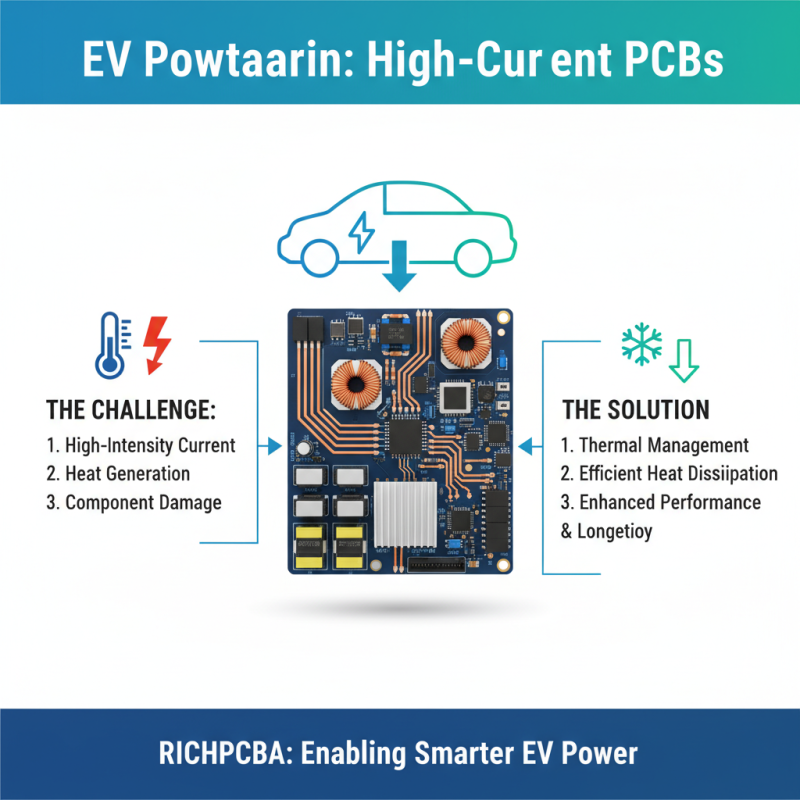
High current printed circuit boards (PCBs) play a crucial role in electric vehicle (EV) powertrains. They must efficiently manage heat generated by High-Intensity Current. Excessive heat can damage components. Therefore, effective thermal management is vital for performance and longevity.
Using advanced materials is key to improving thermal conductivity. Copper layers are often utilized to dissipate heat effectively. However, not all designs maximize heat dissipation. Engineers face challenges in balancing size and thermal management. Some designs may overlook crucial details, leading to potential overheating issues.
Incorporating thermal vias is another method to enhance heat distribution. These small pathways allow heat to travel away from sensitive areas. Yet, proper placement is critical; otherwise, the intended benefits may be lost. Overall, as EV technology evolves, the importance of high current PCBs grows. Continued innovation in thermal management strategies can lead to improved efficiency and performance in future electric vehicles.
High current PCBs play a critical role in electric vehicles (EVs). Their reliability is paramount. According to recent studies, about 40% of failures in EVs are linked to poor PCB performance. High current demands from components can lead to heat generation. Insufficient heat management can degrade performance and lead to failures. Effective high current PCBs can manage this heat, ensuring longevity.
Durability in EV systems is essential. A report from a leading industry analyst noted that high current PCBs can double the lifespan of critical components. These PCBs often use advanced materials and precise design methodologies. The integration of Current Regulator Ic in these boards helps manage energy flow more effectively. This not only enhances efficiency but also improves the overall robustness of the vehicle.
However, challenges remain. Many manufacturers still overlook the importance of thermal management. Cost-cutting in PCB design can lead to unreliable systems. It's crucial to balance cost with performance needs. Investing in high-quality components can prevent future failures and enhance vehicle reliability. As the EV market grows, so does the need to refine these technologies. Properly engineered high current PCBs will ultimately ensure safer, more durable electric vehicles.
High current PCBs play a pivotal role in the performance of electric vehicles (EVs). As EV powertrains become more advanced, the demand for efficient, high-capacity PCB technology intensifies. This trend highlights the importance of High-Frequency PCB High-Speed Suppliers, who provide the necessary materials and designs. Increased energy demands require robust layouts that can handle significant current without overheating.
Emerging technologies are shaping the future of high current PCBs. For instance, innovative materials like graphene and improved copper plating techniques are gaining traction. These advancements aim to enhance conductivity and thermal management. However, the challenge remains in balancing weight and efficiency. Heavy PCBs can hinder overall vehicle performance, yet lighter alternatives must maintain structural integrity.
Sustainability is another concern. While new methods are developed, their environmental impact cannot be overlooked. The production of high current PCBs needs to be eco-friendly. There is still room for improvement in recycling materials and processes. Re-evaluating these aspects alongside performance ensures a more responsible approach for EVs in the future.
High current PCBs play a crucial role in the performance of electric vehicle powertrains. They are designed to handle higher currents without overheating, resulting in improved efficiency and reliability. Traditional PCBs, while widely used, often fall short in these demanding applications.
Their inability to dissipate heat effectively can lead to failures in the powertrain systems.
When comparing high current PCBs to traditional ones, several factors come into play. High current PCBs utilize advanced materials like high-TG laminates. These materials are essential in providing better thermal management.
In contrast, traditional PCBs may struggle under similar conditions and can fail at lower current levels. This difference can significantly impact vehicle performance and safety.
Finding a High-Quality High-TG PCB Supplier becomes crucial for manufacturers aiming to enhance their EV designs.
Designing with high current PCBs may introduce complexities. Engineers must consider layout intricacies and thermal constraints. However, the benefits often outweigh these challenges. The shift towards electric mobility makes it necessary to explore every advantage in powertrain technology.
While traditional methods have served their purpose, they may not meet the future demands of electric vehicles.
In the realm of modern electronics, high-density interconnect (HDI) rigid-flex PCBs play a pivotal role in maximizing performance for high-density applications. The 10-Layer 2nd-Generation HDI Rigid-Flex PCB stands out as an innovative solution designed to meet the demands for enhanced signal integrity and miniaturization. By integrating advanced HDI technology, this multi-layer PCB strikes an excellent balance between flexibility and robustness, crucial for sophisticated electronic applications. Key features such as impedance control and resin insertion contribute to the reliability of these PCBs, ensuring they can withstand the rigors of demanding environments. This is particularly vital in sectors like 5G communications, automotive, aerospace, and medical devices, where high performance and dependability are paramount. Rigid-flex PCBs, with their unique ability to combine different forms of circuit board technology into a single unit, facilitate the development of compact designs without sacrificing functionality, thus revolutionizing the design landscape for future electronics. With their advanced performance capabilities, these PCBs are set to be the backbone of next-generation electronic devices.
: The product aims to enhance user experience through innovative features and solutions.
Regular cleaning and careful handling can help maintain its performance.
Check the user guide for troubleshooting. If issues persist, seek professional assistance.
Yes, the product typically comes with a limited warranty. Details are found in the documentation.
Return policies vary, but dissatisfaction often leads to a return option within specified days.
The product offers efficiency, saves time, and simplifies tasks.
Users sometimes overlook maintenance guidelines, leading to performance issues.
While many find it useful, some may struggle with complex features.
Its lifespan depends on usage, maintenance, and care. Users should be realistic about longevity.
Support services are available online or via customer service. However, response times may vary.
High-Current PCBs are crucial for enhancing the performance of electric vehicle (EV) powertrains. Their unique design and engineering address the high power demands of contemporary EVs, ensuring efficient energy transfer and reliability. The article delves into the role of high-current PCBs within EV powertrains, highlighting critical features that contribute to improved vehicle efficiency, including thermal management solutions that help dissipate heat generated during operation.
Additionally, the durability and long-term reliability of high-current PCBs are emphasized, as they ensure the safety and longevity of EV systems. A comparative analysis reveals the advantages of high-current PCBs over traditional PCBs, reinforcing their significance in future EV technologies. As the automotive industry continues to advance towards electrification, the integration of high-current PCB for EV powertrain will be instrumental in achieving enhanced performance and efficiency standards.