The demand for top-notch PCB manufacturing has been growing non-stop. It’s no secret that companies all around the world often turn to expert manufacturers in China to get their circuit boards made. In this overview, I’ll share a bit about some of the key players in the PCB manufacturing scene.
Chinese manufacturers have really built up a solid reputation internationally. Their skills in Hdi Pcb Manufacturing definitely give them an edge. These companies don’t just hit the basic standards—they also focus heavily on innovation and dependability. Still, buyers should take some time to really assess the manufacturers’ capabilities and the quality they can deliver.
When it comes to choosing a PCB partner, trust and experience are huge factors. Of course, there can be bumps along the way—things like cost fluctuations for materials or changes in regulations—but if you find the right partners, those hurdles can be managed smoothly. Building strong, long-term relationships with Chinese manufacturers can really make the whole process more efficient and cost-effective. So, understanding these little nuances is pretty important for anyone looking to work with Chinese factories on a consistent basis.
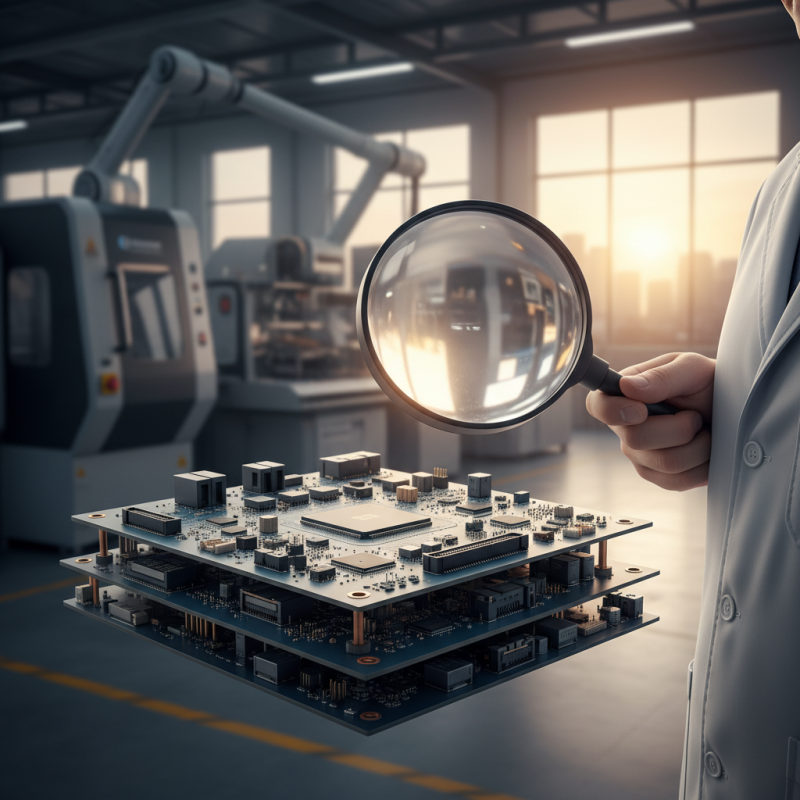
Overview of PCB Manufacturing Industry in China
The PCB manufacturing industry in China has seen significant growth in recent years. Reports indicate that China's PCB market is expected to reach over $40 billion by 2025, driven by the demand in sectors like telecommunications, automotive, and consumer electronics. This robust growth highlights China's position as a leading global player.
Key factors contribute to this expansion. Advanced manufacturing technologies and cost-effective production processes enhance capabilities. Moreover, strong investments in research and development boost innovation, keeping companies competitive on a global scale. However, there are challenges, such as fluctuating raw material prices and increasing environmental regulations. These issues require continuous adaptation and improvement in operations.
Notably, while China leads in production volume, there is a growing focus on quality and sustainability. The emphasis on reducing waste and improving energy efficiency shapes industry practices. For global buyers, understanding these dynamics is crucial. As industries shift, alternatives like PCB manufacturing in Australia may offer different advantages, emphasizing localized solutions in an increasingly interconnected market.
Key Factors Driving PCB Production in China
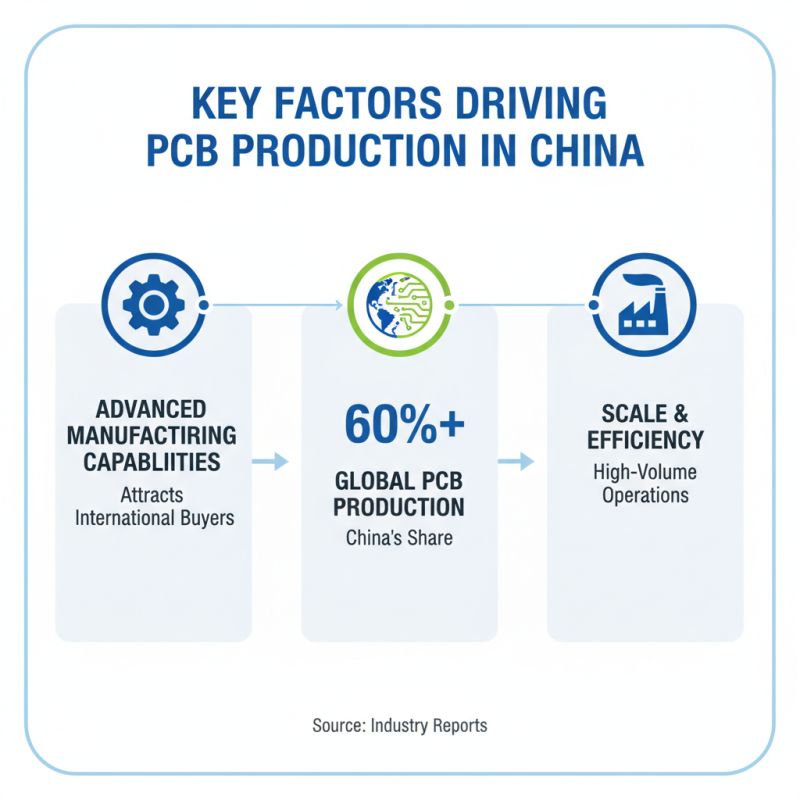
China has solidified its status as a global powerhouse in PCB manufacturing. This rise is underpinned by several key factors. The country's advanced manufacturing capabilities attract numerous international buyers. According to industry reports, China produces over 60% of the world's printed circuit boards. This significant share highlights the scale and efficiency of operations.
Labor cost plays a crucial role in driving PCB production. Skilled labor is readily available and relatively affordable compared to other countries. Recent data indicates that PCB manufacturers in China can maintain competitive pricing while ensuring high-quality outputs. However, this advantage might face challenges from rising labor costs over time. Manufacturers need to adapt and innovate to stay ahead.
Technological advancements in China have also propelled PCB production. Investment in state-of-the-art machinery has improved production speed and accuracy. A report noted that automation in PCB assembly increased efficiency by 30%. Yet, rapid tech adoption requires continuous workforce training to avoid skill gaps. Understanding the balance between technology and skilled labor is vital for sustainable growth in this sector.
Leading PCB Manufacturers in China: An In-Depth Look
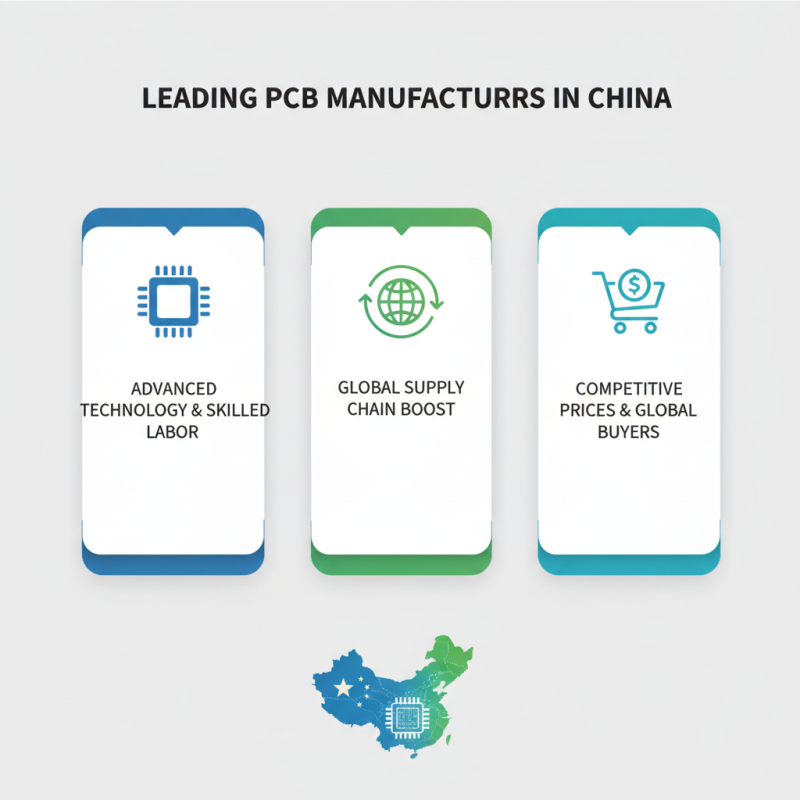
China has emerged as a key player in the global PCB manufacturing landscape. Many companies in this region boast advanced technology and skilled labor. They cater to various industries, significantly boosting international supply chains. The competitive prices attract global buyers, presenting viable options for various project needs.
Leading manufacturers emphasize quality control and innovation. They invest heavily in state-of-the-art machinery. This commitment to excellence often yields high customer satisfaction. However, potential buyers can find it challenging to navigate through numerous suppliers. Differentiating between reliable and subpar manufacturers requires careful research.
Transparency is crucial in this market. Some companies may promise fast turnaround times without substantiating those claims. This calls for due diligence from buyers. Understanding certifications and compliance standards is essential. Engaging with manufacturers who prioritize clear communication can mitigate risks and build trust.
International Standards and Certifications of Chinese PCB Companies
In the competitive landscape of PCB manufacturing, international standards and certifications are crucial. Many Chinese companies have embraced these guidelines, ensuring their products meet global requirements. Certifications like ISO 9001 and IPC standards are common among top manufacturers. Reports show that companies holding these certifications often experience fewer defects and higher customer satisfaction rates.
It's important to note that not all Chinese PCB manufacturers possess these certifications. Some may lack robust quality management systems. This can lead to higher risks in quality assurance. Buyers should ask for documentation of certifications before entering a partnership. History has shown that companies with solid certifications often follow best practices and maintain higher production standards.
Tip: Verify any certifications presented. Reach out to certifying bodies for authenticity. Companies that invest in certifications typically provide better support and reliability. Look for manufacturers that don’t just focus on cost but prioritize quality. Some manufacturers may claim compliance without concrete proof. Questioning these claims can save significant time and resources in the long run.
Comparative Analysis of Cost and Quality in Chinese PCB Manufacturing
When considering PCB manufacturing, cost and quality are top concerns for global buyers. According to a recent industry report, the average cost of PCB production in China is about 30-50% lower than in regions like North America or Europe. This substantial cost difference attracts many companies seeking to optimize their budgets. However, it is essential to assess whether lower prices translate to acceptable quality.
A comparative analysis reveals that quality can vary widely among Chinese manufacturers. Many smaller factories may offer lower prices but compromise on materials and precision. Buyers must investigate certifications, customer reviews, and production capabilities. Reports indicate that companies that prioritize quality assurance see a lower defect rate, enhancing long-term sustainability.
Tip: Always request samples before making bulk purchases. Check for industry certifications that validate production standards. Be cautious with exceptionally low-cost quotes; this could indicate potential issues with quality or reliability. Remember that PCB manufacturing in Canada may offer advantages in compliance and customer support that warrant a higher price.
Trends and Innovations in Chinese PCB Production
Trends and innovations in Chinese PCB production are evolving rapidly. Manufacturers are adopting advanced technology to streamline processes. Automation in production lines reduces human error and improves efficiency. Companies are implementing AI and IoT for real-time monitoring. This integration enhances quality control and reduces waste.
Eco-friendly practices are gaining traction. Many manufacturers are exploring sustainable materials and recycling methods. This shift meets the growing demand for green manufacturing. The push for lower emissions is notable. Companies are analyzing energy consumption to optimize their operations.
Global buyers look closely at these advancements. The fierce competition with PCB manufacturing in Europe drives improvements. However, challenges remain. Finding skilled labor and quality control in mass production continues to be a concern. Additionally, there are inconsistencies in raw materials. Manufacturers must constantly adapt and refine their strategies to remain competitive.
Top PCB Manufacturing Companies in China for Global Buyers - Trends and Innovations in Chinese PCB Production
| Parameter |
Value |
| Annual Production Capacity |
Over 500 million square feet |
| Number of Employees |
Over 20,000 |
| Export Percentage |
70% |
| Primary Markets |
North America, Europe, Southeast Asia |
| Technology Focus |
Multilayer PCBs, HDI PCBs, Flex & Rigid-Flex PCBs |
| Quality Certifications |
ISO 9001, ISO 14001, IPC-A-600 |
| Innovation Areas |
Automation, Green Manufacturing, IoT Integration |
| Average Lead Time |
2-4 weeks |
| Customer Support Services |
24/7 Service, Project Management, Technical Support |
Challenges Faced by Global Buyers in Sourcing PCB from China
Sourcing PCBs from China presents unique challenges for global buyers. Communication barriers often arise due to language and cultural differences. Misunderstandings can lead to errors in design specifications. This can result in costly delays and increased production lead times.
Quality control is another significant concern. Although many manufacturers claim high standards, verifying these claims can be difficult. Buyers must conduct thorough research and audits. It's essential to request samples to assess quality before placing large orders.
**Tips:** Establish clear communication protocols. Use visuals and digital platforms to convey ideas. Also, consider working with local representatives to facilitate smoother transactions. Additionally, always verify certifications and ensure compliance with industry standards.
Global buyers should also reflect on their sourcing strategy. Relying solely on Chinese manufacturers may limit options. Exploring alternatives like Pcb Manufacturing Germany could provide more reliable solutions. Diversifying suppliers can enhance resilience in supply chains.
Optimizing PCB Assembly for Medical Devices: A Guide to High-Quality Manufacturing and Compliance
In the medical device industry, where safety and reliability are paramount, optimizing PCB assembly processes is critical. High-quality manufacturing practices ensure that every component meets stringent regulatory standards while maintaining the performance required for life-saving applications. According to a report from the IPC, over 35% of recalls in the medical device sector are attributed to issues related to electronic components, highlighting the importance of meticulous PCB assembly and testing.
To achieve top-notch quality, manufacturers must adopt a hybrid approach that combines automated and manual assembly processes. This flexibility allows for addressing the unique complexities of medical devices while ensuring high precision. Studies show that automated assembly can increase throughput by up to 50%, reducing the risk of human error associated with manual assembly. However, the integration of skilled technicians remains essential, as they provide the oversight needed to maintain quality control throughout the production lifecycle.
Compliance with industry standards such as ISO 13485 and IEC 60601 is non-negotiable in this sector. Manufacturers must implement rigorous testing and validation practices to demonstrate adherence to these standards. A successful PCB assembly operation not only incorporates high-quality components but also employs advanced technologies for inspections and testing, which can detect potential failures before devices reach the market. By focusing on these aspects, manufacturers can significantly enhance the reliability of medical devices, ensuring they perform as intended in critical situations.
FAQS
: Advanced manufacturing capabilities and competitive labor costs significantly drive PCB production in China.
Skilled labor is affordable in China. However, rising labor costs may challenge competitive pricing in the future.
International standards ensure products meet global requirements. Many Chinese companies obtain certifications to enhance quality and customer satisfaction.
No, not all manufacturers possess certifications. Some may lack quality management systems, increasing quality risks.
Buyers should request documentation and verify with certifying bodies. This adds assurance of quality and reliability.
PCB production costs in China are about 30-50% lower than in North America or Europe, attracting many buyers.
Not always. Quality can vary widely. Some cheaper manufacturers compromise on materials and precision.
Always request samples and check for industry certifications. This helps ensure acceptable quality levels.
Exceptionally low-cost quotes may indicate quality or reliability issues. Caution is advised with such offers.
Canadian manufacturers might offer better compliance and customer support, which can justify higher prices.
Conclusion
The PCB manufacturing industry in China plays a pivotal role in the global supply chain, driven by factors such as cost efficiency, technological advancement, and a highly skilled workforce. As Chinese manufacturers adopt international standards and certifications, they enhance their credibility in the global market, making them appealing to international buyers.
A comparative analysis highlights the delicate balance between cost and quality in Chinese PCB production, with ongoing trends and innovations pushing the industry towards more sustainable and efficient practices. However, global buyers face challenges in sourcing from China, including varying quality standards and supply chain complexities. Understanding these dynamics is crucial for international buyers looking to navigate the PCB manufacturing landscape in China effectively.